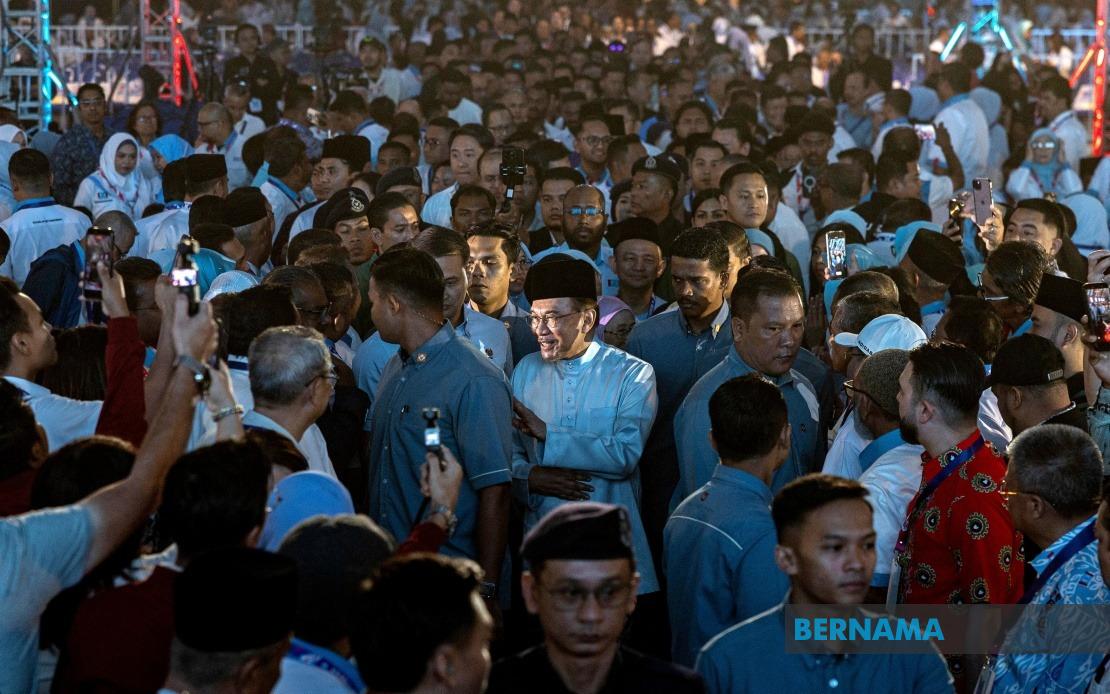
The upcoming 2026 PKR National Congress represents a critical juncture for the ruling party to consolidate its fractured ranks and rebuild eroding public confidence, according to Tengku Datuk Seri Zafrul Tengku Abdul Aziz, who serves as senior political adviser to the Prime Minister and sits on the party's Political Bureau. Speaking in Melaka, Tengku Zafrul delivered a candid assessment of the party's current predicament, framing the congress not merely as a ceremonial gathering but as a necessary moment of reckoning and renewal.
The call for introspection follows disappointing outcomes in recent state elections, which have exposed vulnerabilities within PKR's organisational structure and public messaging. Rather than deflecting responsibility or blaming coalition partners within the Unity Government, Tengku Zafrul emphasised that the party must focus its energies on factors within its direct control. This approach contrasts sharply with the tendency of ruling parties to attribute electoral setbacks to external circumstances, suggesting a more mature acknowledgment that PKR bears responsibility for its own performance and perception.
At the heart of Tengku Zafrul's message lies a recognition that the gulf between PKR's policy achievements and public perception has widened considerably. The government has implemented various initiatives across multiple portfolios, yet these efforts have failed to resonate meaningfully with voters or translate into sustained political support. This disconnect points to a fundamental communication failure rather than necessarily a policy failure—the party has struggled to articulate its accomplishments in ways that matter to ordinary Malaysians grappling with cost-of-living pressures, employment concerns, and public service delivery expectations.
The adviser's call for comprehensive organisational assessment extends from grassroots level to central leadership, reflecting an understanding that dysfunction at any level compromises the entire party apparatus. Local branches often serve as the primary interface between the party and communities, yet many PKR divisions have struggled with inadequate capacity, internal politics, and inconsistent messaging. Simultaneously, coordination between central leadership and regional offices has frequently been inefficient, creating gaps in policy implementation and public communication that undermine party credibility.
Tengku Zafrul's framework of "listen, acknowledge, deliver" offers a practical roadmap for party renewal that emphasises genuine engagement with constituent concerns rather than performative politics. The listening phase requires party leaders and members to suspend their immediate impulse to justify or explain, instead creating space for communities to articulate their actual grievances and priorities. This distinction between hearing and understanding represents a significant shift in approach for a party that has sometimes been perceived as defensive or dismissive of criticism.
The acknowledgment phase carries particular weight in Malaysian politics, where citizens often feel that their concerns are ignored or minimised by those in power. When party representatives genuinely validate the legitimacy of public grievances—whether regarding inflation, housing affordability, healthcare access, or educational quality—they establish the foundation for restored trust. This requires vulnerability and honesty about shortcomings, qualities not always evident in political discourse.
The delivery phase then demands that PKR translate listening and acknowledgment into concrete action, allocating resources and political capital to address identified problems. For a party operating within a coalition government, this often means navigating competing priorities and negotiating with partners who may have different agendas. PKR's ability to deliver within these constraints will determine whether the 2026 congress translates into renewed voter confidence or remains merely another party gathering.
For Malaysian politics more broadly, Tengku Zafrul's intervention signals tensions within the ruling coalition regarding accountability and performance. The implicit criticism of coalition partners—while diplomatic in tone—acknowledges that some electoral disappointments stem from unpopular decisions or policies implemented by other government members. This suggests potential friction within the Unity Government, with PKR seeking to distance itself from unpopular initiatives while claiming credit for positive developments. Managing these internal dynamics while maintaining coalition stability presents a delicate political challenge.
The 2026 congress also carries significance beyond internal party matters, as PKR's renewal efforts will influence the broader stability of Malaysia's coalition government. If PKR successfully addresses organisational weaknesses and reconnects with voters, it strengthens the ruling coalition's electoral prospects for the 2028 general election. Conversely, continued public alienation could accelerate defections and emboldened opposition efforts. The congress thus represents not merely a party event but a moment with implications for Malaysia's political trajectory and the viability of coalition-based governance.
For PKR members, the congress will test the party's commitment to genuine reform versus superficial gesturing. Grassroots activists and mid-level leaders will scrutinise whether party leadership demonstrates willingness to modify approaches that have proven ineffective, whether accountability mechanisms exist for poor performance, and whether resources are genuinely directed toward strengthening party infrastructure. Empty rhetoric without substantive change would likely intensify member frustration and potentially trigger further defections to rival parties.
Tengku Zafrul's emphasis on closing ranks carries particular resonance given documented factionalism within PKR between competing power centres and ideological currents. The 2026 congress must somehow reconcile these internal divisions while maintaining focus on external challenges. This requires deft political management to address grievances of marginalised factions while preventing their disputes from paralyzing party operations or consuming the agenda that should focus on public engagement and policy development.
Looking ahead, the success of PKR's renewal efforts will depend substantially on whether party leaders translate Tengku Zafrul's measured critique into concrete operational changes. The congress framework of introspection, strengthening, and renewed communication provides direction, yet execution remains the critical variable. Whether PKR can genuinely reconnect with voters and rebuild institutional capacity will ultimately determine whether the 2026 congress marks a genuine turning point or merely another staged gathering with limited tangible impact on party performance and public standing.

