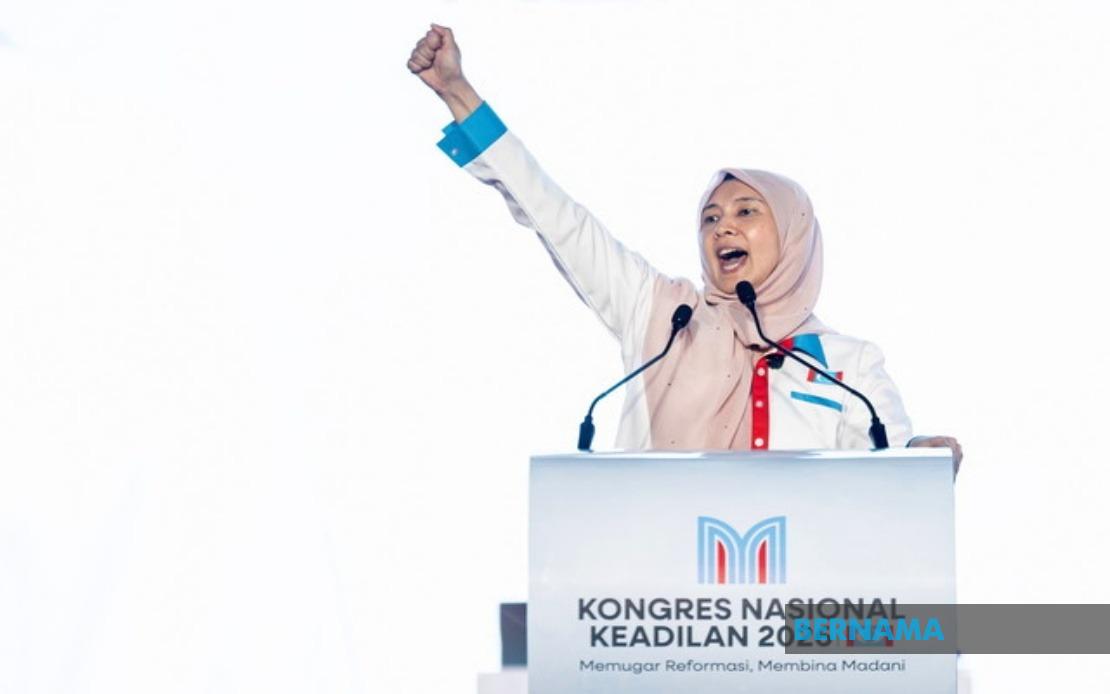
PKR deputy president Nurul Izzah Anwar has issued a pointed reminder to her party that the reform agenda which birthed the movement must remain at the forefront of its work, even as the party exercises governmental authority. Speaking during the closing session of the PKR 2026 National Congress at the Melaka International Trade Centre on August 16, Nurul Izzah stressed that the struggle for institutional and policy change cannot be considered complete merely because PKR has transitioned from opposition to ruling coalition partner. The message carries particular weight in Malaysian political circles, where concerns periodically surface about ruling parties losing sight of their original missions once they consolidate power.
The deputy president's emphasis on continuity reflects a tension inherent to Malaysia's political development. Reform movements typically gain traction through galvanizing public discontent with the status quo, yet once those movements secure electoral victories, the momentum for systemic change often dissipates as incumbents prioritize consolidation and stability. Nurul Izzah's intervention appears designed to counteract this tendency within PKR's ranks, compelling party members to view their governmental participation not as an endpoint but as an opportunity to deepen institutional transformation. This framing positions reform as a perpetual obligation rather than a campaign promise to be shelved after victory.
A concrete example anchors her argument: the repeal of the Universities and University Colleges Act, a 1971 statute that PKR had championed in opposition. The party's ability to deliver on this longstanding commitment now that it holds ministerial portfolios demonstrates how governmental access translates reform aspirations into tangible legislative outcomes. Yet Nurul Izzah's invocation of AUKU's repeal simultaneously underscores how much work remains. University governance represents only one domain among many where structural reform remains incomplete, suggesting that PKR's reform agenda extends far beyond symbolic legislative victories to encompassing broader questions about how power operates throughout Malaysian institutions.
Economic dimensions of reform feature prominently in her framing. While acknowledging the MADANI Government's strong economic growth metrics, Nurul Izzah contends that mere aggregate expansion fails to constitute genuine reform if citizens do not experience tangible improvements in their material circumstances. She identifies three critical areas requiring sustained attention: employment creation, support for small and medium enterprises, and expanded economic participation by women and younger Malaysians. These concerns reflect post-pandemic realities facing the Southeast Asian region, where growth statistics often mask persistent inequality and precarious labor conditions affecting significant population segments.
Wage structure reform emerges as a particularly salient dimension of her economic vision. Nurul Izzah emphasizes that structural adjustments are necessary to ensure salary frameworks become more equitable and that wage growth tracks productivity improvements. This concern resonates across Malaysia and the broader Southeast Asian context, where real wage stagnation has afflicted workers despite respectable headline GDP growth figures. For Malaysian readers, wage dynamics carry especial relevance given the country's middle-income positioning and the political salience of bread-and-butter economic concerns among swing voters and younger demographics entering the workforce.
Beyond specific policy domains, Nurul Izzah articulates a philosophical vision concerning power itself. She cautions PKR's leadership against viewing governmental positions as personal assets or sources of individual advancement, instead characterizing power as a custodial trust demanding responsible stewardship. This language gestures toward accountability concerns that have periodically destabilized Malaysian coalition governments, as factionalism and personal ambition sometimes override collective party discipline. Her emphasis on restraint and fiduciary obligation speaks to broader governance challenges that affect not merely PKR but Malaysian politics more comprehensively, where questions about how ruling party members exercise delegated authority recurrently generate public concern.
The temporal dimension of her closing remarks warrants particular attention. Nurul Izzah reminds listeners that individual names fade from public memory while enduring legacies accumulate through substantive accomplishments and ethical commitments. This framing implicitly rejects the performative politics in which leaders prioritize personal visibility and monument-building over institutional improvement. For a party whose foundational narrative emphasizes opposition to entrenched patronage networks and personal fiefdom-building, such reminders serve important internal functions, reinforcing ideological self-conception even as the party navigates the temptations and pragmatic compromises inherent to governmental participation.
Nurul Izzah's position within PKR lends particular resonance to her intervention. As deputy president and a prominent figure in the party's reform wing, her address carries weight among party activists and ideologically-committed members who might otherwise become demoralized or apathetic once initial reform objectives are achieved. Her remarks effectively mobilize reform rhetoric as an internal PKR discipline mechanism, channeling party members' energies toward ongoing institutional work rather than allowing complacency to set in following electoral success. This represents a sophisticated political management technique, using ideological consistency as a tool for maintaining organizational coherence.
The PKR 2026 National Congress setting also proves symbolically significant. Congress proceedings provide venues where parties articulate organizational direction and reinforce ideological commitments before broader membership. By positioning her closing remarks around reform's perpetual necessity, Nurul Izzah ensures that the party congress concludes by cementing reform as an enduring organizational priority rather than a historical achievement to celebrate and shelve. This framing shapes the political culture that congress attendees carry forward into their respective constituencies and party roles.
For Malaysian observers, Nurul Izzah's intervention illuminates tensions between party and government that will likely intensify as the MADANI coalition's tenure progresses. Governing requires pragmatism and compromise with coalition partners holding divergent priorities, yet ideologically-committed activists expect substantive progress on party platforms. Her attempt to reconcile these imperatives—insisting that reform remains achievable and necessary even within governmental constraints—tests whether coalition governance permits the scope for institutional change that reform movements typically demand. The coming years will reveal whether PKR's structural reform agenda advances meaningfully or gradually recedes beneath coalition management pressures and the incumbency interests that accumulate as parties hold power longer.

