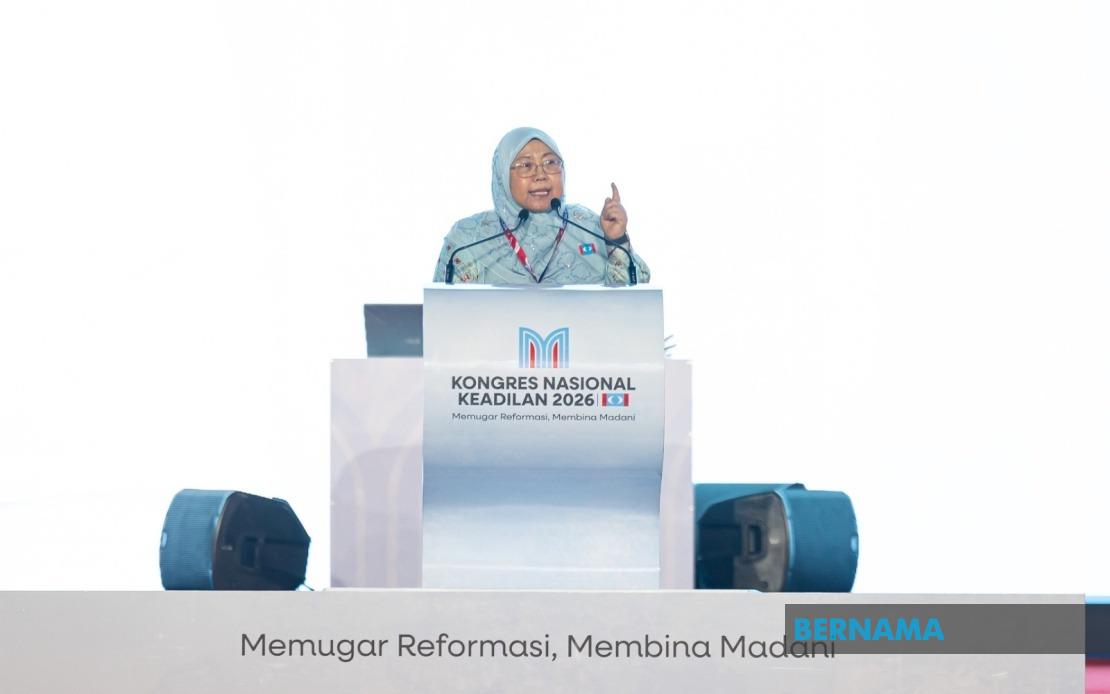
Parti Keadilan Rakyat faces a critical juncture in its political trajectory, with party secretary-general Senator Datuk Dr Fuziah Salleh calling on members and leaders to transcend the disappointment of recent electoral reversals and channel their energy toward organisational renewal. Speaking at the 2026 PKR National Congress in Melaka this week, Fuziah articulated a vision centered on introspection and determination, rather than recrimination, as the party navigates an increasingly complex political landscape.
The congress, held at the Melaka International Trade Centre in Ayer Keroh and drawing 2,594 delegates alongside over 2,000 observers from across the nation, provided the setting for Fuziah's unambiguous message: the party cannot afford to squander this gathering on fingerpointing or settling scores over contemporary political circumstances. Instead, members must seize the opportunity to extract lessons from difficult experiences while ensuring those lessons inform strategy rather than derail future prospects. This emphasis on constructive reflection over destructive recrimination represents a deliberate attempt to steer PKR away from the internal divisions that often plague opposition coalitions in Malaysia.
Fuziah drew on historical precedent to contextualise PKR's current position within the party's longer arc. Following the 2004 General Election, when PKR's parliamentary representation collapsed to a single seat, the party might reasonably have dissolved into despair or fragmentation. Instead, PKR persevered, systematically rebuilding its organisational capacity, deepening its community engagement, and sustaining the Reformasi message across the Malaysian landscape. This historical reference carries particular weight as PKR navigates the aftermath of disappointing electoral performances, suggesting that the party's present difficulties, however severe they may appear, do not represent an existential crisis compared to earlier trials.
The 2026 congress theme, "Memugar Reformasi, Membina MADANI," encapsulates this balancing act between historical continuity and contemporary relevance. The Malay term "memugar" connotes revival and regeneration, carrying implications that PKR must not abandon the foundational principles that animated its emergence, but rather refresh and adapt those principles to meet present-day political realities. Fuziah explicitly cautioned against constructing entirely new ideological frameworks, emphasising instead the imperative to resurrect and revitalise the idealism that once anchored the Reformasi movement. This distinction proves significant in Malaysian political discourse, where parties frequently face accusations of abandoning core missions for electoral pragmatism.
The congress attracted substantial international attention, with 26 diplomatic representatives from 19 countries and six ambassadors present, underscoring PKR's relevance within regional and global political circles. This international dimension reflects PKR's position as a significant opposition entity within Southeast Asia's democracy landscape, and suggests that the party's fortunes carry implications extending beyond Malaysia's borders. For regional observers, PKR's capacity to regroup and redefine itself carries lessons relevant to democratic renewal movements elsewhere in the region facing similar pressures and setbacks.
Fuziah's exhortation toward maturity speaks to a fundamental challenge confronting PKR: maintaining coalition cohesion while addressing legitimate frustration among members over electoral performance. In Malaysian politics, opposition coalitions frequently fracture under pressure, with constituent parties prioritising their particular interests over collective strategy. By framing the current moment as an opportunity for reflection rather than recrimination, PKR's leadership attempts to create psychological and institutional space for this recalibration without triggering the blame-attribution cycles that typically precede coalition breakdown.
The timing of this message carries significance within Malaysia's broader political trajectory. With the next general election still years away, PKR possesses relative freedom to undertake substantive organisational reform without the time pressures that typically constrain major parties in the immediate pre-election period. This window permits the kind of comprehensive reassessment Fuziah advocates—one that examines not merely electoral strategy but the party's ideological positioning, membership mobilisation approaches, and relationships with other opposition entities. For Malaysian voters monitoring opposition health, such deliberative processes indicate whether alternative political forces possess the institutional maturity necessary for eventual governance.
The secretary-general's emphasis on reviving rather than revolutionising the Reformasi agenda addresses a perennial tension within PKR's political economy. The party emerged from a specific historical moment defined by the Anwar Ibrahim crisis and the broader anti-corruption sentiment of the 1990s. Yet two decades later, Malaysian political consciousness has evolved considerably, with newer generations of voters possessing different reference points and priorities. PKR must therefore communicate why core Reformasi principles remain relevant to contemporary concerns around economic inequality, governance, and social justice, without appearing to rehash outdated grievances.
The congress's substantial attendance—nearly 4,600 delegates and observers—suggests that despite recent electoral disappointments, PKR retains organisational capacity and membership engagement. This institutional solidity provides foundation for the renewal process Fuziah outlined, distinguishing PKR from smaller opposition entities that might struggle to convene such assemblies. The presence of significant observer delegations from across Malaysia indicates that regional PKR chapters maintain active operations and membership interest, suggesting that the party's organisational structure remains fundamentally sound despite electoral setbacks.
Fuziah's address implicitly acknowledges that Malaysian voters, particularly those in Peninsular Malaysia, have demonstrated willingness to shift their political allegiances when dissatisfied with government performance but demand evidence that alternative coalitions offer viable governance models. PKR's challenge involves demonstrating that it possesses not merely principled opposition but constructive policy frameworks addressing contemporary voter concerns. The maturity Fuziah advocates encompasses not only internal party discipline but the intellectual and strategic sophistication necessary to present credible alternative governance approaches to an increasingly discerning electorate.
For Southeast Asian observers tracking Malaysia's democratic evolution, PKR's 2026 congress represents a crucial test of whether opposition parties can undergo necessary regeneration without collapsing into factionalisation or ideological incoherence. The region's democracy landscape includes multiple examples of opposition movements that failed to navigate post-electoral setback periods effectively, instead splintering into competing factions pursuing contradictory strategies. PKR's apparent commitment to structured reflection and principled rebuilding, if executed with genuine conviction rather than performative commitment, could establish a model relevant to democratic renewal efforts across Southeast Asia.
Looking forward, the extent to which PKR translates Fuziah's rhetoric into concrete organisational changes will determine whether the 2026 congress marks a genuine inflection point in the party's trajectory. This requires moving beyond philosophical renewal toward practical reforms in candidate selection processes, policy development mechanisms, and coalition engagement strategies. Malaysian voters and regional observers will monitor whether PKR's leadership demonstrates the genuine commitment to mature political practice that Fuziah articulated, or whether internal divisions and competing power bases ultimately undermine the unity message offered at this week's congress.

