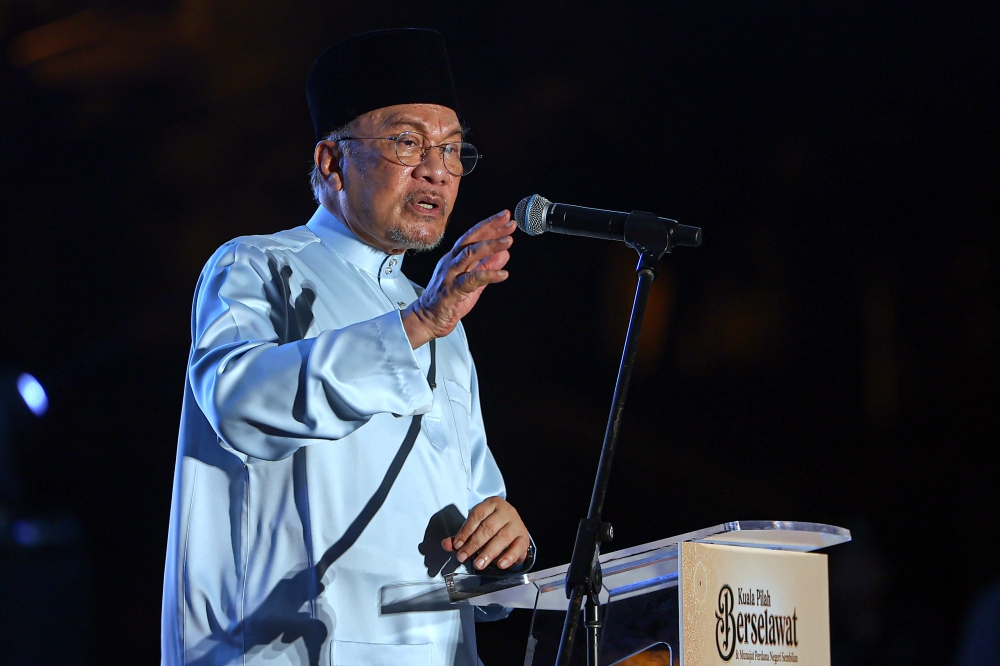
Anwar Ibrahim has sounded an emphatic reminder to the Parti Keadilan Rakyat that the organisation's core mission extends far beyond winning elections, insisting instead that PKR must operate fundamentally as a mass movement anchored in principles of integrity and democratic participation. Speaking in Kuala Lumpur on August 15, the party leader stressed that this distinction carries profound implications for how PKR conducts itself, shapes its internal culture, and engages with Malaysian society at every level.
The statement arrives at a moment when Malaysia's political landscape remains in flux following the 2022 election cycle and the subsequent shifts in parliamentary alignment. For PKR, which has positioned itself as a reformist alternative within the Pakatan Harapan coalition, questions about party identity and purpose are not merely philosophical but carry practical weight in determining how the organisation builds and sustains its support base. Anwar's intervention suggests internal conversations about whether PKR risks losing its defining characteristics as it matures into a party of government.
A mass movement, in political terminology, emphasises broad-based citizen engagement, grassroots mobilisation, and adherence to foundational principles that transcend the narrow objective of winning seats. This contrasts with what political scientists call an electoral machine—a streamlined organisation optimised primarily for vote-getting, patronage distribution, and parliamentary performance. The distinction reflects different philosophies about democratic participation and governance. Movements that prioritise their mass character tend to maintain stronger connections to civil society, retain ideological clarity, and cultivate member engagement beyond polling day. Electoral machines, by comparison, often centre resources on campaign mechanics and legislative strategy.
For a party like PKR, which emerged from the reformasi movement of the late 1990s and early 2000s as a vehicle for political change, this tension has always existed beneath the surface. As the party has gained parliamentary representation and moved closer to ministerial office, particularly following the 2018 election victory, the gravitational pull toward becoming primarily an electoral and governmental organisation has intensified. Anwar's remarks appear designed to recalibrate PKR's trajectory and prevent the dilution of its foundational mission.
The concept of integrity that Anwar emphasises carries particular resonance in Malaysian politics, where public perceptions of political corruption and elite self-dealing remain widespread. PKR's brand has historically rested significantly on portraying itself as distinct from the patronage networks and power consolidation tactics associated with establishment parties. By anchoring the party's identity in mass movement principles and integrity standards, Anwar is essentially arguing that PKR's competitive advantage depends on maintaining these differentiating characteristics rather than adopting the operational models of older political organisations.
Within Southeast Asia more broadly, the tension between mass movements and electoral machines reflects broader questions about how reformist parties sustain their founding energy and values as they transition from opposition to government participation. Parties across the region—from Thailand to Indonesia to the Philippines—have grappled with similar pressures. Some successfully preserve their movement character while wielding governmental power; others gradually transform into conventional political machines. PKR's trajectory will likely influence perceptions of whether Malaysian politics can accommodate sustained democratic reform.
Anwar's intervention also signals awareness of potential member dissatisfaction. In many maturing political movements, rank-and-file activists become disillusioned when party leadership appears to prioritise electoral victory and ministerial seats over the ideological commitments and transparency that initially attracted members. Internal party democracy, inclusive decision-making processes, and genuine member participation in party governance become flashpoints. By reasserting the mass movement identity, Anwar may be attempting to address concerns that PKR risks replicating the hierarchical, leadership-dominated structures of other Malaysian parties.
The practical implications of maintaining a mass movement character extend to how PKR structures campaigns, allocates resources, and manages internal conflicts. Mass movements typically invest more heavily in civic education, grassroots organising, and member development. They tend toward more inclusive and transparent decision-making processes, though these can be slower and more cumbersome than top-down electoral machines. They emphasise candidate selection based on ideological alignment and grassroots support rather than purely on electoral viability. These approaches require disciplined party leadership committed to principles even when shortcuts might yield immediate electoral gains.
Malaysian voters across the political spectrum have shown increasing demand for parties that operate transparently and maintain connection to grassroots concerns rather than operating primarily as mechanisms for distributing power and resources among elites. PKR's positioning as a mass movement appeals to this constituency. However, operationalising this identity consistently—particularly when electoral pressures mount or when holding government office tempts parties toward conventional patronage practices—requires continuous renewal of commitment from party leadership and active members.
Anwar's emphasis on integrity specifically invokes not merely avoidance of corruption but also consistency between stated values and actual conduct. Mass movements derive legitimacy from perceived authenticity in pursuing their stated missions. When reformist parties adopt the operational tactics of the establishments they critiqued, they undermine their moral authority and alienate supporters drawn to them precisely because they seemed different. This tension remains particularly acute for PKR as it navigates simultaneous roles as parliamentary opposition, coalition partner, and vehicle for governance.
The statement ultimately reflects Anwar's recognition that PKR stands at a crossroads familiar to reformist political movements worldwide. The party can evolve into a conventionally competitive political machine increasingly indistinguishable from Malaysian establishment parties, or it can consciously preserve and reinvigorate its mass movement identity even as it contests for power. This choice will substantially shape not only PKR's future trajectory but also whether Malaysian politics develops greater space for genuinely reform-oriented movements that maintain principled distance from traditional patronage networks. Success in sustaining the mass movement model would represent a significant development in Malaysian democratic practice.

