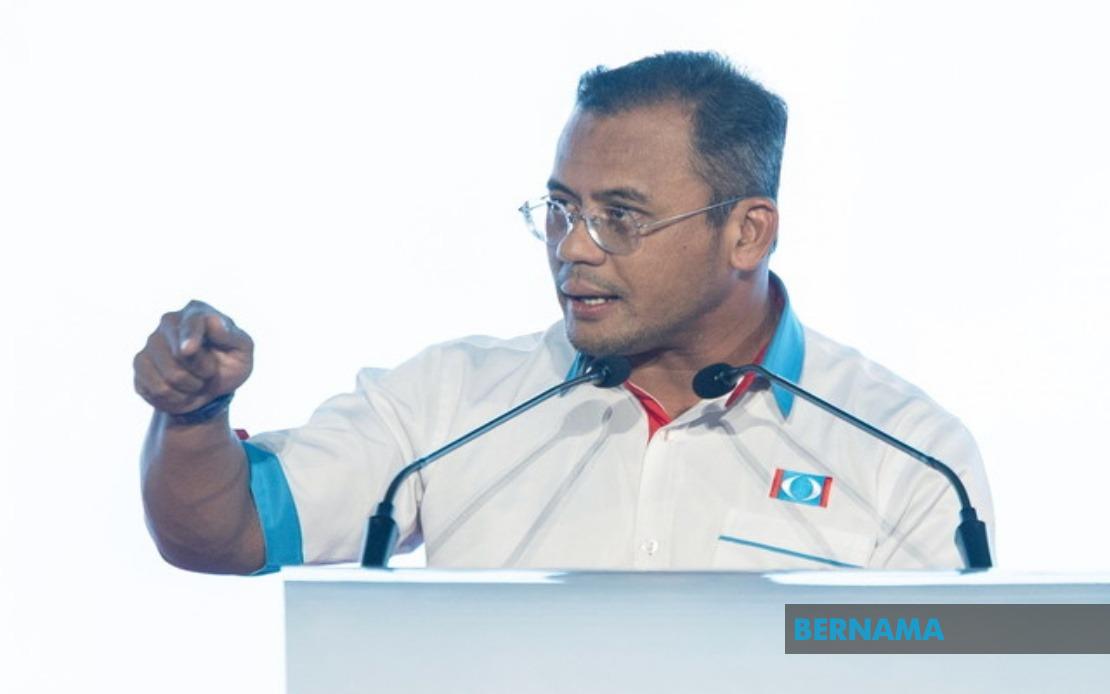
At its national congress in Melaka, PKR's leadership has issued a clear directive that the party must continue championing fair and equitable political engagement across all sections of Malaysian society. The party's vice presidents have emphasised that this commitment to inclusivity must coexist with due respect for the constitutional provisions governing Islam and the position of the Malays—a balance that party officials argue is both legally sound and morally imperative.
Datuk Seri Amirudin Shari, PKR's vice president and Selangor Menteri Besar, articulated this dual commitment in his closing remarks at the party congress held at Melaka International Trade Centre. He framed the party's foundational principles as rooted in the Federal Constitution itself, arguing that recognising Islam's status and the Malays' position represents not a limitation on fairness but rather a prerequisite for maintaining constitutional integrity. This framing positions PKR as a party capable of navigating the complex terrain of Malaysian constitutional law while simultaneously advancing progressive democratic ideals.
Amirudin traced PKR's political journey back to 1998, when party president Datuk Seri Anwar Ibrahim initiated a reform movement that has, according to party narratives, successfully elevated several critical issues into mainstream political discourse. These include the deepening of democratic institutions, the protection of fundamental rights, the pursuit of more equitable economic distribution, and the promotion of governance standards rooted in integrity. This historical perspective serves to remind party members that PKR's identity is fundamentally tied to institutional reform rather than to narrower sectarian interests.
A second key theme emerged from fellow vice president Datuk Seri R. Ramanan, the Minister of Human Resources, who specifically directed PKR's attention toward resisting what he characterised as deliberate exploitation of racial issues for electoral advantage. Ramanan's comments appear targeted at competing political forces that he argues deploy identity politics as a tool for vote-gathering, often at the expense of national unity. For Malaysian readers, this represents an ongoing tension in the country's political landscape: the constant negotiation between legitimate constitutional protections for particular groups and the misuse of those protections to generate divisive political capital.
Ramanan's warning carries particular relevance given Malaysia's history of communal tensions and the periodic emergence of parties that mobilise voters primarily through appeals to ethnic or religious identity. He contended that such approaches ultimately serve narrow political interests rather than the broader national good. His call for PKR to remain steadfast in rejecting these tactics suggests the party views itself as positioned against a tide of identity-based politics, though this positioning itself remains subject to contestation from both left and right within Malaysia's political spectrum.
In a notable observation regarding internal party cohesion, Ramanan stressed that leadership conflicts inevitably cascade downward through organisational hierarchies, weakening grassroots structures and ultimately benefiting political opponents. This frank assessment of the consequences of elite infighting speaks to persistent challenges within PKR's coalition government participation and its efforts to maintain unified messaging across its machinery. The emphasis on prioritising collective strength over individual egos reflects pragmatic recognition that Malaysia's complex political environment demands disciplined, coordinated party operations.
A third vice president, Datuk Chang Lih Kang, offered empirical evidence in support of the party's inclusive political model. He pointed to the Chennah seat in the recent Negeri Sembilan State Election as a case study demonstrating that voters respond positively to candidates of distinction regardless of their ethnic or religious background. The election of DAP secretary-general Anthony Loke in a Malay-majority constituency, despite the deployment of what Chang termed "identity politics propaganda" against him, serves as a counter-example to the notion that racial voting patterns are immutable or that appeals to racial solidarity inevitably dominate electoral behaviour.
This evidence is particularly significant for understanding the trajectory of Malaysian politics in the post-2018 reform period. It suggests that voters, even in constituencies with particular demographic compositions, may prioritise competence, service delivery, and personal integrity over appeals based primarily on ethnic or religious identity. If substantiated across multiple elections and constituencies, such patterns could indicate a gradual evolution in voter behaviour that rewards parties and candidates positioned as above communal divisiveness.
For PKR specifically, the party leadership's emphasis on defending diversity while respecting constitutional positions reflects an attempt to occupy the political centre ground in a landscape increasingly polarised between those advocating for stronger communal protections and those championing purely universal principles. This centrist positioning carries both opportunities and risks. On one hand, it allows PKR to present itself as a voice of reason and constitutional propriety. On the other hand, it may prove difficult to maintain in practice, particularly if political pressure from competitors or internal factional disputes create incentives to abandon the balance between inclusivity and constitutional respect.
The timing of these statements at PKR's national congress also suggests an attempt to reset party narratives and reinforce institutional discipline ahead of potential electoral challenges. Repeated emphasis on party unity and rejection of racial division may serve both as internal messaging to party members and as external communication to voters about PKR's political positioning. Whether this messaging translates into tangible political outcomes will depend on the party's ability to maintain consistency across diverse constituencies and to navigate the inevitable tensions that emerge when advocating for both constitutional respect and democratic inclusivity.
For the broader Malaysian political context, PKR's articulated stance reflects one possible trajectory for the country's political evolution: toward a system in which constitutional provisions are respected while simultaneously constraining their deployment for narrow partisan purposes. This approach differs significantly from alternatives that prioritise either constitutional protections above all other considerations or universal principles without qualification. The success or failure of this centrist model may well shape the character of Malaysian politics in the coming years, particularly as the country navigates demographic changes, economic pressures, and the ongoing challenge of maintaining communal harmony in an increasingly complex society.

