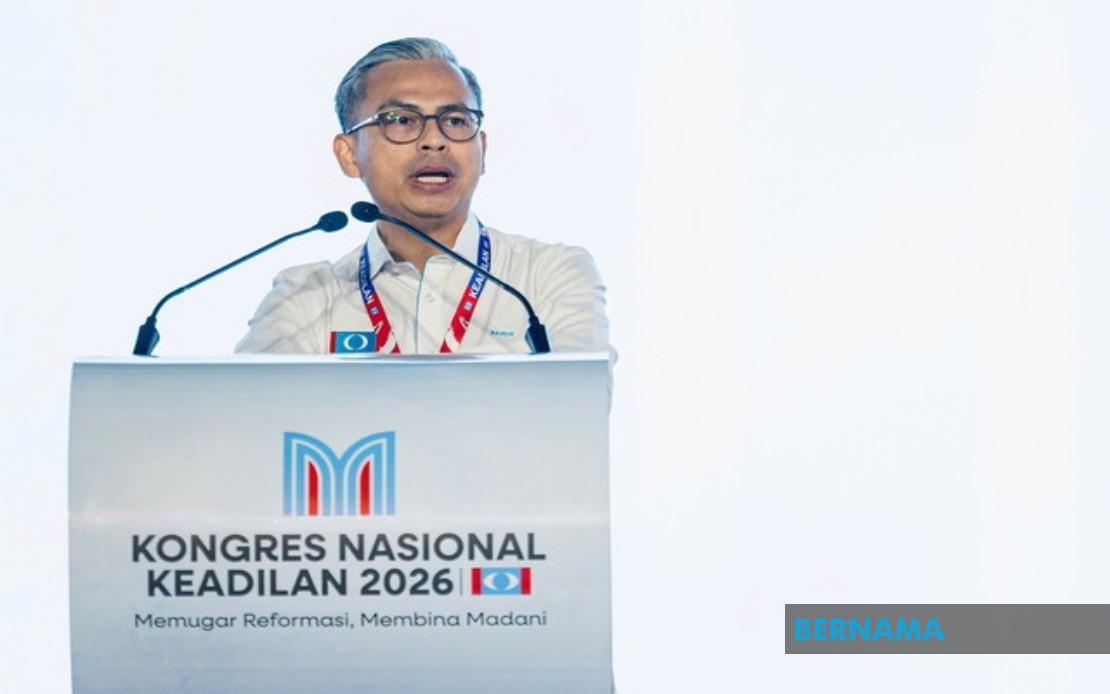
The Malaysian government must do more to translate its macroeconomic successes into tangible improvements that resonate with ordinary citizens, according to PKR information chief Datuk Seri Fahmi Fadzil, who acknowledged growing frustration that major policy victories remain largely unknown or misunderstood by the broader population. Speaking during the 2026 PKR National Congress in Melaka on August 16, Fahmi, who also serves as Communications Minister, outlined a comprehensive strategy to reshape how the ruling coalition presents its work to Malaysians, recognising that the disconnect between government accomplishments and public perception poses a significant political challenge that must be addressed urgently.
Fahmi's remarks underscored a fundamental communications problem within the current administration: despite what party leaders describe as substantial successes under PKR president Datuk Seri Anwar Ibrahim's leadership, these achievements have failed to gain traction with most Malaysians. The minister characterised this as a failure not of policy itself, but of the mechanisms through which information flows from Putrajaya to the grassroots, suggesting that the government's communications apparatus requires structural overhaul. This acknowledgement reflects growing anxiety within PKR about the party's ability to translate economic improvements into political dividends ahead of the next general election, particularly given persistent public scepticism about whether national-level growth benefits ordinary households.
To address this messaging challenge, the government plans to move beyond traditional top-down communication channels and invest heavily in smaller, more intimate forums where officials can explain policies in relaxed settings that encourage direct dialogue with constituents. This shift represents a strategic pivot from broadcast-style announcements toward grassroots engagement, recognising that emotional connections and personal understanding matter more to voters than statistical improvements in GDP or foreign direct investment. The expansion of these localised talks would be coordinated through divisional PKR leaders and grassroots structures, leveraging the party's organisational reach to ensure information penetrates communities that typically remain distant from formal government communications.
A central concern animating these efforts is what Fahmi termed the "emotional dimension" of public understanding—the recognition that government achievements must be felt and internalised by citizens rather than merely acknowledged. This represents a sophisticated understanding of political messaging, acknowledging that technical successes in macroeconomic management can seem abstract and disconnected from daily struggles with living costs, employment prospects, or access to public services. By focusing on the emotional resonance of government action, PKR appears to be attempting to bridge the perception gap that has plagued Anwar's administration despite credible claims of economic stabilisation and improvements in key fiscal indicators.
Simultaneously, the government is intensifying efforts to combat the spread of false information and coordinated disinformation campaigns that exploit sensitive social divisions. In partnership with the Malaysian Communications and Multimedia Commission, authorities have identified and targeted over 8,410 fake accounts since the Johor state election that weaponise issues around religion, race, and the royal institution—topics that carry outsized emotional and political weight in Malaysian discourse. This crackdown reflects understanding that misinformation campaigns can undermine the government's ability to communicate genuine achievements by creating competing narratives that appeal to voters' anxieties and grievances.
Fahmi's statements also signalled a notable shift in tone regarding media relations, with the Communications Minister emphasising that the government is not seeking to control the press but rather to correct factual inaccuracies through "orderly and courteous" channels. This framing attempts to position media engagement as collaborative fact-checking rather than confrontational censorship, a distinction that carries importance given sensitivities around press freedom in Malaysia. However, the stated intention to address inaccurate reporting through formal complaints procedures could be perceived differently by media outlets, particularly given the government's regulatory powers through various agencies.
The communications overhaul also involves strengthening cooperation with PKR's Wanita (Women's) wing, suggesting that the party views female-focused messaging and engagement as crucial to reaching households and communities where much political discourse occurs outside formal political structures. This recognition of women's roles in household decision-making and community influence reflects broader demographic shifts and the political importance of mobilising female voters, a constituency that has proven decisive in recent Malaysian elections.
These strategic communications adjustments come at a crucial juncture for the Anwar administration, which has staked its political legitimacy on delivering tangible economic improvements following the turbulent years of the Muhyiddin Yassin and Ismail Sabri Yaakob premierships. While government economic indicators show genuine progress in areas such as inflation control and fiscal consolidation, this data-driven narrative has struggled to gain purchase in public consciousness, where persistent concerns about cost of living and economic inequality dominate everyday conversation. The PKR leadership's decision to acknowledge and address this communications deficit publicly suggests recognition that superior policies alone cannot guarantee political survival without effective public persuasion.
For Malaysian readers across the region's major urban and rural constituencies, these developments reveal the extent to which governing parties remain preoccupied with perception management and narrative control. The emphasis on combating misinformation and fake accounts exploiting 3R issues—religion, race, and the royal institution—also highlights the ongoing vulnerability of Malaysian public discourse to coordinated disinformation, reflecting broader challenges facing democracies across Southeast Asia where social divisions can be weaponised through digital platforms to undermine institutional legitimacy.
The broader implication of Fahmi's statements extends beyond immediate communications strategy to fundamental questions about how governments in Malaysia connect with citizens and build durable political support. By explicitly acknowledging that macroeconomic success does not automatically translate into public perception, the PKR leadership has signalled that the coming months will likely feature intensified efforts to reshape political narratives through grassroots engagement, targeted messaging, and aggressive fact-checking—tactics that will define the political landscape leading toward eventual general elections.

