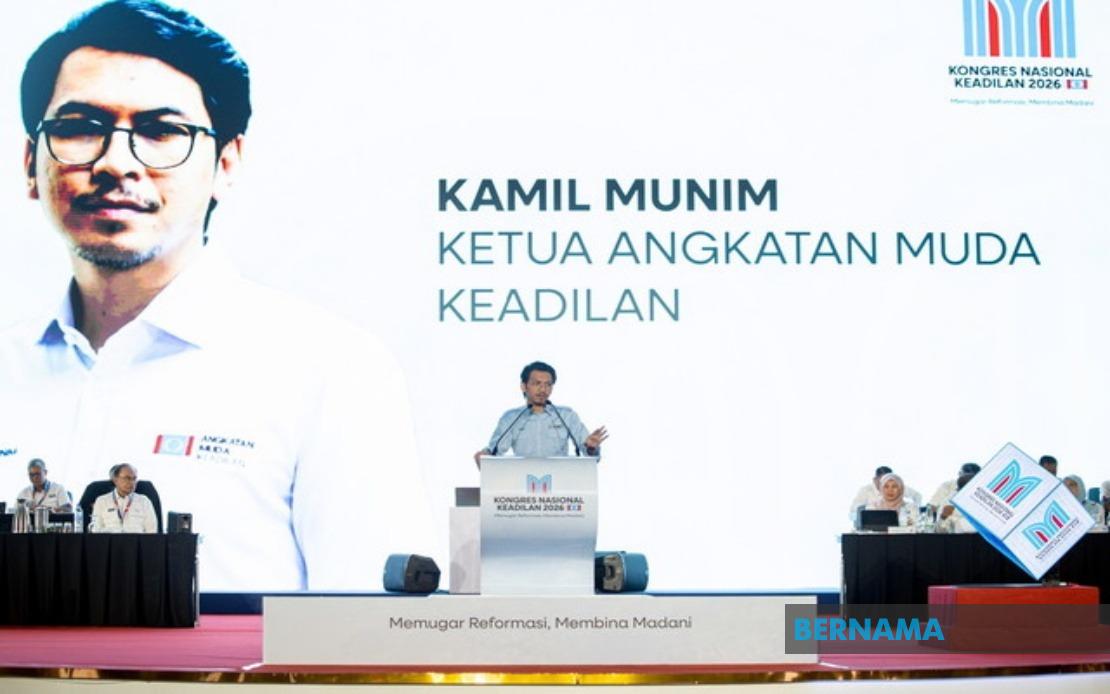
Speaking at the PKR National Congress in Melaka, party youth chief Muhammad Kamil Abdul Munim has issued an urgent call for the party to fundamentally reassess its approach and messaging to connect with Malaysia's burgeoning young electorate. The remarks come as PKR grapples with the fallout from recent state elections in Johor and Negeri Sembilan, which have prompted soul-searching within the coalition about its electoral competitiveness and grassroots appeal.
Muhammad Kamil underscored that voters under 45 years old represent the largest constituency within Malaysia's electoral roll, making this demographic critical to the party's ambitions in future elections. The insight reflects broader demographic shifts in Malaysia's voting population, where youth voters increasingly hold the balance in closely contested contests. Rather than treating younger voters as a peripheral concern, he argued, PKR must place them at the centre of its political strategy and communication efforts.
The party youth leader's comments reveal an internal acknowledgement that recent electoral disappointments signal deeper structural challenges beyond temporary setbacks. The party's assessment following the Johor and Negeri Sembilan contests has identified gaps between its messaging and the actual concerns of ordinary Malaysians, particularly among younger age cohorts who may hold different priorities and respond to different political appeals than older voters. These findings suggest that conventional approaches may no longer suffice in an increasingly competitive electoral landscape.
Muhammad Kamil specifically cautioned grassroots party structures against becoming mired in administrative routine while neglecting the deeper work of developing meaningful leadership. His message carried an implicit critique that party machinery at the local level had drifted towards bureaucratic concerns at the expense of genuine community engagement and understanding. He called instead for a more substantive approach where local leaders develop nuanced awareness of community grievances, aspirations, and anxieties—knowledge that must then translate into credible policy responses.
Despite generally positive public sentiment towards the MADANI Government's performance, Muhammad Kamil acknowledged persistent disconnects between government messaging and lived experiences at the grassroots level. This tension reveals a paradox confronting the coalition: perceived competence at the national level does not automatically translate into electoral gains if local communities feel unheard or unconvinced that their specific concerns will be addressed. The party leadership recognises that closing this perception gap requires deliberate, sustained engagement rather than relying on top-down communication.
The youth leader emphasised the critical importance of direct engagement with smaller communities, particularly in rural settings where traditional political organising methods retain significance. Rural communities often operate through different information networks and decision-making frameworks than urban centres, requiring tailored outreach strategies. By physically visiting rural areas, listening to locals, and demonstrating substantive understanding of their challenges, party leaders can build the credibility necessary to shift voting behaviour.
Muhammad Kamil's framing of the current moment suggests the party views the next general election as increasingly proximate, demanding urgency in organisational preparation. He reminded party members that history offered reassurance—PKR has demonstrated capacity for political surprises every decade or so, notably in 2008 when it substantially damaged Barisan Nasional's parliamentary supermajority and again in 2018 when Pakatan Harapan successfully contested for federal power. These historical precedents suggest that electoral reversals, while painful, need not define a party's trajectory if it mobilises effectively.
The broader strategic question facing PKR involves how to refresh its reform and change agenda in ways that resonate with younger voters while retaining older constituencies. Younger voters often prioritise different issues than their parents—climate action, digital rights, education accessibility, housing affordability, and corruption accountability may rank higher than traditional concerns. Messaging that fails to address these priorities risks appearing disconnected from the electorate's actual preoccupations.
For Malaysian politics more broadly, Muhammad Kamil's intervention highlights the structural importance of youth engagement across the political spectrum. With younger voters increasingly dominant within the electoral roll, whichever coalition develops the most credible, sustained connection with this demographic will possess a substantial advantage. This dynamic creates pressure on all political parties—government and opposition alike—to genuinely listen to young Malaysians rather than attempting to manipulate them through disconnected appeals.
The PKR Youth chief's emphasis on identifying and addressing public concerns speaks to a recognition that electoral competition has intensified. Voters increasingly penalise parties that appear insensitive to their problems or unwilling to develop concrete responses. The party's internal discussions suggest acknowledgement that recent results reflected not temporary factors but genuine shifts in voter sentiment requiring sustained institutional response.
Moving forward, the party's ability to implement this strategic recalibration will depend on translating rhetoric into action. This requires equipping grassroots leaders with genuine authority to respond to local concerns, creating feedback mechanisms that ensure community feedback reaches decision-makers, and demonstrating through concrete outcomes that the party takes younger voters' priorities seriously. Without such implementation, calls for strategic renewal risk appearing performative rather than substantive.

