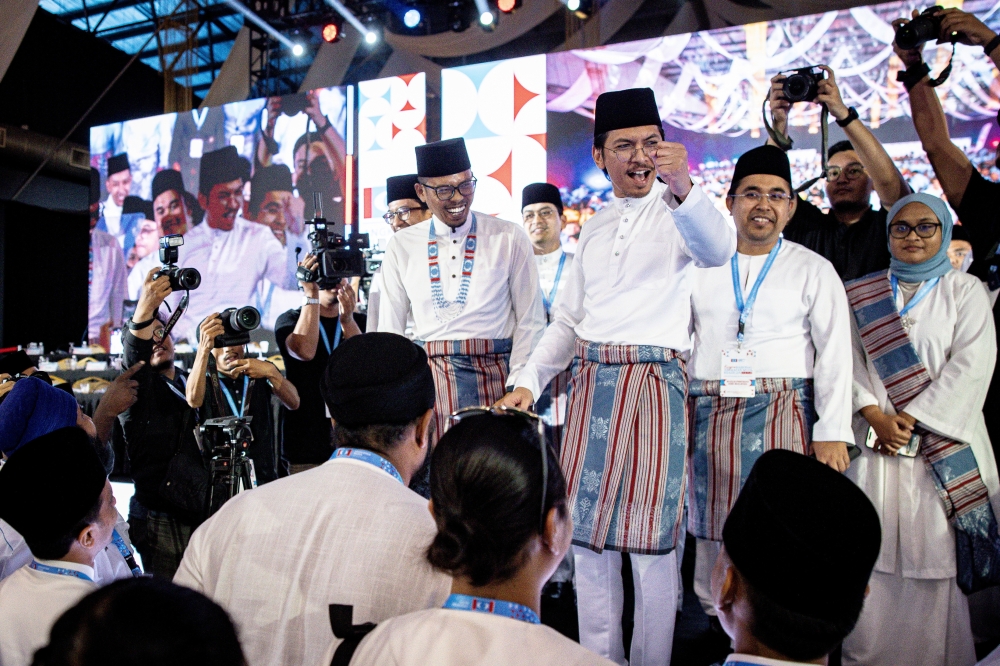
The youth wing of Parti Keadilan Rakyat has publicly endorsed Prime Minister Datuk Seri Anwar Ibrahim's pledge to dismantle the Universities and University Colleges Act, positioning the move as a watershed moment for student activism and institutional independence across Malaysia's higher education sector. The endorsement marks a significant alignment between the government's legislative agenda and the expectations of younger party members who view the repeal as essential groundwork for creating more open and politically engaged campus environments.
At the heart of this development lies growing frustration with the longstanding restrictions imposed by the UUCA, which has for decades constrained student political participation and limited freedom of expression on Malaysian campuses. The act has historically been used as a tool to curb student unions, regulate political activities, and prevent demonstrations, creating what critics argue is an environment antithetical to intellectual inquiry and democratic maturity. By backing the repeal, PKR Youth is effectively positioning itself as a champion of academic freedom—a stance that carries particular resonance among students who have increasingly chafed against regulatory constraints that their counterparts in other democracies do not face.
PKR Youth's call for students to become vocal advocates for this legislative change reflects an understanding that institutional reform requires more than top-down policy shifts. The party wing is encouraging campus communities to articulate their own visions for what expanded freedoms should entail, suggesting that the repeal itself is merely an opening rather than a complete solution. This emphasis on student voice underscores a recognition that young people must be architects of the changes affecting them, not merely passive beneficiaries of reformist gestures from political leadership.
The timing of this stance is significant given Malaysia's broader political context. Anwar Ibrahim's government has positioned itself as more reform-oriented than its predecessor, and moves like the UUCA repeal are central to that narrative. However, implementation remains uncertain, and questions linger about what will replace the current regulatory framework and whether universities will genuinely move toward greater autonomy or simply operate under revised constraints. PKR Youth's mobilisation of student support could prove crucial in maintaining political momentum for follow-through on this commitment.
For Malaysian universities, the potential repeal carries substantial implications. Institutional leadership will face pressure to develop new governance structures that balance freedom with accountability, particularly as concerns about radicalism or disorder on campus remain politically sensitive. Administrative bodies will need to recalibrate their approach to student activities, protest, and political engagement—a transition that may prove uncomfortable for institutional cultures accustomed to tight control. The shift could also reshape campus life in ways that make Malaysian universities more attractive to both domestic and international students seeking vibrant intellectual communities.
Regionally, Malaysia's movement toward greater campus freedom aligns with broader conversations about academic autonomy and student rights across Southeast Asia. Countries like Thailand and Myanmar have grappled with similar questions about institutional independence and state oversight, often with more turbulent outcomes. Malaysia's approach, if successfully implemented, could offer a model for how societies can gradually expand democratic spaces within educational institutions without destabilising broader governance structures—though success is far from guaranteed.
The broader reform agenda that PKR Youth is encouraging students to pursue extends beyond repeal to encompass substantive questions about university governance, curriculum autonomy, faculty protections, and the relationship between academic institutions and political power. These conversations could reshape how Malaysian universities operate at fundamental levels, potentially leading to greater institutional independence from state direction and more robust protections for academic inquiry that challenges prevailing orthodoxies.
However, student mobilisation in support of this agenda carries its own complexities. Political parties backing student activism for their own reasons may later find those movements difficult to direct or contain. PKR Youth's encouragement of broader student discourse could energise constituencies whose priorities diverge from government interests, creating tensions between the party's genuine commitment to reform and its interest in maintaining political control. This dynamic is not unique to Malaysia but represents a perennial challenge for reformist governments navigating the relationship between expanding freedoms and preserving political advantage.
The path forward likely hinges on whether the government demonstrates genuine commitment to implementing the repeal and establishing transparent frameworks for post-UUCA university governance. If the reform becomes another incomplete gesture toward liberalisation while maintaining substantive constraints through alternative mechanisms, student enthusiasm could quickly transform into disillusionment. Conversely, if the repeal catalyses meaningful expansion of campus freedoms alongside genuine institutional autonomy, it could represent a consequential moment in Malaysia's democratic development.
For students themselves, this moment presents both opportunity and responsibility. The backing of a major political party lends credibility to demands for change, yet students must ensure their voices remain independent and that their vision for campus freedom extends beyond narrow partisan interests. The success of this reform ultimately depends not on what PKR Youth or the government promises, but on whether students themselves develop the capacity and courage to exercise the freedoms they are demanding—translating legal changes into lived transformations of campus culture and intellectual life.

