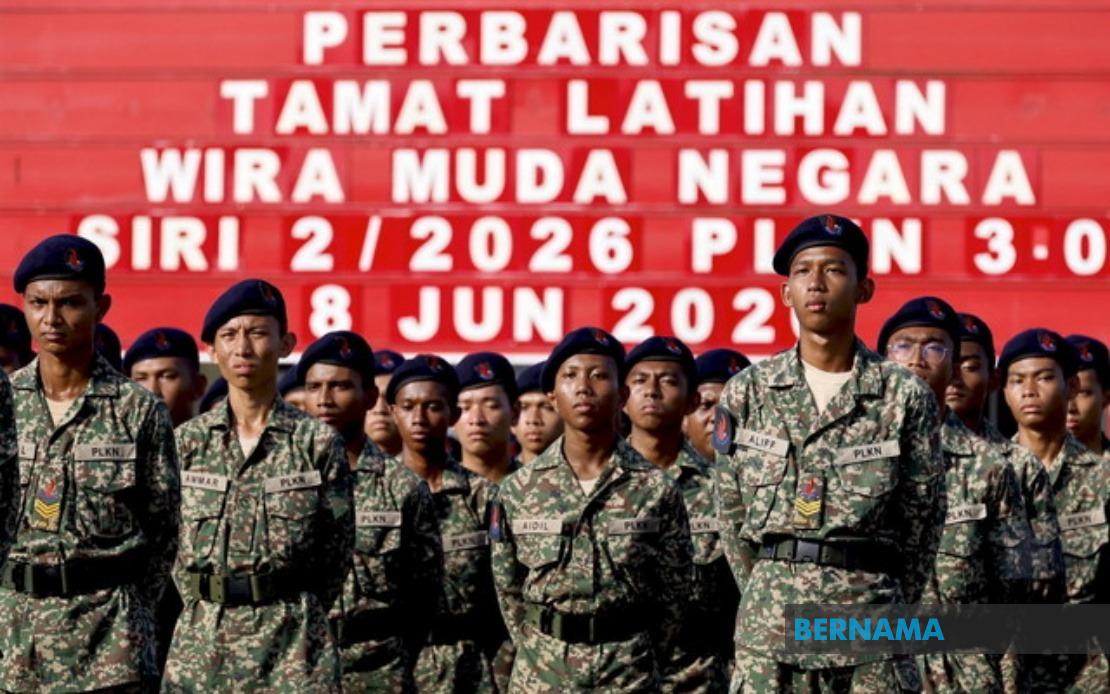
Malaysia's revamped National Service Training Programme, known as PLKN 3.0, has cleared all its key performance indicators, according to impact assessments presented in Parliament. Deputy Defence Minister Adly Zahari reported to the Dewan Rakyat that trainees have demonstrated measurable gains across six crucial dimensions of human capital development, with improvements validated through rigorous pre- and post-training surveys conducted in collaboration with Universiti Malaysia Sabah and the National Defence University of Malaysia.
The programme established a baseline requirement that participants must achieve at least 80 per cent proficiency in six specific competency areas: patriotism, national unity, discipline paired with personal transformation, mental resilience and readiness, military knowledge, and engagement in voluntary service. This structured approach reflects a deliberate shift toward measurable outcomes in national service training, moving beyond traditional anecdotal assessments to evidence-based evaluation frameworks that can demonstrate tangible returns on public investment.
Among the measured improvements, military knowledge emerged as the standout performer, surging from 56 per cent baseline competency before training to 84 per cent upon completion—a substantial 28-point gain that underscores the effectiveness of the revised curriculum in conveying practical defence concepts and institutional knowledge. Volunteerism also strengthened considerably, climbing from 75 per cent to 83 per cent, suggesting the programme successfully cultivates service-oriented attitudes among young Malaysians. These trajectories validate the redesigned training methodology and indicate that the compressed, focused curriculum delivers concentrated learning despite the intensive timeframe.
Additional metrics paint a comprehensive picture of attitudinal and behavioural shifts. Patriotism levels rose from 82 per cent to approximately 89 per cent—a modest but meaningful improvement among participants already predisposed toward national pride. Unity, a cornerstone of Malaysia's multicultural social contract, increased by nine percentage points across the cohort. Discipline and personal self-transformation proved particularly transformative, climbing dramatically from 77.36 per cent to 92.6 per cent, indicating that the programme's structured environment and training regimen successfully instil behavioural modification and self-directed improvement. Mental resilience and psychological readiness improved from 71 per cent to 83 per cent, suggesting participants develop greater emotional fortitude and capacity to handle stress through the intensive training experience.
While the programme explicitly operates outside the employment sector, officials have engineered indirect labour-market incentives through negotiations with five public sector appointing authorities. These agencies have committed to awarding additional merit points to eligible former PLKN participants during recruitment and interview processes, effectively creating a modest competitive advantage in government hiring pipelines. This approach acknowledges that national service carries inherent opportunity costs for participants and their families, and modest career recognition may encourage broader uptake among ambitious young people who might otherwise view mandatory training as time away from educational or economic advancement.
Access and inclusivity remain critical design considerations. Deputy Minister Adly emphasised that PLKN 3.0 deliberately targets young people from all socioeconomic backgrounds, including the bottom 40 per cent income households and rural populations who have historically faced barriers to quality skills development and national integration activities. The integration of Technical and Vocational Education and Training (TVET) modules into the core curriculum represents a strategic investment in occupational skill development alongside patriotic and civic education, potentially positioning participants for career advancement in Malaysia's evolving technical labour market.
Current enrolment figures demonstrate steady programme growth, though still modest in absolute terms. To date, 3,404 trainees have participated across two series: 1,202 in the inaugural year and 2,202 in this year's second cohort. The Defence Ministry targets 4,200 participants by year-end utilising three existing training camps, reflecting a gradual scaling approach that prioritises training quality and infrastructure capacity over rapid mass enrolment. However, expansion plans reveal considerably more ambitious medium-term objectives, with nine additional camps under development that would nearly triple capacity to 9,200 annual trainees by 2025.
This expansion trajectory raises important questions about scaling and sustainability. Establishing nine new training facilities represents substantial capital investment and requires recruitment and development of hundreds of additional trainers, administrators, and support personnel. Malaysia must ensure that rapid capacity expansion does not dilute training quality or overwhelm the partner universities conducting impact assessments. The international experience with national service programmes suggests that poorly managed scaling frequently erodes programme effectiveness and creates quality control challenges that damage long-term credibility.
Participation barriers persist despite the programme's inclusive design. Officials attributed non-reporting among selected candidates primarily to health constraints and ongoing educational commitments, suggesting that some prospective trainees face genuine scheduling conflicts or medical considerations that prevent participation. This indicates potential policy levers for improving uptake—enhanced flexibility for students during exam periods, or more robust pre-screening to identify health concerns before final selection, could reduce participation gaps without compromising programme integrity.
The PLKN 3.0 framework represents a meaningful evolution in Malaysia's approach to civic engagement and human capital formation among youth. By establishing clear performance metrics, conducting independent evaluation, and documenting measurable improvements across multiple competency dimensions, the programme transcends the political rhetoric often surrounding national service initiatives. The evidence of substantial gains in military knowledge, discipline, and unity demonstrates that structured, professionally delivered training can produce meaningful behavioural and attitudinal change among participants from diverse backgrounds. For policymakers considering similar initiatives across Southeast Asia, PLKN 3.0's emphasis on rigorous assessment and transparent reporting offers a credible model for evaluating whether intensive national programmes deliver genuine developmental outcomes or merely consume public resources.