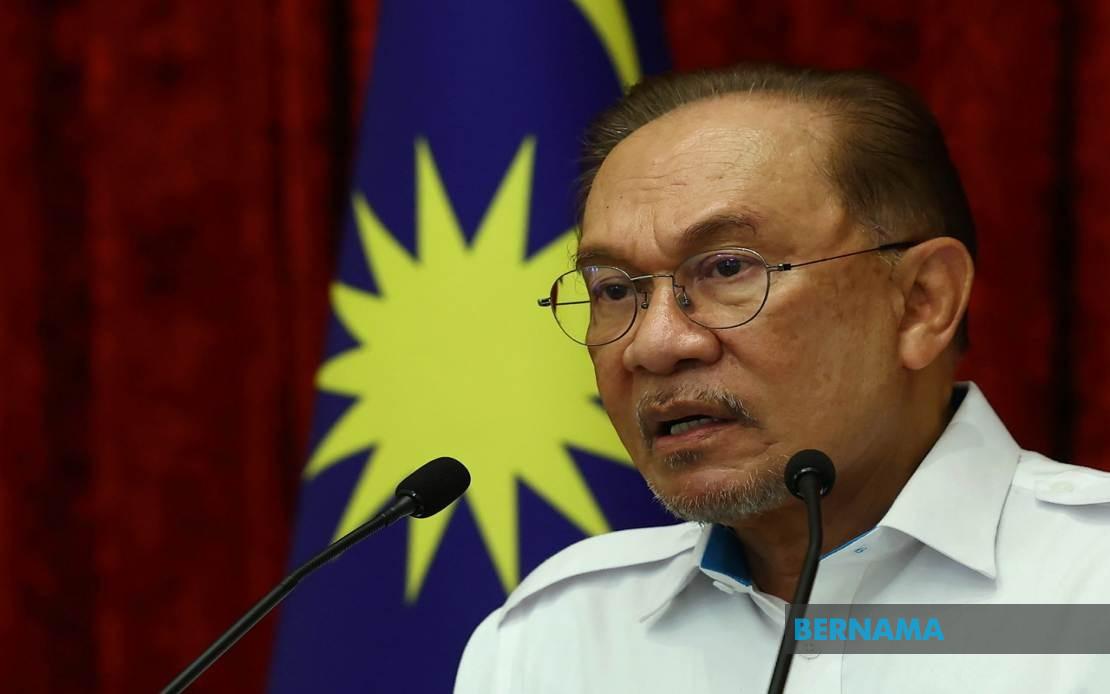
Prime Minister Datuk Seri Anwar Ibrahim has conveyed his apologies for being unable to participate in today's special session of the Dewan Rakyat, where lawmakers examined the findings of the Royal Commission of Inquiry into the governance and management of Tabung Haji. The 79-year-old leader, who recently celebrated his birthday, remains under medical supervision as he recuperates from a surgical procedure conducted earlier this week.
Through a statement released by his senior press secretary Tunku Nashrul Abaidah, Anwar expressed his commitment to monitoring the parliamentary proceedings despite his physical absence. The Prime Minister has instructed his office to maintain detailed oversight of the debate, reflecting his determination to stay engaged with critical national matters even while managing his health recovery. His office emphasised that safeguarding the trust and confidence reposed in Malaysia's Islamic pilgrimage fund remains a priority for the government.
Anwar underwent an elective laparoscopic surgical intervention to address a para-umbilical hernia, according to a statement from his lead medical advisor Datuk Dr Asri Ranga Abdullah Ramaiah. The minimally invasive procedure represents a standard approach to treating this type of abdominal condition. His medical team has indicated that the operation proceeded as planned, setting the foundation for his current recuperation phase.
The Prime Minister's health trajectory has shown positive momentum since the surgical intervention. Medical specialists supervising his care have structured a comprehensive physiotherapy regimen designed to restore his strength and mobility during the post-operative recovery window. This staged approach typically spans several weeks, during which patients gradually resume normal activities under professional guidance.
The absence carries particular significance given the ongoing scrutiny surrounding Tabung Haji's operations and governance framework. The Royal Commission of Inquiry has examined how the fund, which manages pilgrimage savings for millions of Malaysian Muslims, has been administered and overseen. The parliamentary debate represents an opportunity for lawmakers to scrutinise the RCI's conclusions and recommendations, shaping potential policy responses to any identified deficiencies.
Tabung Haji occupies a distinct institutional space within Malaysia's financial ecosystem, serving as both a savings mechanism and a pilgrimage facilitator for Muslim citizens. Recent years have witnessed heightened public interest in its governance structures, particularly regarding investment decisions, financial management, and transparency in operations. The RCI report addresses these concerns systematically, providing lawmakers with empirical findings to guide their deliberations.
Anwar's decision to monitor proceedings remotely rather than attend in person underscores the evolving nature of political leadership during medical challenges. Contemporary parliamentary systems frequently accommodate such circumstances through various procedural mechanisms, allowing leaders to remain informed and engaged without compromising their health recovery. This approach balances operational continuity with medical prudence.
The Prime Minister's office has also relayed his gratitude toward individuals and institutions that extended prayers, well-wishes, and supportive messages during this period. Such public expressions of appreciation reflect established protocols in Malaysian political culture, where senior leaders acknowledge the goodwill of citizens and religious communities during health challenges. The reference to birthday greetings particularly resonates given Anwar's milestone age.
For Malaysian governance observers, this episode highlights both the resilience required of political leaders managing complex national responsibilities and the importance of institutional mechanisms that enable continuity during periods of leadership transition or incapacity. The parliamentary system's capacity to proceed with significant legislative business despite the temporary absence of the Prime Minister demonstrates the distributed nature of governmental authority across multiple institutional actors.
The Tabung Haji inquiry itself reflects broader governance conversations occurring throughout Southeast Asia concerning transparency, accountability, and effective stewardship of public financial institutions. Malaysia's approach to examining such concerns through formal commission processes offers a case study in institutional responses to governance questions, with implications extending beyond the pilgrimage fund itself.
As Anwar continues his medical recovery programme, political observers anticipate his gradual return to full operational capacity. The timing and scope of his reintegration into parliamentary activities will likely depend on medical clearance from his specialist team. Meanwhile, parliamentary leadership has structured proceedings to ensure substantive debate proceeds on the Tabung Haji findings without requiring the Prime Minister's immediate participation.
The episode also contextualises the vulnerability inherent in concentrated executive systems, where prime ministerial absence, however temporary, creates gaps in immediate leadership presence. Malaysian constitutional arrangements distribute powers sufficiently to accommodate such gaps, though the psychological and symbolic dimensions of prime ministerial engagement in major policy debates remain politically significant.

