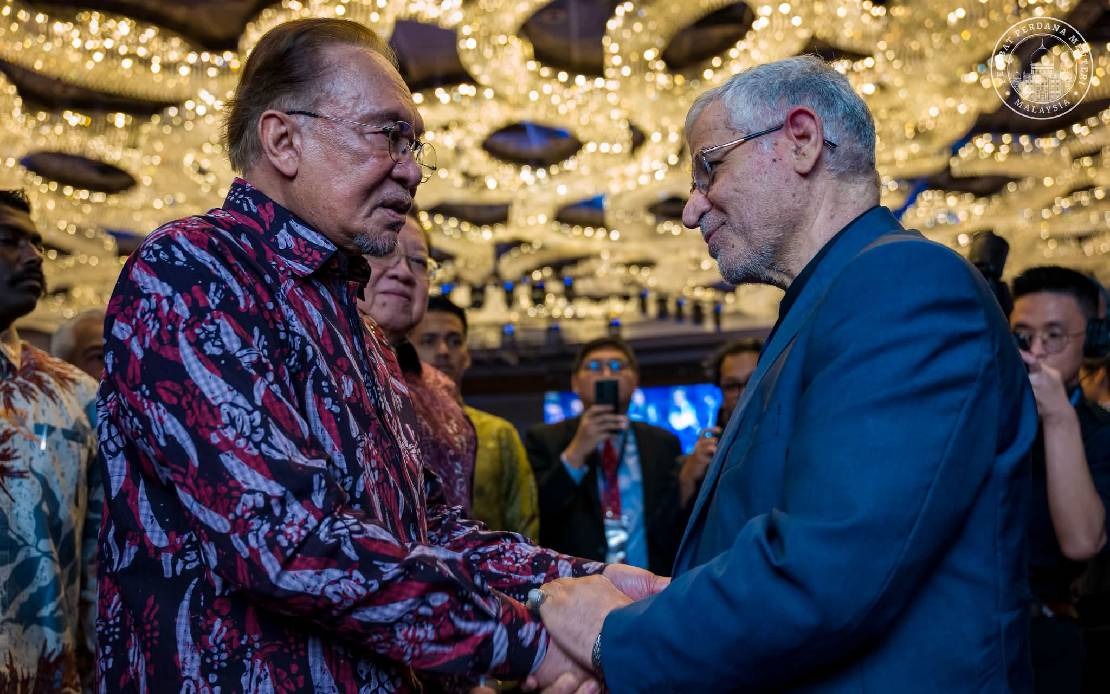
Prime Minister Datuk Seri Anwar Ibrahim has formally expressed his regret to the Iranian Government for his inability to attend the state funeral and farewell ceremonies honouring the late Supreme Leader Ayatollah Ali Khamenei, who passed away in February at the age of 86. The apology was communicated during a bilateral meeting with Iranian Ambassador to Malaysia Valiollah Mohammadi at the 39th Asia-Pacific Roundtable conference held in Kuala Lumpur, with Anwar sharing his condolences through a Facebook statement addressing both the Iranian authorities and the nation's people.
The Prime Minister explained that his absence stemmed from pre-existing and unavoidable official commitments that prevented him from travelling to Iran during the scheduled ceremonies. Rather than leave Malaysia without high-level representation, Anwar designated Agriculture and Food Security Minister Mohamad Sabu to serve as Malaysia's official representative at the funeral proceedings. This arrangement reflects the diplomatic protocol observed between nations when heads of government cannot personally attend significant state events, ensuring that the attending country still demonstrates respect and solidarity through ministerial-level participation.
Ayatollah Ali Khamenei, who led Iran as Supreme Leader for over three decades, died at his residence in Tehran on February 28 following a major military confrontation involving attacks attributed to both the United States and Israel. His death marked the end of an era in Iranian politics and had significant ripple effects across the Middle East and beyond, given his influence over Iran's foreign policy, military strategy, and regional alignment. The timing of his passing and the circumstances surrounding it underscored the volatile geopolitical tensions characterising the region during the first quarter of this year.
The state farewell ceremonies for Khamenei are being conducted over an extended six-day period beginning July 4, reflecting the prominence of the deceased leader and the scale of national mourning in Iran. The ceremonial itinerary includes funeral processions through two of Iran's most significant cities—Tehran, the capital, and Qom, a centre of Shia Islamic learning and authority. The final phase of the proceedings culminates in Khamenei's burial at the Imam Reza Shrine located in Mashhad, Islam's second holiest city, on July 9, underscoring both the religious and political significance accorded to his final resting place.
Malaysia's diplomatic engagement with Iran has historically been multifaceted, encompassing economic, cultural, and security dimensions that reflect both nations' roles as important voices in their respective regions. The decision to send Mohamad Sabu, a senior cabinet member responsible for agriculture and food security, signals Malaysia's commitment to maintaining cordial bilateral relations despite the Prime Minister's absence. Such gestures of respect, particularly during moments of national loss, carry symbolic weight in international relations and contribute to the maintenance of diplomatic goodwill between countries.
The timing of Anwar's explanation—delivered on July 2—gave approximately 48 hours' notice before the ceremonies commenced, allowing Iran sufficient time to acknowledge Malaysia's representation arrangement. By making his apology public through social media, Anwar ensured transparency and demonstrated the importance Malaysia places on the relationship with Iran. This approach also clarified to domestic audiences in Malaysia the administration's foreign policy priorities and its commitment to respectful engagement with major Islamic nations.
For Southeast Asian observers, Malaysia's handling of this situation reflects broader principles governing how regional states engage with larger powers and significant geopolitical events. As a Muslim-majority nation and an active participant in regional forums like ASEAN, Malaysia frequently navigates complex diplomatic scenarios involving Middle Eastern actors. The precedent set by sending a cabinet minister to represent the Prime Minister demonstrates how Malaysia calibrates its presence at international events to balance domestic requirements with international obligations.
The incident also illustrates the practical challenges facing contemporary statesmen, particularly those leading developing nations with extensive regional and international commitments. Prime Ministers of countries like Malaysia must often choose between competing demands for their presence at various events, each carrying diplomatic implications. Anwar's transparent communication about these constraints reflects a pragmatic approach to statecraft while maintaining the dignity and respect owed to significant bilateral relationships.
Looking forward, the representation of Malaysia at Khamenei's ceremonies by Mohamad Sabu provides an opportunity to reinforce bilateral ties between Kuala Lumpur and Tehran. Such attendance allows for informal diplomatic conversations and relationship-building among government delegations present at major state events. The continuity of Malaysia's engagement with Iran, particularly at ministerial levels, suggests the government views the relationship as sufficiently important to warrant sustained attention despite shifts in global dynamics or the emergence of new geopolitical challenges in the Middle East.

