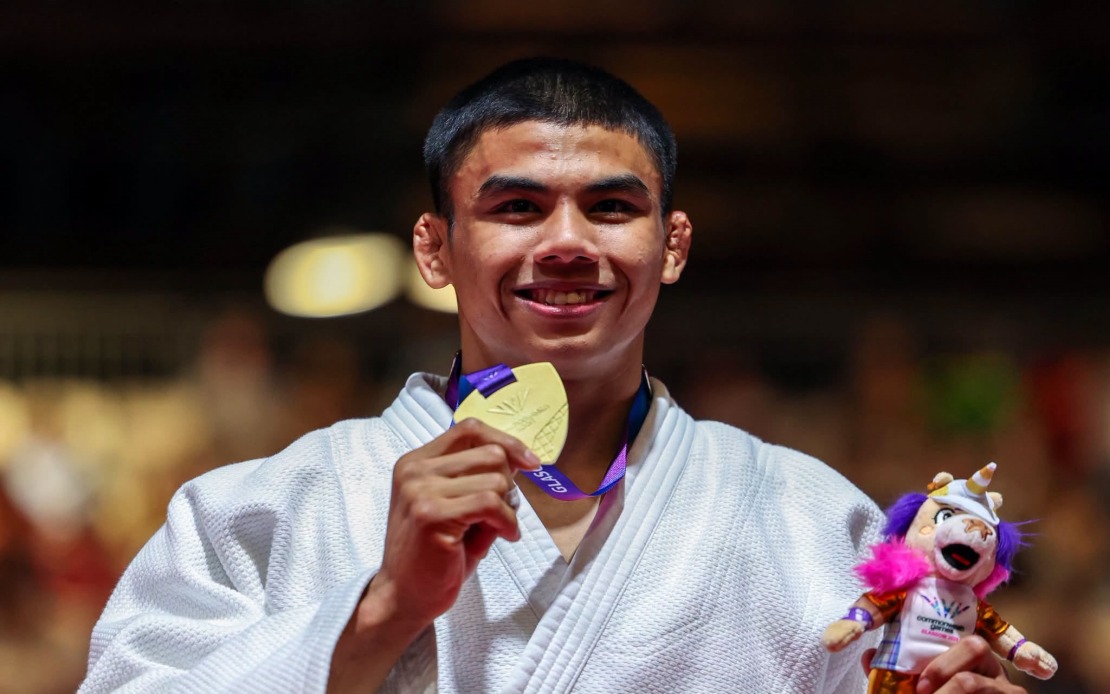
Prime Minister Datuk Seri Anwar Ibrahim has lauded the historic achievement of national judoka Amir Daniel Abdul Majeed, who has claimed Malaysia's maiden gold medal in judo at the Commonwealth Games. The breakthrough comes as the nation continues to build momentum in combat sports on the international stage, marking a significant milestone for Malaysian athletics.
Amir Daniel's victory came in the men's under-81 kilogramme category at Glasgow 2026, where he overcame world-ranked opponent Timothy Meuwsen of South Africa in a closely contested final. Despite being ranked world No. 117 at the time of competition, the Malaysian judoka demonstrated the skill and composure required to defeat an opponent positioned 76 places higher in global rankings, underscoring the unpredictability and drama inherent in martial arts competition.
The Prime Minister took to social media to express his appreciation, emphasizing the qualities that underpinned the achievement. His statement reflected broader national values surrounding sports excellence, noting that the victory exemplified the rewards of sustained commitment, mental discipline, and competitive determination. Anwar's public recognition serves to elevate the profile of judo within Malaysia's sporting consciousness, a sport that has historically operated in the shadows of more prominent disciplines such as badminton and squash.
Amir Daniel's gold medal constitutes Malaysia's eighth medal of the Glasgow 2026 Commonwealth Games, indicating a strong overall performance by the national contingent. This medal haul reflects the diversity of Malaysian sporting talent, though the specific breakthrough in judo suggests that strategic investment and training programmes in the sport may be yielding tangible results on the world stage.
The significance of this achievement extends beyond mere medal counting. For a relatively small nation with limited resources compared to major Commonwealth powers such as Australia, Canada, and India, every gold medal represents a concentrated effort from athletes, coaches, and support systems working within tight budgetary constraints. Amir Daniel's victory therefore illuminates the potential that exists within Malaysia's judo community when talent is properly identified and nurtured.
Historically, Malaysia has struggled to assert dominance in Olympic combat sports, with success traditionally concentrated in badminton and sepak takraw. The emergence of a competitive judoka at Commonwealth level opens questions about how effectively the nation's sports infrastructure can support martial arts development. The pathway that enabled Amir Daniel to reach world competition standards may offer insights for nurturing additional talent in other underrepresented sports.
The timing of this achievement carries political resonance as well. The Prime Minister's rapid public acknowledgment of sporting success has become characteristic of contemporary Malaysian governance, reflecting an understanding that grassroots sports achievement generates positive national sentiment and provides an alternative narrative to political controversy. By positioning himself alongside athletic accomplishment, Anwar reinforces the government's commitment to national pride and excellence.
For regional sports observers, Amir Daniel's performance raises the profile of Southeast Asian judo competitiveness. While nations like Japan and South Korea dominate global judo rankings, emerging strengths in regional competitors demonstrate the sport's growing accessibility and professionalization across Asia. Malaysia's breakthrough adds another dimension to the region's sporting diversity and competitive landscape.
The Commonwealth Games context also matters significantly. As a biennial competition bringing together nations from across the former British Empire, the Games often serve as a valuable training ground and proving ground for athletes aiming toward Olympic qualification. A strong showing in Glasgow 2026 could position Malaysian judo for the Paris Olympics cycle and beyond, provided that national sports bodies capitalize on the momentum generated by this gold medal.
Looking forward, the challenge for Malaysian sports administration involves sustaining interest and investment in judo beyond the immediate aftermath of Amir Daniel's victory. International sporting success requires consistent funding, access to world-class coaching expertise, and competitive opportunities that allow athletes to test themselves against elite opposition. Without these structural elements, isolated breakthroughs can prove ephemeral.
The judoka's success also underscores the importance of individual determination in overcoming circumstances. Training and competing as a judoka in Malaysia—where cultural focus traditionally emphasizes sports like badminton—requires personal commitment to a niche discipline. Amir Daniel's ability to persevere and excel within such constraints speaks to character qualities that extend beyond technical sporting prowess.
For Malaysian sports fans, this achievement provides a tangible reason for celebration and suggests that the nation's athletic talent base remains deeper than sometimes perceived. As the Commonwealth Games concluded in Glasgow, Amir Daniel's gold medal joins a growing collection of moments that define Malaysian sporting identity and aspiration for future generations.

