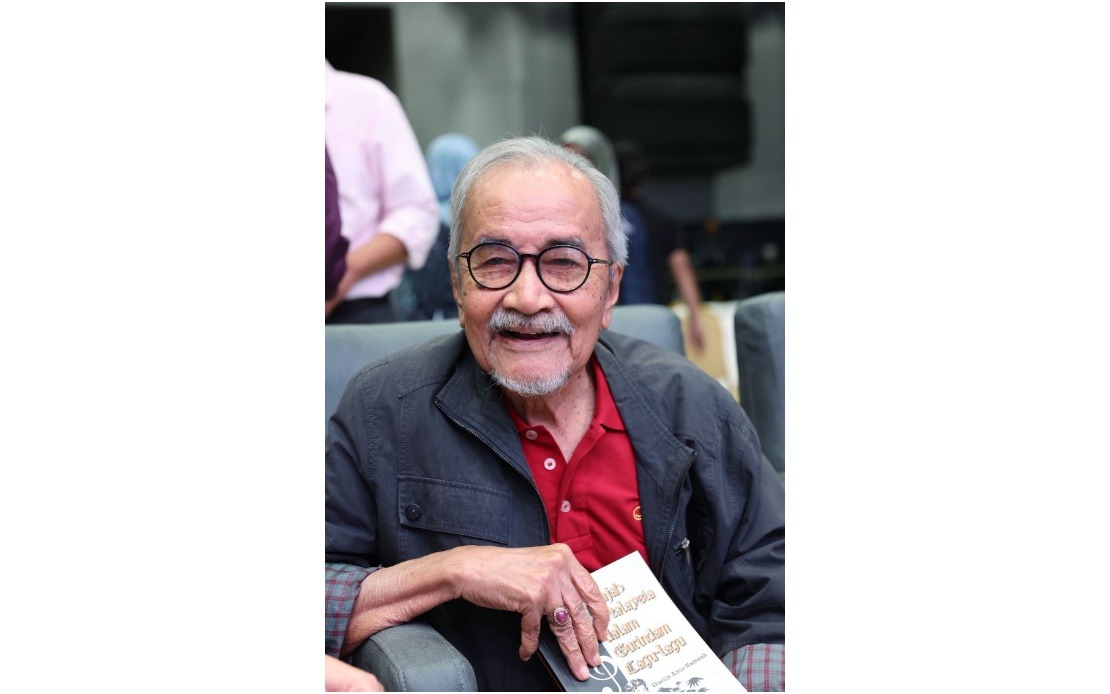
Prime Minister Datuk Seri Anwar Ibrahim has marked the 87th birthday of Datuk Rahim Razali, one of Malaysia's most distinguished figures in cinema and the performing arts, with a heartfelt public tribute that underscores the government's commitment to recognising cultural contributions to national development.
Anwar's birthday acknowledgement, shared via social media on July 5, positioned Rahim not merely as an entertainer but as a custodian of Malaysian identity and human values through his artistic endeavours. The Prime Minister's characterisation of Rahim as a cornerstone of the local creative landscape reflects a broader governmental appreciation for the role cultural figures play in shaping national narratives and preserving heritage in an increasingly globalised world.
Rahim Razali's career trajectory embodies the multifaceted nature of Malaysia's creative economy. Born on July 3, 1939, in Batu Gajah, Perak, he has navigated multiple disciplines across more than six decades—acting, directing, screenwriting, sports journalism, and broadcasting—demonstrating the kind of versatility that has become rarer in contemporary specialised creative industries. His longevity in the field, spanning from the formative decades of Malaysian cinema through to the digital age, makes him a living bridge between different eras of the nation's cultural production.
Among his most celebrated works stands Matinya Seorang Patriot, the film that Anwar specifically referenced, which exemplifies Rahim's thematic preoccupations with patriotism and moral conviction. This project, along with numerous others in his directorial and acting portfolio, earned him recognition at the Malaysian Film Festival (FFM), where he received Best Director and Best Male Actor accolades. These awards validate his dual mastery of both sides of the camera, a combination that has allowed him to shape narratives while embodying them for audiences.
The Prime Minister's blessing for Rahim's continued health and strength carries particular resonance given Malaysia's aging population and the nation's cultural sector challenges. As younger generations increasingly gravitate toward digital media and international entertainment platforms, established figures like Rahim represent anchors to locally-produced content that carries distinctly Malaysian values and perspectives. Anwar's public recognition serves as a reminder that sustained investment in traditional and contemporary arts remains a governmental priority alongside economic and technological development.
Rahim's influence extends beyond his individual works to encompass the ecosystem he has inhabited and shaped. His longevity has made him a mentor figure, and his presence in the industry across multiple decades has witnessed and contributed to the evolution of Malaysian filmmaking from its early post-independence period through to contemporary productions. Many younger creatives acknowledge the pathways that his generation established, even as new technologies and distribution models transform how stories reach audiences.
The Malaysian Film Festival recognitions that punctuate his career underscore the institutional frameworks through which the nation has validated and celebrated creative excellence. These accolades, accumulated over decades, position Rahim among a select cohort of artists whose work has consistently met or exceeded the standards set by their peers and by evolving audience expectations. His continued relevance across these decades, rather than fading into nostalgia, demonstrates that quality storytelling grounded in universal human themes retains its power regardless of technological change.
From a broader policy perspective, Anwar's tribute reflects how contemporary Malaysian governance seeks to integrate cultural narratives with nation-building objectives. By explicitly mentioning how Rahim's works highlight human values, culture, and national identity, the Prime Minister articulates a vision in which the arts serve instrumentally to reinforce social cohesion and shared understanding. This framing, while perhaps instrumental, also validates the arts as essential rather than peripheral to national interests.
Rahim's career also illuminates the interconnections between different creative sectors in Malaysia. His sports journalism and broadcasting contributions placed him at the intersection of entertainment and news media, roles that required understanding both popular culture dynamics and information dissemination. This breadth suggests that successful creatives in Malaysia have often needed to operate across multiple platforms and genres to sustain long-term viability and influence.
The generational significance of figures like Rahim becomes increasingly apparent as Malaysia confronts questions about cultural preservation and evolution. Digital technologies have democratised content creation, allowing individuals to reach global audiences without institutional gatekeeping. Yet this same accessibility can fragment attention and dilute the shared cultural references that once united Malaysian audiences. Established artists who have maintained relevance across technological transitions offer valuable models for how to sustain artistic integrity while adapting to new distribution and consumption patterns.
Looking forward, Rahim Razali's continued visibility and the public recognition he receives from national leadership may inspire younger creatives to envision long-term careers in the arts rather than treating them as transitional endeavours. The Prime Minister's investment in publicly acknowledging artistic contributions signals that Malaysia values cultural production as a legitimate and respected vocation, a message that carries implications for educational policy, funding allocation, and the social status of creative professions.
As Malaysia navigates its development trajectory in an increasingly competitive Southeast Asian creative economy, the presence of senior figures like Rahim Razali—grounded in local traditions yet cosmopolitan in scope—provides both institutional memory and continuing artistic output. His 87th birthday becomes occasion not merely for personal celebration but for reflecting on how Malaysia sustains, honours, and learns from those who have dedicated lifetimes to enriching the nation's cultural fabric.

