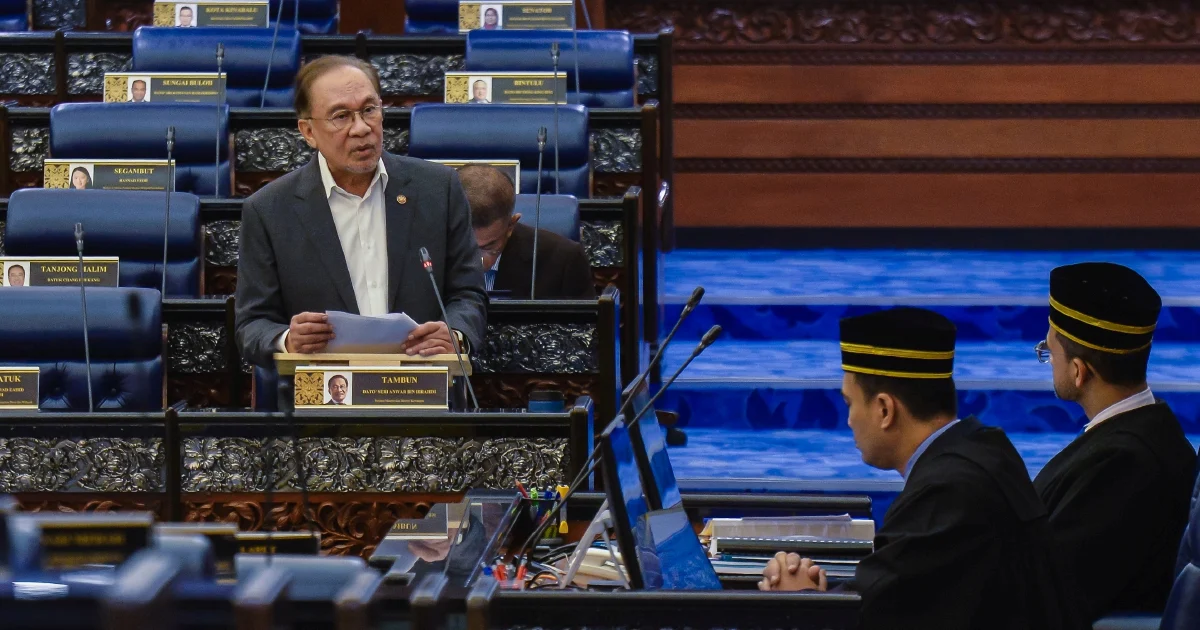
Prime Minister Datuk Seri Anwar Ibrahim has reiterated his position that he did not issue instructions to cancel the Johor Felda Settlers Day observance scheduled for Kluang, reaffirming his statement to lawmakers that the constraints applied were merely the standard election period guidelines prohibiting the use of government resources for campaign activities.
The clarification emerged during parliamentary proceedings as the Prime Minister addressed persistent questions regarding the event's status. His assertion focused on distinguishing between an explicit cancellation order and the routine administrative protocols that govern the conduct of government machinery during electoral campaigns. This distinction carries particular weight in Malaysia's political context, where the proper deployment of state resources during election periods remains a sensitive constitutional matter that has attracted scrutiny from multiple stakeholder groups.
Felda settlements, which represent crucial agricultural communities across Malaysia with deep roots in the nation's economic history, hold considerable political and social significance. The Federal Land Development Authority scheme has shaped the lives of hundreds of thousands of settler families, making celebrations and commemorations tied to their communities matters of public interest beyond routine government events. Johor, as the nation's second-largest state and a politically influential region, commands particular attention whenever administrative decisions affect settler welfare or community observances.
The controversy surrounding the Kluang event illustrates the delicate balance Malaysian officials must maintain between implementing election regulations and respecting community traditions. During campaign periods, the Elections Commission enforces strict guidelines ensuring government machinery—encompassing both personnel and facilities—remains neutral and inaccessible to political parties seeking electoral advantage. These restrictions, while democratically essential, sometimes create practical complications for scheduled celebrations and official commemorations that fall within the election window.
The Prime Minister's explanation suggests that uncertainty regarding the event may have stemmed from overzealous interpretation of election guidelines by lower-level administrators rather than from any central directive. Government ministries and state authorities occasionally adopt conservative approaches to election regulations, sometimes restricting activities more broadly than technically required, creating confusion among communities expecting scheduled observances to proceed as planned.
This interpretation resonates with Felda settler communities who have expressed concern about whether their traditional celebrations would be accommodated within the electoral framework. Settlers typically view these commemorative events as important occasions for recognising their historical contributions to Malaysia's development and for reinforcing community bonds. The prospect of cancellation without explanation naturally generated anxiety and prompted questions about whether political considerations had overridden cultural and community priorities.
Anwar's parliamentary clarification serves multiple functions within Malaysia's political ecosystem. First, it provides authoritative reassurance to settler communities and their representatives that no discriminatory action was contemplated. Second, it reinforces the principle that routine administrative constraints should not be conflated with political targeting. Third, it establishes that government policy prioritises the continuation of legitimate community activities while respecting electoral integrity, a balance that strengthens public confidence in both governance and democratic processes.
The situation also reflects broader patterns in Malaysian electoral administration, where the interpretation and implementation of campaign guidelines sometimes generates confusion among government agencies and affected communities. Clearer communication protocols between the Elections Commission, relevant ministries, and local authorities could minimise such uncertainties in future electoral cycles, ensuring that legitimate community events proceed smoothly while maintaining the integrity of election regulations.
For Felda settlers specifically, the clarification carries reassuring implications. These communities have historically experienced close relationships with government support systems, and any perceived withdrawal of recognition—even inadvertent—could create lasting friction. By explicitly confirming that settler commemorations are not targets of political suppression, the Prime Minister reinforces the government's commitment to respecting settler interests and maintaining the institutional frameworks that have supported these communities since the scheme's inception decades ago.
Moving forward, the incident underscores the importance of distinguishing between necessary election regulations and actual cancellation orders. Government announcements during campaign periods should communicate transparently about which activities face genuine restrictions and which proceed unchanged, preventing the confusion that emerged around the Kluang celebration. This clarity benefits all stakeholder groups: communities can plan accordingly, officials can implement regulations consistently, and the democratic process itself gains legitimacy through transparent communication.
The matter ultimately reflects Malaysia's ongoing effort to balance multiple legitimate interests—electoral integrity, community traditions, administrative efficiency, and public reassurance—within a complex constitutional framework. The Prime Minister's parliamentary intervention demonstrates this balancing act in practice, clarifying that election regulations and respect for settler communities need not be positioned as conflicting values but rather as complementary elements of responsible governance.

