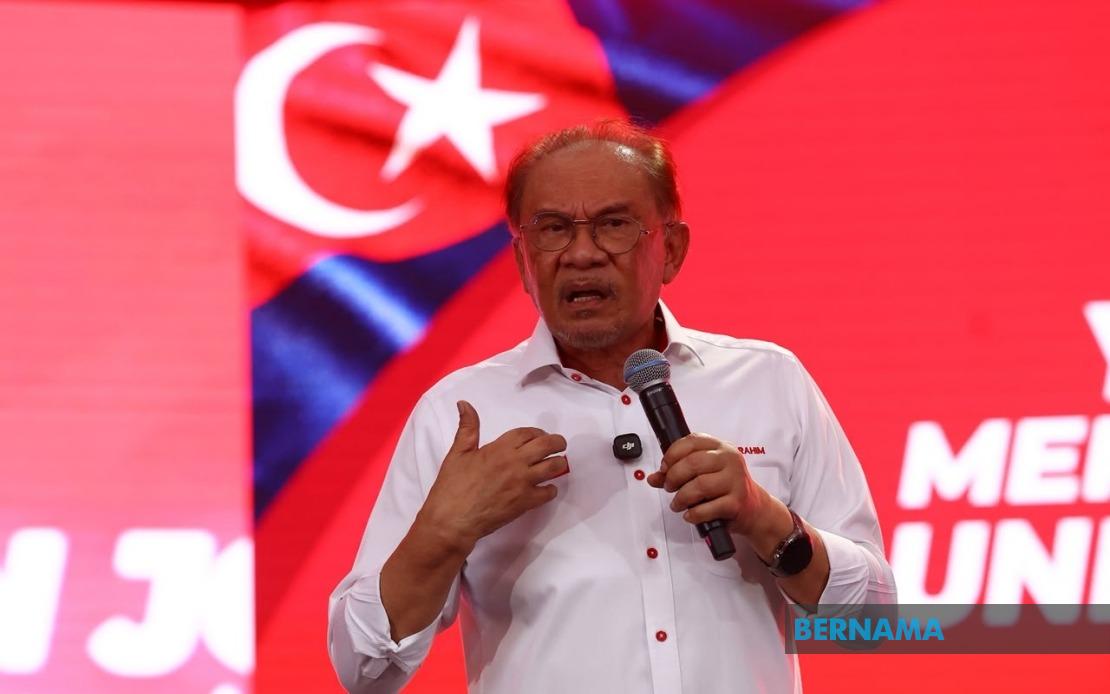
Prime Minister Datuk Seri Anwar Ibrahim moved swiftly to extinguish allegations circulating on social media that he had acquired a luxury BMW vehicle for himself, dismissing the claims as deliberate falsehoods spread during campaigning for Johor's state election. Speaking at the 'Yok! Meriahkan Johor! Undi Harapan' programme in Senggarang on July 9, the Prime Minister directly addressed the controversy that has gained traction among online users questioning the government's expenditure on official vehicles.
The allegations, which juxtaposed claims of the Prime Minister's commitment to assisting lower-income Malaysians with apparent personal indulgence, struck at a sensitive nerve in public discourse surrounding government spending and ministerial conduct. Anwar categorically rejected the narrative, emphasising that the BMW in question was not newly purchased and suggesting that those spreading such claims were deliberately manufacturing controversy. He questioned why individuals would propagate unverified information, framing the matter as part of broader political opposition tactics rather than substantive policy debate.
Clarifying his own vehicle arrangements, Anwar explained that his current Mercedes-Benz automobile represents a gift granted by His Majesty Sultan Ibrahim, King of Malaysia, rather than a personal acquisition. Importantly, he registered the vehicle under the Prime Minister's Department rather than claiming individual ownership, a distinction he highlighted to underscore his adherence to proper protocols governing official assets. This explanation carries significance in a regional context where transparency regarding government property usage has become an increasingly scrutinised issue.
The Prime Minister's contrasting approach with unnamed counterparts suggested a deliberate effort to distance himself from perceptions of personal enrichment at public expense. His statement that he was "not like others who siphon off and steal the people's money" positioned the debate within a broader narrative of governmental accountability and personal integrity that has animated Malaysian politics since the 1MDB scandal fundamentally altered public expectations of political leadership.
The Prime Minister's Department and the Ceremonial and International Conference Secretariat Division released an official clarification prior to his public remarks, establishing that the BMW in question constituted an existing government asset rather than a newly procured vehicle. The statement confirmed that BIUPA maintained management responsibility for the automobile, which had been allocated for official logistics and diplomatic functions. This institutional confirmation preceded the Prime Minister's personal intervention, suggesting coordination between different government entities to control the narrative around vehicle ownership.
The timing of these clarifications during active campaigning for the 16th Johor state election amplified their political significance. Allegations concerning government vehicle usage typically gain particular traction during electoral periods when opposition parties mobilise voter sentiment around fiscal responsibility and leadership integrity. By addressing the matter directly at a campaign event alongside senior coalition figures, Anwar ensured his denial received immediate distribution through party channels and media coverage.
Pakatan Harapan communications director Datuk Fahmi Fadzil, serving also as Communications Minister, was positioned alongside the Prime Minister at the event, lending institutional weight to the clarification. The presence of coalition candidates contesting in the Senggarang, Semerah and Penggaram state seats—namely Onn Abu Bakar, Mohd Khuzzan Abu Bakar and Felicia Poh Rui Ling—reinforced the campaign messaging and signalled unified coalition messaging entering the election weekend.
The controversy reflects enduring anxieties within Malaysian civil society regarding government expenditure and the boundary between official and personal property. While vehicles designated for prime ministerial use necessarily involve substantial financial outlay, public sensitivity to such matters intensifies when leadership communicates concern for economically disadvantaged communities. The apparent contradiction generates political vulnerability that opposition actors exploit during electoral contests, particularly in state elections where grassroots sentiment carries decisive influence.
Johor represents a strategically crucial battleground where Pakatan Harapan contested all 56 state seats with polling scheduled for the Saturday following the Prime Minister's Senggarang appearance. Victory in the peninsular state carries implications beyond local governance, influencing broader perceptions of the coalition's electoral momentum heading toward the next federal election. Vehicle ownership claims, seemingly marginal policy matters, acquire amplified importance within such contexts, where voters evaluate leadership character alongside party platforms.
The BMW allegation exemplifies how digital platforms enable rapid dissemination of unverified claims affecting political reputations, requiring government communicators to respond swiftly and comprehensively. Anwar's personal intervention, rather than leaving the matter to departmental statements, reflected understanding that direct denial from the Prime Minister carries greater persuasive authority than bureaucratic clarifications. This approach acknowledges modern political communication dynamics where social media narratives frequently outpace official channels in capturing public attention.
For Malaysian observers evaluating government spending and ministerial conduct, the episode underscores persistent tensions between resource allocation for official functions and public expectations of ascetic political leadership. While prime ministers legitimately require vehicles suitable for diplomatic and security purposes, public discourse increasingly scrutinises whether such arrangements reflect necessity or indulgence. The controversy demonstrates how technical distinctions between personal and official ownership, however legally significant, may fail to satisfy public perception of appropriate government expenditure.

