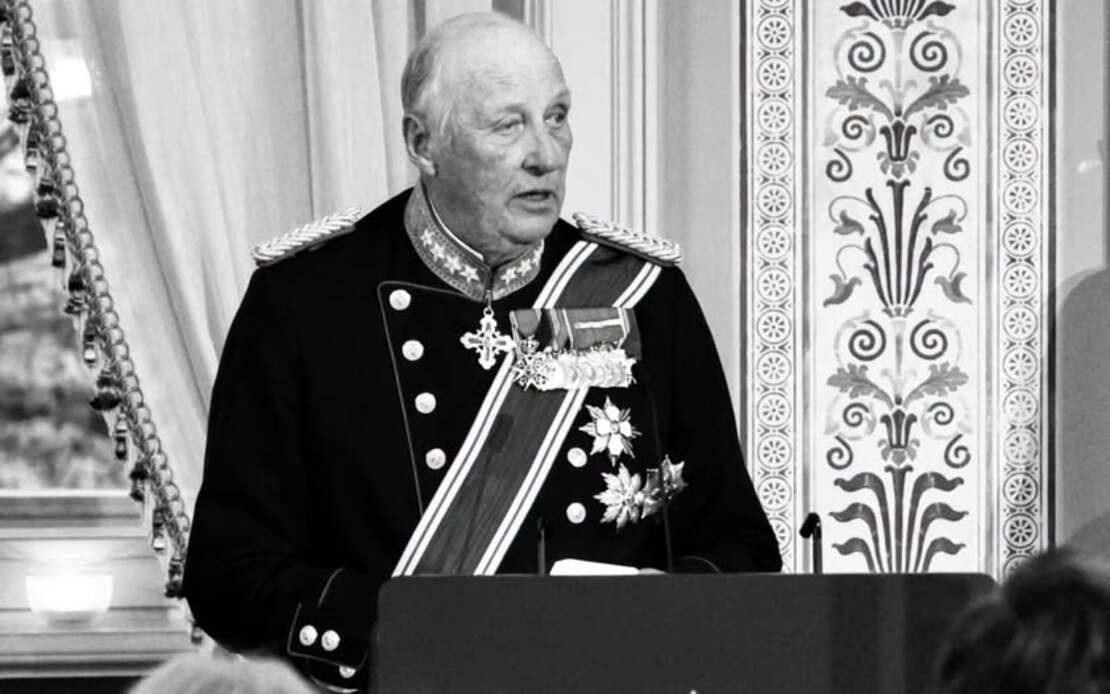
Prime Minister Datuk Seri Anwar Ibrahim has extended official condolences on behalf of the Malaysian government following the death of Norway's King Harald V, who passed away on Friday at the age of 89. The monarch, who had been hospitalised since August 17 at the National Hospital in Oslo, died after undergoing treatment for hemolytic anemia involving cortisone therapy. His passing marks the end of a reign that spanned several decades and fundamentally shaped modern Norwegian identity and society.
In his statement released through Facebook, Anwar paid tribute to King Harald's legacy as a unifying figure in Norwegian society, particularly highlighting the late monarch's commitment to inclusivity and recognition of Norway's multicultural fabric. The Prime Minister noted that King Harald's understanding of Norwegian identity extended beyond ethnic and historical boundaries, embracing the contributions of citizens whose families originated from diverse nations across the globe. This characteristic reflected the monarch's progressive approach to national identity during a period when many European nations grappled with questions of immigration, integration, and social cohesion.
Anwar specifically referenced one of King Harald's most memorable statements, in which the Norwegian king acknowledged that people whose families came from Afghanistan, Pakistan, Poland, and numerous other countries were equally Norwegian. The Prime Minister interpreted these words as a profound recognition that national strength derives not from homogeneity but from the respect and dignity afforded to all members of society. This message carries particular resonance for Malaysia, a nation with its own complex multicultural composition and ongoing national integration challenges, making the late king's philosophy relevant to Southeast Asian political discourse.
The Malaysian Prime Minister further emphasised King Harald's understanding of constitutional duty and the sanctity of solemn oaths. Anwar's reference to this aspect of the king's character underscores a thematic interest in the relationship between formal commitments, moral responsibility, and the exercise of leadership. For a Malaysian audience, this dimension of the tribute resonates with contemporary debates about democratic accountability and the obligations that public officials bear toward their nations and peoples. The contrast between ceremonial authority and genuine commitment to principle appears to have struck Anwar as particularly noteworthy in the Norwegian context.
King Harald V's reign began in 1991 following the death of his father, King Olav V, and occurred against the backdrop of significant geopolitical changes in Europe. His accession took place during a transformative period that included Norway's relationship with the European Union, the consolidation of Nordic cooperation, and the country's emergence as a prosperous oil-producing nation. Throughout his three decades on the throne, Harald maintained the Norwegian monarchy's reputation for relative informality and accessibility compared to other European royal houses, characteristics that endeared him to Norwegians across social classes.
The late king's commitment to inclusivity extended beyond symbolic gestures. During his reign, King Harald witnessed and supported Norway's transformation into one of Europe's most demographically diverse societies, particularly following increased immigration from the Middle East, South Asia, and Africa in recent decades. Rather than retreating from this evolution, the monarchy under Harald embraced multicultural Norway, participating in interfaith initiatives and publicly affirming the status of immigrant communities. This progressive stance distinguished the Norwegian crown in European contexts where some monarchies adopted more restrictive positions on immigration and national identity.
Malaysia's formal expression of grief follows established diplomatic protocol among Commonwealth and non-Commonwealth nations that maintain bilateral relations. Norway and Malaysia have maintained cordial relations spanning trade, environmental cooperation, and cultural exchange. The Norwegian government's progressive stance on human rights and environmental protection has occasionally intersected with Malaysian policy initiatives, particularly regarding maritime conservation in Southeast Asia and tropical forest preservation. King Harald's personal interest in environmental stewardship, particularly regarding Norway's coastal and Arctic ecosystems, aligned with broader Nordic commitment to sustainability that increasingly influences regional partnerships.
The timing of Anwar's condolence statement reflects Malaysia's careful attention to diplomatic courtesies within the broader international community. For a Prime Minister navigating complex domestic and regional political landscapes, such gestures of respect toward foreign leaders carry symbolic weight beyond ceremonial obligation. Anwar's specific emphasis on King Harald's inclusive vision and commitment to principle suggests an attempt to reinforce these values within Malaysian political discourse, particularly relevant given ongoing discussions about national unity, democratic governance, and the treatment of minority communities in Malaysia.
King Harald's passing concludes an era in European monarchy characterised by his particular interpretation of constitutional kingship. His successor, Crown Prince Haakon, assumes the throne amid contemporary challenges including climate change, digital transformation, and evolving European security architecture following Russia's invasion of Ukraine. The transition in Norwegian leadership may influence bilateral relations between Kuala Lumpur and Oslo, though continuity in diplomatic engagement typically persists across royal successions. For Malaysian observers, the succession represents an opportunity to reflect on how monarchies navigate modernisation, social change, and the balance between tradition and progressive governance.

