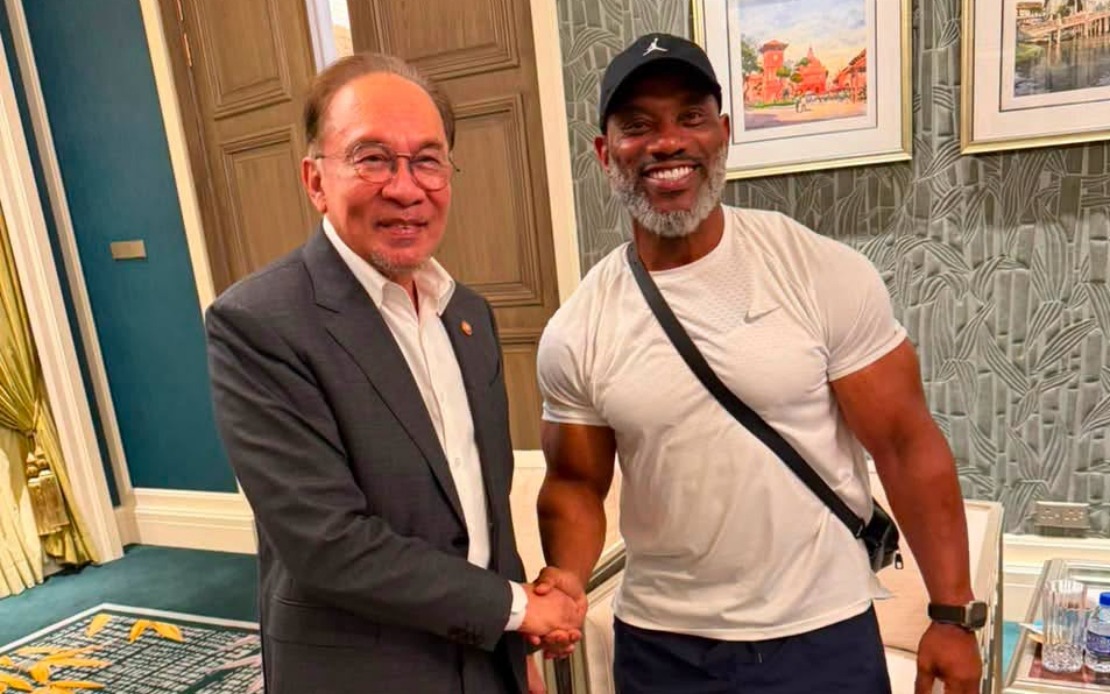
Prime Minister Datuk Seri Anwar Ibrahim expressed his admiration after crossing paths with bodybuilding icon Dexter Jackson, marking a moment he deemed noteworthy enough to document through social media. The encounter, which took place in Kuala Lumpur on July 1, saw Malaysia's premier taking time to engage with one of the sport's most decorated athletes, highlighting the diverse range of individuals and celebrities who interact with the country's leadership.
Anwar shared details of the meeting on his Facebook page, accompanying his remarks with a photograph capturing the two men shaking hands. His post conveyed genuine enthusiasm about meeting Jackson, whose credentials in competitive bodybuilding span multiple decades and numerous prestigious titles. The prime minister's tone, while formal, carried an element of personal warmth and humour, suggesting the encounter left a favourable impression.
Dexter Jackson's standing in the bodybuilding world remains unparalleled in certain respects. The 56-year-old athlete achieved the pinnacle of success in 2008 when he claimed the title of Mr Olympia, widely regarded as the sport's most coveted prize. Three years later, he added another major honour to his collection by winning the 2012 Masters Mr Olympia championship, a category specifically designed for elite competitors in the older age bracket. These accomplishments represent the culmination of decades spent perfecting physical conditioning and competing at the highest levels of international bodybuilding.
Beyond these headline achievements, Jackson holds a record that underscores his longevity and consistent excellence within the sport: he has secured the Arnold Classic title nine times, more than any other bodybuilder in the history of that competition. The Arnold Classic, named after former governor and action film star Arnold Schwarzenegger, ranks as one of bodybuilding's most prestigious contests alongside Mr Olympia. Jackson's nine victories at this event demonstrate not merely technical skill but remarkable durability and adaptability across different judging criteria and competitive eras.
The meeting between Anwar and Jackson carries subtle cultural significance for Malaysia. It illustrates the nation's openness to engaging with international celebrities and sports personalities across varied disciplines. While Malaysia has long fostered achievements in traditional sports such as badminton, football, and motorsports, bodybuilding remains a niche pursuit, yet the prime minister's willingness to publicise the encounter suggests recognition of the sport's global following and the dedication required to excel within it.
Anwar's lighthearted comment about needing to return to the gym himself reflects a common sentiment many leaders express when encountering athletes whose physical conditioning exemplifies peak human performance. Such remarks humanise political figures and suggest they do not isolate themselves from broader cultural touchpoints. The jest also acknowledges Jackson's formidable physique without making the interaction feel overly formal or distant.
The documentation of this meeting through social media demonstrates how contemporary political communication operates in Malaysia. Rather than restricting such interactions to official government channels or press releases, Anwar utilised Facebook to share a personal moment directly with his followers. This approach aligns with modern expectations that public figures maintain visible, accessible online presence and engage in the type of spontaneous content sharing that characterises social media platforms. The post generated engagement without requiring elaborate media orchestration.
Dexter Jackson's career trajectory illustrates how bodybuilders from diverse backgrounds can achieve world recognition despite the sport's relatively limited mainstream visibility compared to football, tennis, or athletics. Jackson's success across multiple competitions and age categories demonstrates the technical sophistication underlying bodybuilding as a competitive discipline. Malaysian audiences, particularly those interested in fitness and personal development, may find his achievements instructive regarding the possibilities available to dedicated athletes pursuing unconventional sporting paths.
The international dimension of this encounter also merits consideration. Jackson's presence in Malaysia likely related to promotional activities, guest appearances at fitness expos, or similar events that leverage his reputation and drawing power within the health and bodybuilding communities. Such visits typically generate interest among local gym enthusiasts and fitness professionals who value direct exposure to athletes of Jackson's calibre, creating economic activity within the fitness industry.
For Anwar personally, the encounter represents one among many interactions with global figures across diverse fields. Prime ministers routinely meet athletes, entertainers, business leaders, and intellectuals as part of diplomatic, cultural, and social engagement. However, the decision to publicise this particular meeting reveals Anwar's approach to leadership communication—one that incorporates moments of cultural interest beyond strictly political or economic matters. This humanising approach may resonate with constituents who appreciate seeing their leaders engage authentically with various communities and interest groups.

