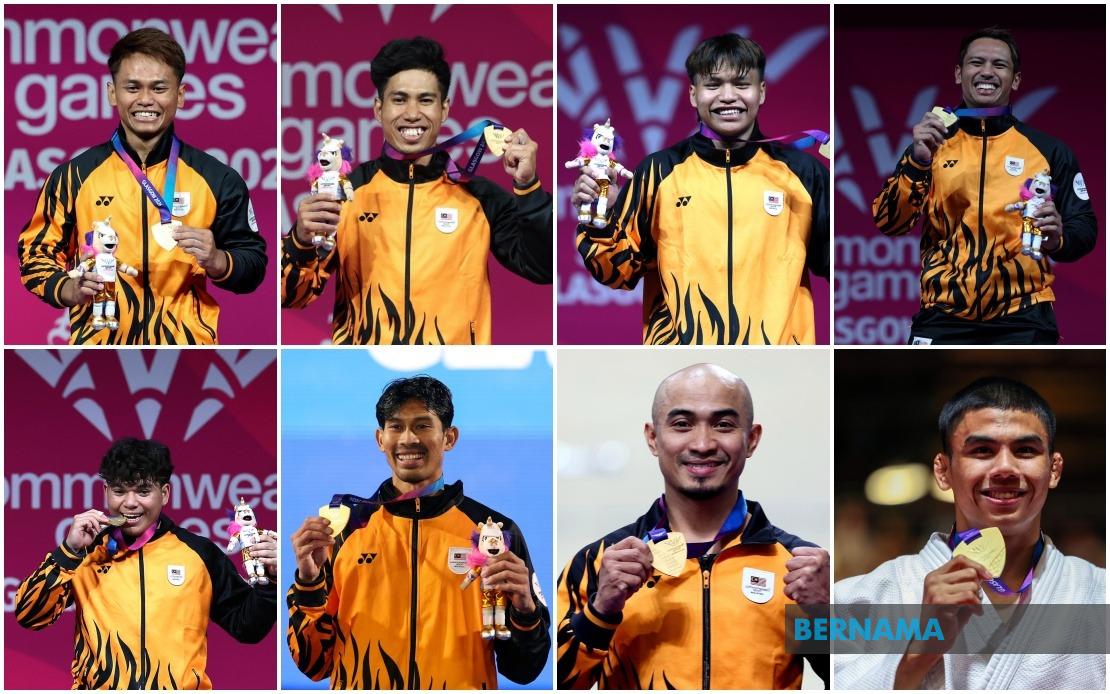
Prime Minister Datuk Seri Anwar Ibrahim has publicly recognised the Malaysian contingent's efforts at the 2026 Glasgow Commonwealth Games, extending his congratulations through a Facebook statement released on August 3. The Prime Minister highlighted the athletes' determination and remarkable competitive display throughout the fortnight-long international sporting event held in Scotland, acknowledging their contributions to the nation's sporting legacy.
Beyond the athletes themselves, Anwar's message encompassed the broader support network that underpins Malaysia's Commonwealth Games campaign. He specifically thanked the coaching staff, competition officials, and auxiliary personnel whose behind-the-scenes work proved instrumental in preparing and supporting the team. This recognition underscores the reality that international sporting success depends not solely on athletes' performance but on coordinated effort across multiple disciplines and roles.
The Prime Minister's acknowledgement extended further to the Malaysian public, whose prayers and moral support he identified as contributing factors to the contingent's mental fortitude and resilience. In the Malaysian cultural context, where spirituality and communal backing hold significant weight, this framing positioned the Games campaign as a national endeavour rather than merely a sporting pursuit. The invocation of "Alhamdulillah"—an expression of gratitude in Islamic tradition—further grounded his message within the values and worldview of the majority Malaysian population.
Malaysia's final tally of 16 medals across all categories, culminating in a 10th-place finish at the 2026 Glasgow Commonwealth Games, represents a meaningful benchmark for the nation's athletic development. While the specific breakdown of gold, silver, and bronze medals was not elaborated in the Prime Minister's statement, achieving double-digit medal counts at Commonwealth Games remains a significant achievement for nations of Malaysia's size and sporting infrastructure. The ranking within the top 10 positions Malaysia among the Commonwealth's most competitive sporting nations, a standing that carries both prestige and implications for funding and policy discussions in the years ahead.
The Glasgow Commonwealth Games, as the 2026 iteration of this quadrennial competition, assumes particular importance within Southeast Asia's sporting calendar. Commonwealth Games participation provides Malaysian athletes exposure to world-class competition, international training partnerships, and media platforms that domestic competitions cannot replicate. For many Malaysian athletes, performances at such events serve as launching pads for subsequent Olympic qualification campaigns and world championship selections, making the Games strategically valuable beyond the immediate medal count.
Prime Minister Anwar's public commendation reflects the Malaysian government's investment in sports development and its commitment to supporting athletic talent. Such statements, particularly from the nation's highest executive office, carry symbolic weight in elevating the status of sportspeople within Malaysian society and signalling governmental priorities regarding health, national pride, and youth development. In a nation where cricket, badminton, and aquatic sports have traditionally dominated public consciousness, visible leadership endorsement of the broader sporting ecosystem matters.
The timing of Anwar's message—released immediately following the conclusion of the Games—demonstrates the administration's attentiveness to sporting affairs and its desire to frame the results positively for domestic audiences. Rather than allowing media narratives to develop without leadership input, the Prime Minister's proactive engagement shapes initial interpretations of the campaign's success. This approach reflects modern political communication practices wherein government officials maintain active social media presence and directly address citizens without intermediary filtering.
Looking forward, Malaysia's Glasgow performance establishes a baseline for assessing progress toward future Commonwealth Games in subsequent years. The 16-medal haul and 10th-place ranking provide measurable targets against which future competitions can be evaluated, whether favourably or critically. Such metrics inform policy decisions regarding athlete subsidies, facility development, coaching programme expansion, and youth talent identification initiatives within Malaysia's sports administration.
The acknowledgement of Malaysia's sporting achievements also carries implications for regional standing within Southeast Asia. Commonwealth Games results contribute to broader perceptions of national capability and development, influencing diplomatic soft power and regional sporting prestige. Malaysia's competitive performance demonstrates continued capacity to compete at elite international levels, relevant to the nation's positioning within ASEAN and broader Indo-Pacific sporting hierarchies.
Athletic achievements likewise generate tangible benefits for sports development pathways in Malaysia. Medal-winning performances attract commercial sponsorship, inspire youth participation in respective sporting disciplines, and facilitate knowledge transfer as successful athletes mentor emerging talent. The visibility accorded to sports through prime ministerial recognition encourages institutional investment and creates aspirational models for younger generations contemplating sporting careers.

