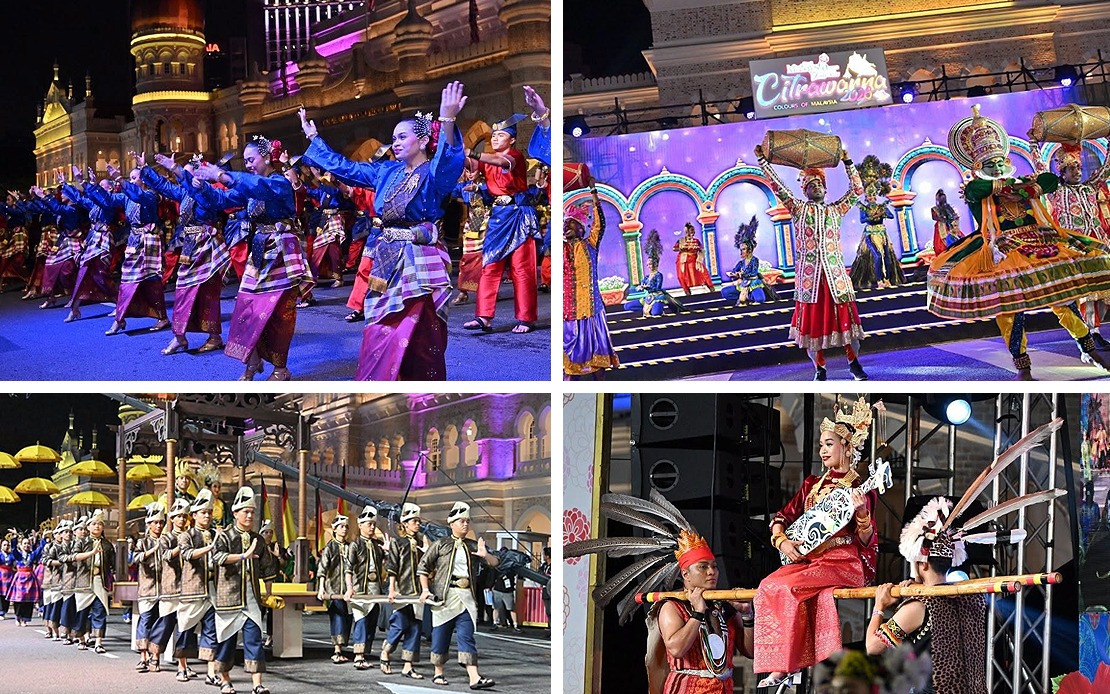
Prime Minister Datuk Seri Anwar Ibrahim formally opened Citrawarna 2026 at Dataran Merdeka on July 25, marking a significant milestone in Malaysia's ambitious tourism strategy for the coming year. The three-day cultural extravaganza represents Tourism Malaysia's commitment to positioning the nation as a premier destination for heritage and arts tourism, integrating seamlessly with the broader Visit Malaysia 2026 (VM2026) initiative that aims to attract millions of international travellers.
The event drew an impressive official delegation, with Tourism, Arts and Culture Minister Datuk Seri Tiong King Sing and Deputy Minister Chiew Choon Man overseeing proceedings alongside Chief Secretary to the Government Tan Sri Shamsul Azri Abu Bakar and Tourism Malaysia director-general Mohd Amirul Rizal Abdul Rahim. This high-level attendance underscores the government's strategic focus on cultural diplomacy and tourism as economic drivers in a competitive regional landscape. The partnership structure, involving Kuala Lumpur City Hall, Warisan Kuala Lumpur, the National Department for Culture and Arts, Istana Budaya and the National Textile Museum, demonstrates a collaborative whole-of-government approach to cultural promotion.
The centrepiece of Citrawarna 2026 remains the Colours of Parade, a breathtaking procession mobilising 3,500 dancers representing all 13 states, three Federal Territories and Malaysia's multicultural communities. This scale of representation carries symbolic weight, affirming Malaysia's identity as a nation woven from diverse threads of heritage and tradition. The parade goes beyond mere spectacle, functioning as a narrative tool that articulates Malaysia's complexity and pluralism to both domestic audiences and international visitors unfamiliar with the country's social fabric.
Beyond the parade itself, the festival's design emphasises immersive cultural experiences that move past passive observation. Traditional fashion displays, coupled with live music and dance performances, allow visitors to engage substantively with Malaysia's artistic legacy. Each participating contingent contributes curated presentations highlighting specific regional traditions, stories and community identities, creating a comprehensive portrait of the nation's cultural landscape that extends far beyond the capital's metropolitan context.
The international response to Citrawarna 2026 has exceeded preliminary expectations, with Tourism Malaysia reporting that over 700 international tourists engaged with specially designed tourism packages. These visitors originated from geographically diverse markets including China, India, Mauritius, Japan, Vietnam, Indonesia, Singapore, Kazakhstan, Italy, the Netherlands, Switzerland and France. This geographic spread suggests effective marketing penetration across multiple continents and demonstrates that cultural tourism holds genuine appeal beyond traditional Southeast Asian visitor bases.
The diversity of source markets carries strategic implications for Malaysia's positioning within global tourism hierarchies. Chinese and Indian visitors represent growth segments within Asian tourism, while European participation from Italy, the Netherlands, Switzerland and France indicates successful penetration of Western markets historically more attracted to beach and adventure tourism. This balanced portfolio of visitor nationalities validates the thesis that well-executed cultural programming can expand Malaysia's appeal beyond conventional geographic preferences.
Tourism Malaysia's official statement emphasised that international participation confirms genuine overseas appetite for Malaysia's cultural tourism offerings. By providing first-hand experiences of heritage, traditions and hospitality, Citrawarna 2026 translates abstract marketing messaging into tangible encounters that typically generate powerful word-of-mouth promotion and repeat visitation. International visitors who experience authentic cultural engagement become informal ambassadors, communicating their positive experiences through social networks in their home countries.
The structural framework underpinning Citrawarna 2026 reflects sophisticated event design, organised around four integrated showcases spanning food culture, performing arts, visual arts and experiential learning. The inclusion of over 70 food and drink stalls positions culinary tourism as a primary value proposition, acknowledging that gastronomic experiences represent increasingly significant factors in international travel decision-making. Malaysian regional cuisines, presented within cultural contexts that explain their origins and significance, acquire enhanced appeal when framed as expressions of heritage rather than mere consumption opportunities.
The festival's 20 cultural activity booths and 10 arts and crafts stalls create participatory opportunities rather than presenting culture as static museum content. Traditional games, heritage demonstrations and hands-on craft experiences invite visitors to become temporary participants in cultural practices, fostering deeper comprehension than passive viewing alone could achieve. This pedagogical approach transforms tourism from consumption into cultural exchange, generating more meaningful cross-cultural understanding and more durable visitor satisfaction.
For Malaysia's tourism sector, Citrawarna 2026 functions as a strategic investment in product diversification. By elevating cultural and heritage tourism to flagship status alongside conventional beach and adventure offerings, Malaysia reduces its vulnerability to commodity competition from neighbouring destinations. Cultural tourism typically commands higher visitor spending, generates repeat visitation, and produces longer average length-of-stay metrics compared to sun-and-sand tourism alone. The event's positioning within Visit Malaysia 2026 suggests government commitment to making cultural tourism a structural pillar of tourism strategy rather than a peripheral offering.
The festival's success carries implications extending beyond immediate tourism revenue generation. International exposure of Malaysia's multicultural identity and artistic heritage contributes to soft power objectives, enhancing the nation's global reputation and cultural standing. Countries like Thailand and Indonesia have leveraged cultural tourism strategically to project favourable national images and secure geopolitical influence. Malaysia's systematic approach to cultural festival tourism positions it competitively within this regional dynamic, particularly given the nation's distinctive multicultural context.
Looking forward, Citrawarna 2026's demonstrated capacity to attract international visitors and organisational support from multiple government agencies suggests this event may become a permanent fixture within Malaysia's tourism calendar. The operational success of the 2026 iteration provides template documentation for scaling future iterations, refining logistics and deepening international marketing reach. If sustained and properly resourced, Citrawarna could evolve into an iconic Southeast Asian cultural event comparable to Thailand's Songkran festival or Indonesia's Bali Arts Festival in terms of international recognition and visitor draw.
The significance of Prime Minister Anwar Ibrahim's personal attendance and official endorsement extends beyond ceremonial protocol. His presence signals government commitment to tourism as economic policy and cultural diplomacy as national strategy. This positioning proves particularly relevant for international investors considering Malaysia as a destination for tourism infrastructure development, accommodations, and service sector investment. By visibly prioritising cultural tourism, Anwar's administration communicates stable government support for the sector's long-term development and protection from political interference.

