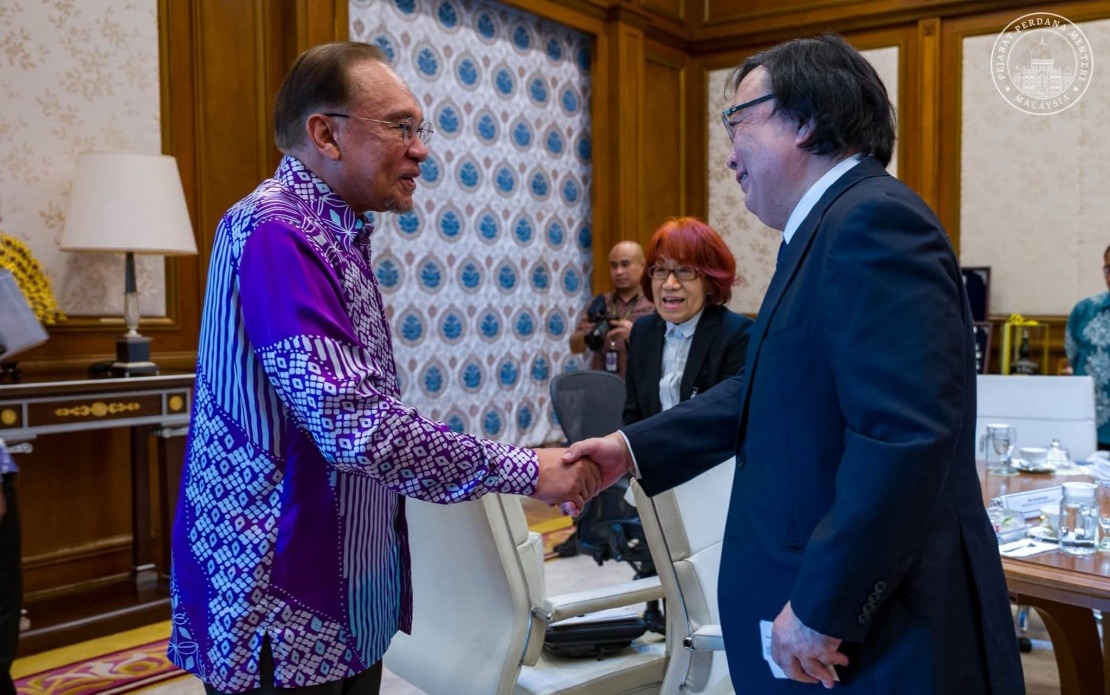
Prime Minister Datuk Seri Anwar Ibrahim held discussions with The Genron NPO President Yasushi Kudo on July 23, focusing on expanding the Asia Leaders Roundtable as a mechanism for tackling pressing regional and global issues. The courtesy call reflects ongoing efforts to broaden Malaysia's engagement with influential Japanese institutions and intellectual circles that shape policy discourse across Asia. The Genron NPO, a Japan-based non-profit think tank, has become an important actor in facilitating high-level strategic conversations among Asian leaders, making such exchanges pivotal for countries seeking to amplify their voice in regional affairs.
The Prime Minister used the occasion to express Malaysia's deep appreciation for Japan's hospitality during his official visit in June, signalling the continued warmth in bilateral relations despite geopolitical complexities. Anwar's acknowledgement of Japan's courtesies underscores the diplomatic choreography that characterises Malaysia-Japan engagement, where both nations maintain overlapping interests in stability and prosperity. Such gestures, while seemingly ceremonial, serve important functions in maintaining the goodwill necessary for substantive cooperation on trade, security, and development initiatives.
At the heart of the bilateral relationship lies Malaysia's Comprehensive Strategic Partnership with Japan, which Anwar reiterated as among the nation's most consequential strategic and economic partnerships. This designation places Japan alongside only a handful of countries in Malaysia's diplomatic hierarchy, reflecting decades of economic interdependence and shared strategic interests. The partnership encompasses significant Japanese investment in Malaysia's manufacturing and technology sectors, defence cooperation, and cultural exchanges that have embedded Japan deeply within Malaysia's development trajectory. For Malaysian policymakers, maintaining this relationship remains crucial as regional power dynamics shift and economic competition intensifies.
The Asia Leaders Roundtable, which formed the substantive focus of the meeting, represents a distinctive platform for candid dialogue among Asian leadership. Unlike formal multilateral organisations bound by consensus requirements and rigid protocols, the roundtable offers flexibility for exploring contentious issues and building personal relationships among leaders. For Malaysia, participation in such forums provides opportunities to project soft power and influence regional narratives on key issues ranging from trade architecture to security challenges and climate action. The roundtable's emphasis on strategic dialogue aligns with Malaysia's broader foreign policy objective of being a bridge-builder across diverse Asian interests.
Anwar's acceptance of The Genron NPO's invitation to address the Tokyo Conference 2027 signals Malaysia's commitment to sustained engagement with Japanese intellectual and policy networks. The Prime Minister's previous contribution of a video message to the 2026 conference demonstrates continuity in this relationship and suggests that Malaysia views these platforms as valuable venues for articulating its vision for regional development. For a country of Malaysia's size and economic capacity, leveraging such international forums allows for disproportionate influence on global conversations affecting Asian interests and priorities.
The timing of this meeting acquires additional significance within the context of broader regional dynamics. As major powers compete for influence in Southeast Asia and beyond, countries like Malaysia must carefully calibrate their partnerships to maximise strategic benefits while maintaining diplomatic flexibility. Japan, as a developed economy with significant technological and financial resources, offers Malaysia avenues for advancement that differ markedly from partnerships with other regional powers. The Genron NPO connection, rooted in intellectual exchange rather than governmental channels, provides a supplementary mechanism for Malaysia to understand Japanese thinking and vice versa.
The emphasis on shared peace, stability, and prosperity reflects aspirational language that nonetheless carries concrete implications. For Malaysia, peace and stability in regional waters—particularly concerning maritime security and freedom of navigation—remain foundational to economic growth. Japan similarly depends on stable regional conditions for its trade and energy security, creating natural alignment between the two nations' fundamental interests. Prosperity, understood as inclusive and sustainable development, has become increasingly central to both nations' foreign policy rhetoric, though translating such principles into concrete cooperative ventures remains an ongoing challenge.
The Genron NPO's role as an independent think tank rather than a governmental organisation carries implications for the nature of dialogue it facilitates. Think tanks operate with greater intellectual freedom than government agencies and can explore ideas and positions that official channels might avoid. For Malaysian leaders, engagement with such institutions provides opportunities to test ideas, build relationships with influential Japanese thinkers and business leaders, and potentially influence Japanese public opinion on matters affecting Malaysia's interests. This track-two diplomacy complements official governmental interactions and often proves instrumental in creating conditions for substantive bilateral progress.
Looking forward, the strengthening of Malaysia-Japan cooperation through both governmental and institutional channels reflects a deliberate strategy to deepen a relationship that has proven resilient across decades. As regional challenges multiply and global competition intensifies, countries must invest in relationships that offer mutual benefit and aligned interests. The continued engagement between Malaysian leadership and The Genron NPO demonstrates both nations' commitment to dialogue and their recognition that addressing contemporary challenges requires sustained interaction among policymakers, intellectuals, and business leaders. For Malaysia, nurturing this partnership remains a prudent investment in long-term regional stability and economic prosperity.

