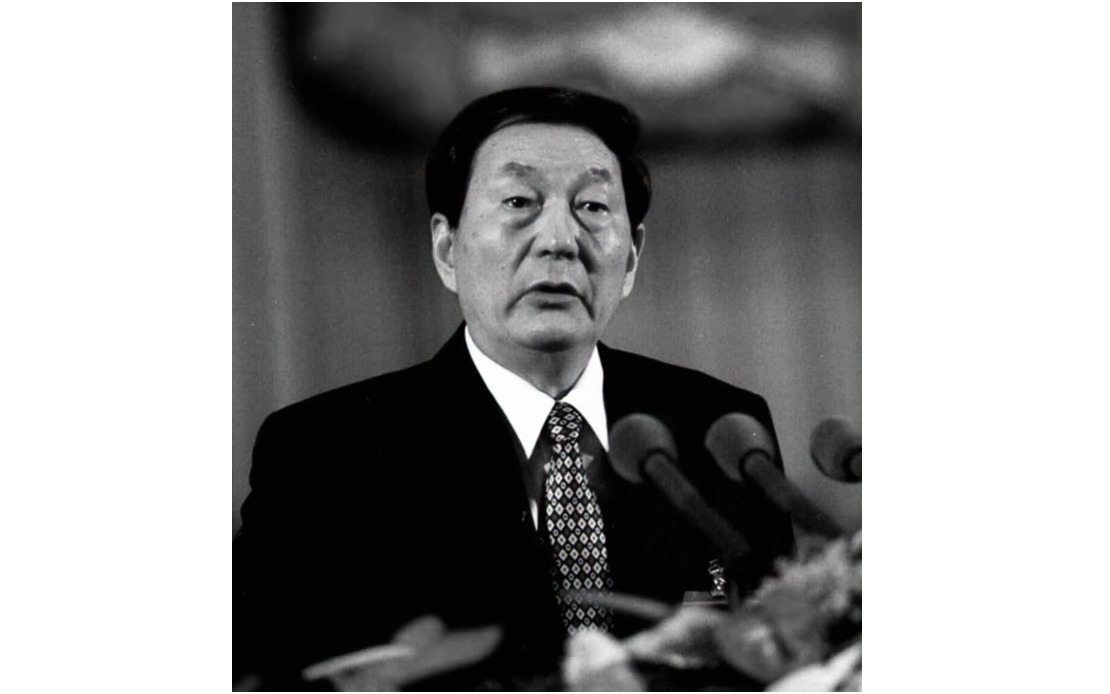
Prime Minister Datuk Seri Anwar Ibrahim has paid tribute to the legacy of former Chinese Premier Zhu Rongji, who passed away at the age of 97, describing him as one of the most consequential figures in shaping modern China's economic trajectory. In a Facebook statement, Anwar emphasised Zhu's transformative role in propelling China towards superpower status through sweeping reforms that fundamentally altered the nation's economic structure and international standing.
Zhu's tenure as Premier from 1998 to 2003 proved pivotal in China's contemporary history. During his five-year leadership, he orchestrated major market-oriented reforms that dismantled much of the old state-controlled economic apparatus. His most celebrated achievement was steering China through its entry into the World Trade Organisation, a watershed moment that integrated the Chinese economy into global commerce and accelerated its development at an unprecedented pace. Beyond these structural reforms, Zhu also oversaw the comprehensive restructuring of state-owned enterprises, modernising them into more competitive entities capable of operating in a liberalised market environment.
Anwar's personal connection to Zhu runs deep and spans decades. The Prime Minister recalled collaborative efforts during the 1990s when both leaders worked to forge stronger economic and financial partnerships between Malaysia and China. This bilateral work proved foundational, with Anwar noting that the frameworks and relationships established during that era continue to anchor Malaysia-China ties in the present day. The depth of this partnership reflects broader recognition in the region of Zhu's importance not merely as a Chinese statesman but as a transformative figure whose policies reverberated across Asia and beyond.
Beyond formal diplomatic achievements, Anwar shared intimate memories of his interactions with Zhu, revealing a man whose interests extended far beyond economics and policy. The former Premier took Anwar on cultural pilgrimages to historically significant sites, including visits to Qufu, the birthplace of Confucius, and Tai Shan, one of China's most revered mountains. These journeys underscore Zhu's engagement with China's philosophical and cultural heritage. Equally telling was Anwar's account of visiting Zhu's personal library, where the former Premier personally curated and gifted several classical Chinese works to his Malaysian counterpart, demonstrating intellectual generosity and a desire to foster cross-cultural understanding at the highest levels.
The significance of Zhu Rongji's death carries implications that extend well beyond China's borders. For Southeast Asia and Malaysia specifically, Zhu represented a critical figure during the formative period when China began reasserting its role in regional and global affairs. His economic reforms and WTO entry initiated China's ascent as a manufacturing and trading powerhouse, transforming bilateral relationships across Asia. The prosperity and stability that flowed from China's economic success during and after Zhu's premiership created opportunities for regional economies to benefit through investment, trade, and technological exchange. Understanding this historical connection helps contemporary Malaysian policymakers appreciate how their counterparts' decisions in the 1990s and 2000s continue shaping present-day dynamics.
Anwar's characterisation of Zhu emphasises moral and patriotic dimensions often overshadowed in discussions of his economic legacy. The Prime Minister highlighted Zhu as a statesman of formidable capability, yet noted his most defining quality was exceptional personal character and unwavering dedication to his nation's interests. This portrait suggests that Zhu's reforms succeeded not merely through technical competence but through principled commitment to serving China's long-term development. Such observations carry relevance for contemporary leadership discussions in Malaysia and the region, where balancing pragmatic reform with steadfast ethical governance remains a persistent challenge.
The relationship between Anwar and Zhu also illustrates a particular diplomatic style that characterised high-level engagement during the 1990s and early 2000s. This era predated the more assertive posturing that would emerge later in Sino-regional relations, and leaders like Zhu and Anwar cultivated relationships marked by cultural exchange, mutual respect, and collaborative problem-solving. Anwar's reflections suggest nostalgia for this approach, with implications for how Malaysia might position itself in an increasingly complex geopolitical landscape where balancing great power relations remains central to national interests.
Zhu Rongji's death marks the passing of a generation of Chinese leaders whose imprint on their nation's trajectory proved extraordinarily consequential. His economic vision directly contributed to lifting hundreds of millions of Chinese citizens from poverty and establishing China as the world's second-largest economy. For Malaysia and Southeast Asia, the consequences of his stewardship rippled outward, reshaping trade patterns, investment flows, and regional power dynamics. The loss of such a figure serves as a reminder of how individual leadership and policy decisions in one country can fundamentally alter the trajectories of entire regions.
Anwar's condolences, conveyed with evident personal feeling, reflect the depth of bilateral engagement between Malaysia and China across multiple administrations. By publicly acknowledging his friendship with Zhu and detailing their collaborative efforts, Anwar reinforces Malaysia's commitment to sustained relations with China at the highest levels. This continuity of diplomatic engagement, even as leaders change, demonstrates the institutionalisation of Malaysia-China partnership across different political eras and contexts. As regional geopolitics continue to evolve, Malaysia's historical relationships with influential Chinese figures like Zhu remain reference points for current and future bilateral cooperation.

