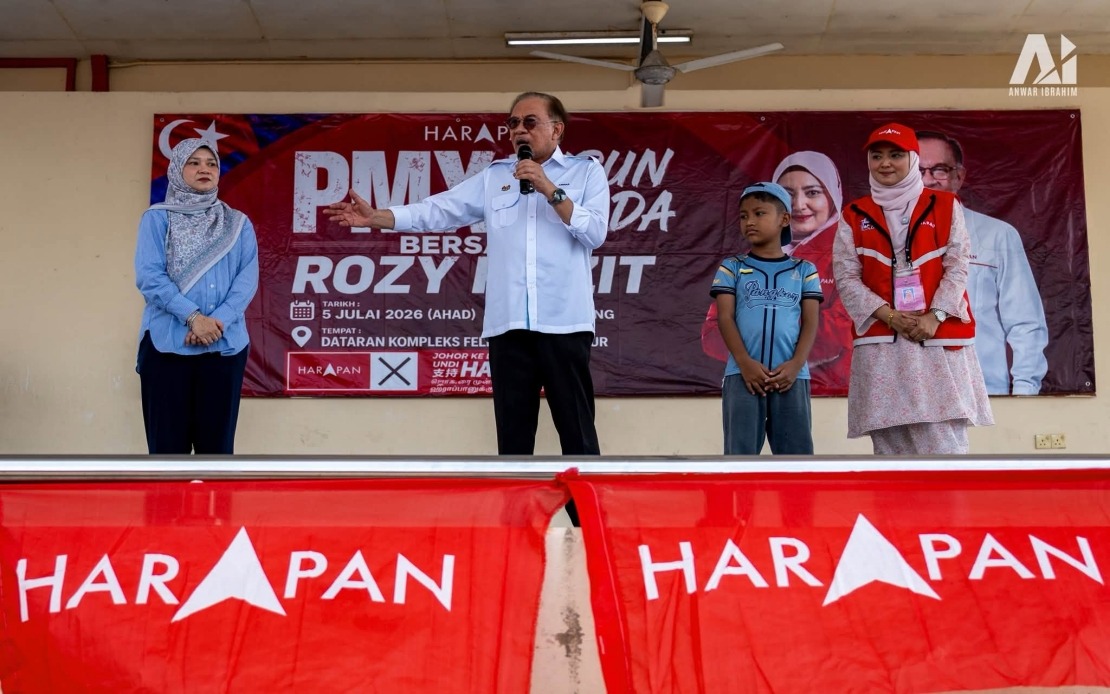
Prime Minister Datuk Seri Anwar Ibrahim has reflected publicly on an unexpectedly poignant moment that unfolded during a constituency visit to Felda Palong Timur in Segamat, when a young boy and his determined grandmother made an arduous journey through oil palm plantations in pursuit of a fleeting encounter with the nation's leader. The incident, which occurred recently, has prompted the Prime Minister to share broader reflections on compassion and the responsibilities that accompany high office, underscoring how ordinary citizens' gestures of hope can resonate profoundly within those wielding political power.
The centrepiece of this encounter involves nine-year-old Muhammad Afif Ikhwan, whose grandmother, 58-year-old Rosimah Mohammad from Kampung Pudu in Segamat, made the unconventional decision to ride a motorcycle across the challenging terrain of oil palm plantation tracks. Her singular motivation was straightforward yet compelling: to afford her grandson the opportunity to see the Prime Minister in person. The physical journey itself, navigating dusty and uneven pathways through commercial plantation land, represented a genuine sacrifice and testament to familial devotion—the kind of effort that typically escapes public attention but occasionally surfaces in ways that capture the imagination of national leaders.
During the programme itself, the moment of connection proved brief but memorable. Muhammad Afif managed to reach through the crowd gathered around the Prime Minister, and the two exchanged handshakes before the boy was invited onto the stage. For a child of nine years, such recognition and physical proximity to the nation's top political figure doubtless represented the culmination of his grandmother's efforts and his own anticipation. The encounter lasted only moments, yet it left sufficient impression on Anwar Ibrahim that he felt compelled to ensure the gesture was reciprocated.
In response to this meeting, the Prime Minister arranged for a representative to visit Muhammad Afif's home and present him with a bicycle—a tangible acknowledgement of the boy's hope and his grandmother's determination. This follow-up action transformed what could have been merely a passing moment into a more meaningful exchange, demonstrating that the Prime Minister's office took seriously the emotional significance of their interaction. For a nine-year-old in a rural Johor setting, such a gift carries weight beyond its material value, signifying that his dream had registered with someone at the apex of Malaysian governance.
Anwar Ibrahim's Facebook reflection on the incident reveals deeper philosophical considerations about leadership and human connection. He emphasised that what may seem inconsequential from the perspective of those in power—a brief handshake, a few seconds of attention—can carry profound significance for ordinary citizens. The Prime Minister contrasted this recognition against the overwhelming demands of high office, noting that managing national affairs and confronting major policy challenges can easily consume a leader's emotional bandwidth to the exclusion of such human moments. His willingness to pause and acknowledge this dynamic suggests a deliberate commitment to maintaining perspective about the relationship between government and governed.
The story carries particular resonance within the Malaysian context, where rural communities in Johor and other peripheral regions sometimes experience a disconnect from national political life. Felda (Federal Land Development Authority) settlements have historically represented both the ambitions and anxieties of Malaysia's development trajectory, and a visit by the Prime Minister to such a location carries symbolic weight. The fact that a grandmother felt sufficiently motivated to undertake a physically demanding journey—rather than accept the assumption that casual proximity to power was impossible—speaks to persistent public desire for tangible connection with elected representatives.
Anwar Ibrahim's emphasis on compassion and humanity in his public remarks suggests an attempt to model leadership qualities that extend beyond policy implementation. He articulated the view that regardless of how taxing the machinery of national governance becomes, those in positions of authority ought to retain the capacity for empathy and the ability to recognise the significance of individual hopes. This philosophy, if consistently applied, could theoretically influence how government officials at various levels interact with constituents seeking their attention.
The bicycle presented to Muhammad Afif serves as a symbolic bridge between the boy's aspirations and acknowledgement from the highest office. In the Malaysian context, where rural infrastructure and access to resources remains an ongoing concern, even such material gestures carry messages about national priorities and the government's attention to grassroots communities. The gift implicitly signals that a child in a Felda settlement merits recognition and provision of opportunity, themes that align with broader national development narratives.
Anwar Ibrahim's public treatment of this incident also reflects broader shifts in how political leaders utilise social media to humanise their public personas. By sharing the story on Facebook with reflective commentary, the Prime Minister reaches constituencies beyond those physically present at Felda Palong Timur, amplifying the emotional resonance of the encounter and potentially establishing a narrative template for how government officials might respond to similar situations elsewhere in Malaysia. The story becomes not merely personal but exemplary.
The grandmother's journey through the oil palm plantation also inadvertently highlights the physical geography of Malaysian political engagement—the real distances, literal and figurative, that exist between rural constituencies and centres of power. That she chose to navigate this terrain through plantation tracks rather than conventional roads underscores both the commitment of her gesture and the tangible challenges facing residents of outlying areas in accessing mainstream social and political infrastructure. For rural Malaysians, such determination to effect connection with national leadership may feel both necessary and extraordinary.
Moving forward, this incident may establish modest expectations for how similar grassroots aspirations receive acknowledgement. The follow-up bicycle gift suggests that at least at the Prime Minister's office level, mechanisms exist for responding to such encounters beyond the moment itself. Should this approach influence broader government culture, it could incrementally reshape public perception of political accessibility and responsiveness. However, such cultural shifts typically require sustained demonstration rather than individual instances.
The story ultimately reflects enduring human desires for recognition and connection that transcend political systems and social hierarchies. Rosimah Mohammad's motorcycle journey and nine-year-old Muhammad Afif Ikhwan's dream of meeting the Prime Minister represent the kind of ordinary yet meaningful moments that occasionally punctuate political life and remind leaders and citizens alike of the personal stakes underlying governance. In Malaysia's diverse landscape, where communities remain geographically and economically dispersed, such connections—however brief—may carry disproportionate significance for how ordinary people perceive their government's awareness and concern for their circumstances.

