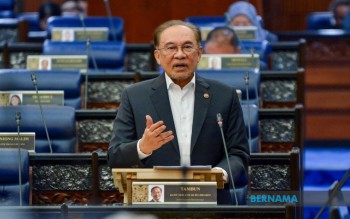
Prime Minister Datuk Seri Anwar Ibrahim has made clear that the government will adopt a zero-tolerance stance toward any irregularities involving the Retirement Fund (Incorporated) (KWAP) investment in eFishery, the aquaculture technology start-up that has drawn parliamentary scrutiny. Speaking in the Dewan Negara, Anwar stressed that while preliminary findings suggest the investment was handled properly, no aspect of the transaction will be exempted from rigorous examination if concerns emerge.
The government's firm position comes amid heightened public interest in how national retirement funds deploy Malaysians' savings. KWAP, which manages retirement benefits for statutory body employees, has faced questions about its decision to invest in eFishery, prompting Senator Mohd Hasbie Muda to raise the issue in parliament. The query centred on how the government intends to safeguard retirement fund dividends while navigating volatile global conditions and ensuring sound investment decisions.
Anwar, who concurrently holds the Finance Ministry portfolio, confirmed he has engaged directly with KWAP leadership to emphasise the need for complete transparency and cooperation during investigations. This personal intervention underscores the political sensitivity surrounding the matter, particularly given public concerns about the stewardship of retirement savings in an increasingly complex investment environment. The message is unambiguous: institutional leadership must facilitate scrutiny without obstruction.
Despite initial reports suggesting the investment decision proceeded without irregularities, Anwar indicated that the Malaysian Anti-Corruption Commission (MACC) should conduct a comprehensive review of the entire investment journey. This encompasses not merely the final investment decision but also the analytical work and deliberations undertaken by KWAP's investment panel and the ultimate approval process by the board. The breadth of this inquiry signals official determination to examine every procedural step and decision-making layer.
The Prime Minister's stance reflects broader anxieties among Malaysian policymakers about institutional accountability in fund management. With millions of workers depending on KWAP and the Employees Provident Fund (KWSP) for retirement security, any perception of mismanagement or impropriety carries substantial political and social consequences. Anwar's emphasis on non-negotiable standards on corruption and fraud is partly reassurance to contributors that their interests remain paramount, regardless of investigative findings.
Senator Wan Martina Wan Yusoff raised a supplementary question probing the government's oversight mechanisms for ensuring that retirement funds are directed only toward vetted companies and that robust safeguards exist to protect contributors' capital. This line of questioning reflects legitimate concerns about governance frameworks for sovereign wealth and retirement capital, particularly as these funds increasingly explore technology and emerging sector investments. The query implicitly acknowledges that as KWAP and KWSP diversify portfolios, investment due diligence becomes more critical.
The eFishery investment gained prominence within broader discussions about how Malaysia positions itself in the agricultural technology sector. The aquaculture technology space represents potential growth for the nation's food security and export competitiveness, yet investments in nascent firms inherently carry higher risk than traditional instruments. Public scrutiny has intensified because the decision involved retirement savings rather than discretionary venture capital, raising the stakes for institutional judgment.
Anwar's response underscores that the government recognises a distinction between supporting innovative sectors and exercising fiduciary responsibility toward retirement fund contributors. The MACC investigation, in this context, serves multiple purposes: it provides accountability assurance to the public, validates KWAP's investment governance, and establishes precedent for how controversial fund allocations will be handled in future. The investigation's scope and findings may influence how Malaysian retirement funds approach technology investments generally.
The political management of this issue also carries implications for investor confidence. Malaysia competes regionally for retirement fund management expertise and fintech investment. While stringent oversight is necessary, perceptions of excessive political interference or unstable governance could discourage quality fund managers and technology entrepreneurs. Anwar's framing emphasises that robust investigation represents normal institutional practice rather than extraordinary intervention, attempting to preserve confidence in Malaysia's investment ecosystem whilst demonstrating accountability.
The government's position also reflects evolving expectations around environmental, social and governance (ESG) standards in emerging markets. The aquaculture sector encompasses both sustainability and labour practice considerations, meaning KWAP's investment decision likely involved assessments beyond pure financial returns. The MACC's expanded investigative scope may examine whether such considerations were properly weighted in the decision-making process, setting standards for how retirement funds evaluate socially-conscious investments.
For Malaysian savers and retirees, this episode carries important signals. It demonstrates that significant investment decisions involving retirement capital face heightened parliamentary oversight and potential investigation, whether or not irregularities are suspected. This transparency, while sometimes uncomfortable for investment managers, provides some reassurance that institutional capital is not deployed without public accountability mechanisms. The outcome of the MACC inquiry will likely influence how KWAP approaches future investments in emerging technologies and novel sectors.
Moving forward, the investigation's conclusions may reshape investment governance frameworks for Malaysia's retirement funds. Anwar's uncompromising rhetoric on integrity combined with his directive for comprehensive review suggests the government intends to emerge from this episode with clarified protocols and reinforced oversight systems. Whether the probe exonerates or finds fault with KWAP's eFishery decision, it will have served to demonstrate that Malaysia's retirement institutions operate within systems of accountability that prioritise contributor interests above all other considerations.

