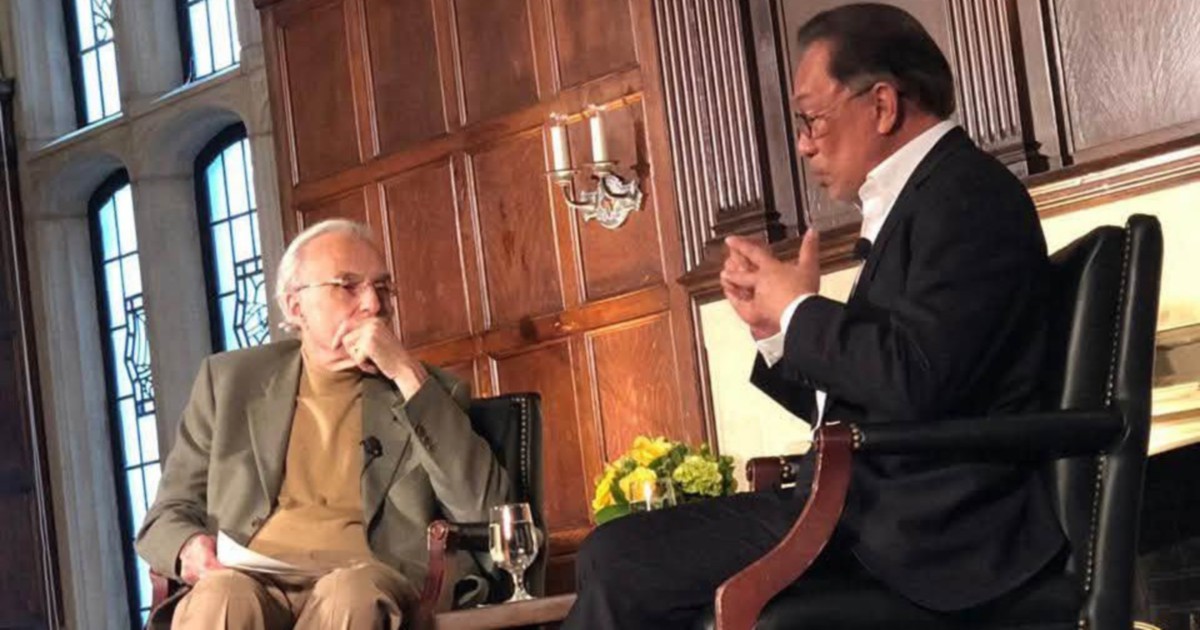
Prime Minister Datuk Seri Anwar Ibrahim has paid tribute to the legacy of Professor John L. Esposito following the scholar's death, extending his deepest condolences to the family and colleagues of the acclaimed academic who spent decades studying and interpreting Islam for international audiences.
Esposito's contributions to Islamic scholarship extended far beyond conventional academic circles. Throughout a career spanning multiple decades, he established himself as a pivotal figure in bridging the understanding between Islamic civilisation and the Western world, at a time when such dialogue faced considerable geopolitical headwinds. His research and public commentary shaped how millions understood Islam's historical development, contemporary practice, and future trajectory across diverse Muslim-majority societies.
The Malaysian Prime Minister's acknowledgment of Esposito's passing underscores the significance of his intellectual work within regional and global contexts. As a scholar who commanded respect across ideological divides and religious communities, Esposito's death represents a considerable loss not merely for Islamic studies as a discipline, but for the broader project of fostering informed, nuanced discourse about religion in an increasingly polarised world.
Throughout his academic tenure, Esposito authored or edited numerous volumes examining the relationship between Islam and political governance, the evolution of Islamic law in modern contexts, and the lived experiences of Muslim communities across the Middle East, Asia, Africa, and the diaspora. His work consistently challenged simplistic narratives and encouraged readers to comprehend the complexity inherent within Islamic thought and practice. This scholarly approach proved particularly valuable in Southeast Asia, where Muslim-majority nations grapple with questions of religious identity, secular governance, and cultural continuity.
Beyond his prolific writing, Esposito's institutional roles amplified his influence considerably. His leadership positions at prestigious universities provided platforms for developing curricula that integrated Islamic perspectives into mainstream academic discourse. Graduate students trained under his mentorship have disseminated his methodologies and intellectual frameworks across multiple continents, ensuring his impact extends through subsequent generations of scholars and policymakers.
The timing of his death arrives at a moment when accurate, credible scholarship on Islam remains essential. In an era characterised by misinformation, polarisation between Muslim and non-Muslim communities, and recurring cycles of geopolitical tension rooted partly in religious misunderstanding, voices capable of articulating Islam's intellectual richness and diversity become increasingly precious. Esposito consistently filled that role, demonstrating through his scholarship that serious engagement with Islamic texts, history, and contemporary practice enriches rather than threatens secular societies.
For Malaysia specifically, Esposito's work held particular resonance. His analyses of Islam within plural democratic societies, the negotiation of Islamic law alongside constitutional frameworks, and the integration of Muslim minorities into diverse national contexts directly illuminated questions confronting the nation. His scholarship provided intellectual scaffolding for understanding how nations could simultaneously honour Islamic principles and maintain multireligious harmony—a perpetual challenge for multiconfessional societies throughout the region.
The scholar's approach to his subject matter distinguished him from more polemical voices in his field. Rather than advancing any predetermined ideological agenda, Esposito pursued understanding through rigorous historical investigation, careful attention to primary sources, and genuine effort to comprehend Islamic civilisation on its own terms rather than through externalised frameworks. This intellectual integrity earned him credibility even among scholars and policymakers who might otherwise remain sceptical of Western academics analysing Eastern religions.
Esposito's passing removes a singular figure from the global intellectual landscape at a moment when cross-cultural understanding demands sustained scholarly attention. His written legacy—comprising dozens of influential books alongside countless articles, lectures, and policy interventions—will continue informing debate for decades. Nevertheless, the absence of his voice from ongoing discussions represents a tangible loss. Few contemporary scholars possessed both the breadth of knowledge and the rhetorical capacity to communicate complex Islamic concepts to educated lay audiences simultaneously with rigorous academic communities.
As Malaysia and the broader region navigate contemporary questions regarding religious identity, governance, and social cohesion, the intellectual frameworks Esposito developed remain relevant and instructive. His emphasis on understanding Islam through multiple registers—theological, historical, sociological, and political—modelled an approach increasingly necessary for policymakers and religious leaders navigating multireligious societies. The Prime Minister's recognition of this significant departure reflects an understanding of how individual scholarship, when sufficiently influential and widely respected, shapes the contours of international dialogue and mutual comprehension across civilisational lines.

