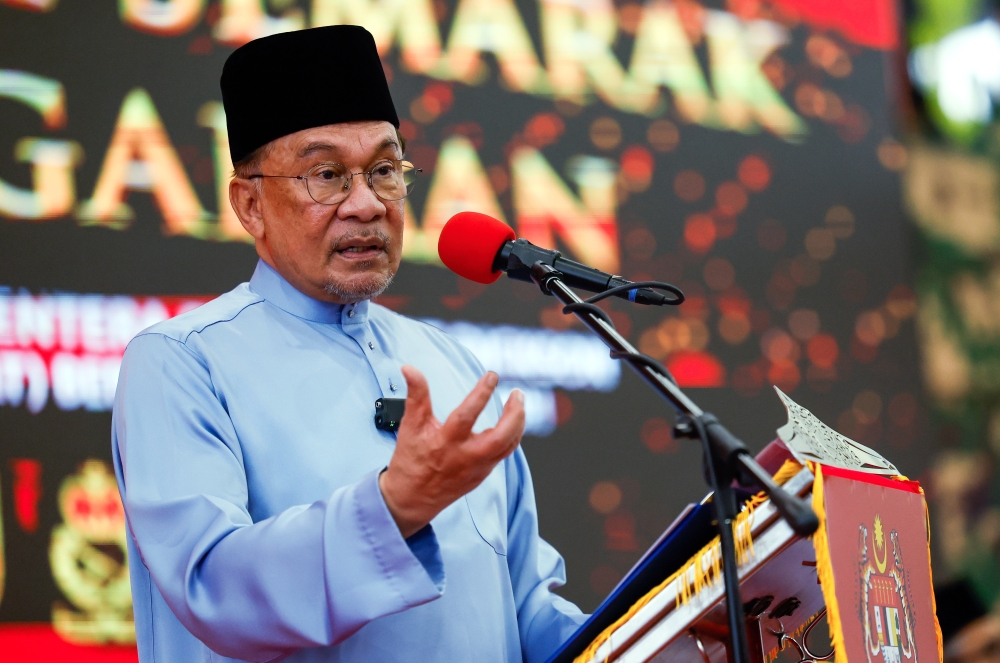
Prime Minister Anwar Ibrahim has explained the government's decision to keep the Royal Commission of Inquiry report on Lembaga Tabung Haji under wraps, revealing that the disclosure would trigger widespread public anxiety and potentially spark a wave of withdrawals from the Islamic savings fund. Speaking in Port Dickson on July 24, Anwar addressed a longstanding question about why the findings from the comprehensive investigation into the pilgrimage fund remain classified, stating that releasing the document at this juncture would be counterproductive to the institution's financial stability and the interests of its contributors.
Tabung Haji, which manages savings for Malaysian Muslims preparing for the hajj pilgrimage, has faced considerable scrutiny following revelations of substantial investment losses and management concerns that prompted the RCI establishment. The fund serves hundreds of thousands of members across Malaysia, holding their dedicated religious savings, making its institutional health a matter of widespread public interest. The decision to commission an RCI represented acknowledgement of serious questions about governance and financial stewardship at the organisation, reflecting public and political pressure to understand what had transpired within the fund's leadership and investment operations.
Anwar's rationale for maintaining confidentiality centers on a pragmatic assessment of institutional risk. He posited that releasing the RCI's full findings would likely provoke investor alarm, leading members to rush their funds out of Tabung Haji simultaneously. Such a scenario could severely strain the organisation's liquidity position, potentially forcing unfavourable asset sales and deepening the financial difficulties the RCI was convened to examine. The Prime Minister's logic suggests that transparency, while ordinarily a democratic virtue, must be balanced against the practical consequences of disclosure when dealing with institutions holding public savings.
This approach represents a continuing tension within governance frameworks across Southeast Asia, where institutional stability concerns sometimes conflict with public accountability expectations. In Malaysia's context, where religious and communal trust in institutions remains crucial for social cohesion, the stakes of potential institutional failure carry dimensions beyond mere financial impact. A collapse or significant contraction of Tabung Haji could undermine confidence in Islamic financial mechanisms more broadly and affect millions of Muslim Malaysians' ability to finance their religious obligations.
The concealment of the RCI report has drawn criticism from transparency advocates and opposition politicians who argue that members have a fundamental right to understand the findings affecting their savings. They contend that withholding information prevents informed decision-making about fund participation and allows poor governance to persist without public scrutiny. The debate reflects broader questions about when confidentiality serves legitimate public interests and when it shields institutional failings from necessary accountability.
Anwar's administration has indicated that portions of the RCI findings have informed internal corrective measures and governance reforms at Tabung Haji, even as the full report remains unavailable to the public. The government has suggested that key recommendations have been implemented to address identified weaknesses in management, investment oversight, and internal controls. However, without disclosure of the actual investigation findings, independent verification of these reform claims remains impossible, deepening scepticism among critics.
The situation reflects the complex position faced by governments managing institutions that simultaneously serve public and religious purposes. Tabung Haji occupies a unique space as a statutory body managing community savings with deep cultural and spiritual significance for Malaysian Muslims. Its governance challenges extend beyond conventional corporate accountability considerations to encompass religious trust and community expectations about stewardship of hajj savings.
Regional observers note that similar dilemmas confronting religious and community-based financial institutions across Southeast Asia often result in comparable confidentiality decisions. Authorities in various countries have cited stability concerns when considering whether to disclose investigations into faith-based savings schemes, though such decisions consistently spark debates about transparency and public interest access to information.
The withholding of the RCI report also raises questions about the effectiveness of the RCI mechanism itself as an accountability instrument. Royal Commissions of Inquiry are typically established precisely to investigate serious governance failures and provide findings that inform public understanding and policy correction. If findings remain confidential indefinitely, the mechanism becomes an internal diagnostic tool rather than a public accountability instrument, potentially limiting its deterrent effect on future institutional misconduct.
Looking forward, the government faces pressure to determine an appropriate timeline for eventual disclosure. Anwar's statement implies that the report might eventually be released once Tabung Haji's financial position stabilises sufficiently that disclosure no longer poses acute withdrawal risks. This suggests the confidentiality is presented as temporary, contingent on institutional recovery, rather than permanent. The credibility of this position will depend on demonstrable progress in addressing the issues the RCI identified and transparent communication about the institution's improving circumstances.
For Malaysian Muslims relying on Tabung Haji for hajj financing, the situation presents a complicated position where they are asked to maintain faith in an institution undergoing undisclosed reform. The government's gamble is that implementing reforms without public knowledge of the underlying problems will stabilise the fund and preserve confidence, while transparency about those problems would destroy that confidence. Whether this strategy ultimately succeeds in restoring institutional stability and public trust will substantially influence future debates about disclosure and transparency in Malaysian public institutions.

