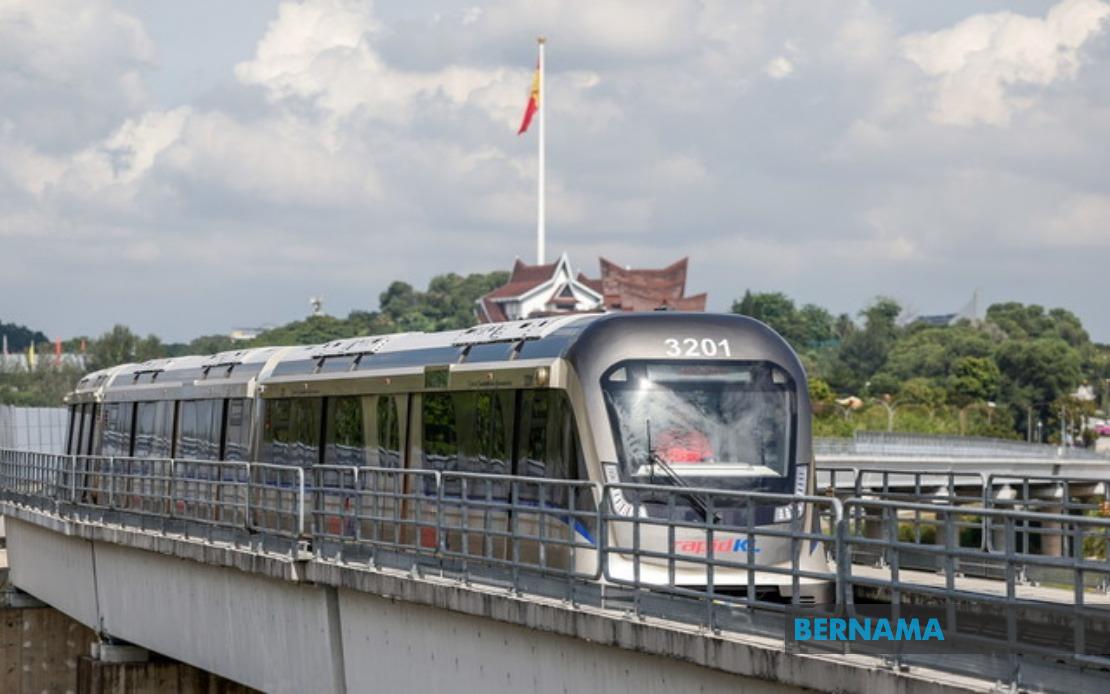
Prime Minister Datuk Seri Anwar Ibrahim will officially inaugurate the Light Rail Transit 3 (LRT3) Shah Alam Line on Sunday, June 28, marking the completion of a major infrastructure project designed to address transportation demands across the greater Klang Valley. The fully constructed 37.8-kilometre transit corridor extends from Bandar Utama to Johan Setia and stands ready to welcome its first commercial passengers. During the ceremony, the Prime Minister is expected to unveil both the official opening date and commencement time for regular service on the 20-station route, bringing to fruition a development anticipated to serve approximately two million residents across its operational corridor.
The Shah Alam Line represents a significant expansion of Malaysia's light rail network, introducing ten previously underdeveloped areas to rapid transit connectivity. Half of the stations—Bandar Utama, Kayu Ara, BU 11, Damansara Idaman, Subang, Glenmarie 2, Kerjaya, Stadium Shah Alam, Dato' Menteri, and UiTM Shah Alam—comprise the northern segment of the route. The remaining ten stations serving the southern corridor and extending into Klang proper include Seksyen 7 Shah Alam, Bandar Baru Klang, Pasar Klang, Jalan Meru, Jambatan Kota, Taman Selatan, Seri Andalas, Klang Jaya, Bandar Bukit Tinggi, and Johan Setia. This comprehensive coverage demonstrates strategic urban planning intended to integrate commercial, residential, and industrial zones throughout one of Malaysia's most densely populated regions.
Integration with existing transit infrastructure forms a cornerstone of the LRT3 Shah Alam Line's operational design. Passengers commuting from the southern Selangor region will benefit from seamless transfers at Bandar Utama, where the line intersects with the Kajang Line, enabling direct onward connections to Kuala Lumpur's city centre and the south Klang Valley. Similarly, the interchange at Glenmarie 2 provides access to the Kelana Jaya Line, expanding journey options for commuters heading westward toward the Petaling Jaya and Subang areas. These strategic connection points position the new line as more than an isolated transit artery; rather, it functions as a crucial linking element within the broader Klang Valley Integrated Transit System, enhancing modal interchange efficiency across the region.
Comprehensive first-mile and last-mile connectivity solutions have been engineered to maximize ridership capture across the service corridor. Prasarana Malaysia Berhad has deployed a network of 40 dedicated feeder buses operating across 13 distinct routes with a total of 323 stops, offering commuters affordable access at RM1 per journey between 6 am and 11:30 pm. Complementing this bus network, 44 rapid on-demand minivans will service 20 designated zones at RM2 per trip during identical operating hours, providing flexibility for passengers in areas where conventional scheduled transit may prove inefficient. These supplementary services address a critical gap in Southeast Asian urban transport systems, where the effectiveness of rapid transit corridors often depends not on the trains themselves but on accessible feeder infrastructure. Both the bus and van services will undergo continuous refinement based on observed commuter demand patterns and travel behavior once regular operations commence.
Parking infrastructure strategically positioned throughout the corridor encourages multimodal journeys among private vehicle users. Six stations—Kayu Ara, Damansara Idaman, Pasar Besar Klang, Sri Andalas, Bandar Bukit Tinggi, and Johan Setia—offer dedicated parking facilities totalling 2,300 bays. This kiss-and-ride capability acknowledges the reality of Malaysian commuting patterns, wherein many travelers currently rely on private vehicles for initial journey segments before transferring to public transport. By reducing the friction associated with transit adoption, such facilities potentially accelerate modal shift away from sole occupant vehicle use.
Operational projections underscore confidence in the line's market penetration within the local commuting ecosystem. Prasarana targets 67,000 daily passenger journeys within the first operational year, a figure anticipated to increase substantially to 117,708 daily boardings within five years. These forecasts reflect demographic concentration along the corridor and improved connectivity to employment centers. Should actual ridership approximate these projections, the LRT3 Shah Alam Line would rank among Malaysia's more successful rapid transit investments relative to population served, though such outcomes depend critically on complementary urban development and land-use planning decisions by local authorities.
Environmental sustainability principles have been embedded throughout the line's design and operational framework. Light rail vehicles deployed on the system feature inverter-based air conditioning technology, reducing electrical consumption during operation while maintaining passenger comfort in Malaysia's tropical climate. Station architecture incorporates passive design strategies maximizing natural ventilation and daylighting, substantially decreasing dependence on mechanical cooling and artificial lighting. These efficiency measures address growing recognition among Malaysian policymakers that transit infrastructure must contribute positively to national emissions reduction targets and climate adaptation objectives, particularly given the transportation sector's substantial carbon footprint within Southeast Asian economies.
Universal accessibility considerations permeate the station design and vehicle configuration. All twenty stations include wheelchair ramps, disability-accessible toilet facilities, and appropriate wayfinding signage, while each light rail train provides reserved seating explicitly designated for passengers with disabilities. This comprehensive accessibility framework exceeds minimum regulatory requirements in many jurisdictions and reflects evolving Malaysian standards for inclusive public infrastructure. Such provisions prove particularly valuable in a regional context where demographic aging increasingly shapes ridership composition and where disability inclusion remains inconsistently prioritized across public transport networks.
Future expansion plans signal commitment to continued transit network development across the wider Klang Valley. Five stations identified for reconstruction—Tropicana, Raja Muda, Temasya, Bukit Raja, and Bandar Botanik—will undergo rehabilitation work commencing by year-end 2024. These reconstruction initiatives suggest that the LRT3 Shah Alam Line represents not an endpoint but rather an opening chapter in a longer-term transport infrastructure development narrative for the region. The sequencing of these secondary upgrades indicates pragmatic project management, enabling the core corridor to commence revenue operations while preparatory work proceeds on subsequent phases.
The June 28 inauguration ceremony carries significance beyond ceremonial protocol. For residents across the Klang Valley, the Shah Alam Line's opening represents tangible infrastructure delivery following extended development timelines, addressing long-standing transportation accessibility gaps between the Shah Alam industrial zone and peripheral residential communities. For the broader Malaysian urban development community, the project demonstrates sustained commitment to rapid transit expansion despite economic headwinds and demonstrates that large-scale transit infrastructure can be delivered within domestic capacity. The Prime Minister's formal opening marks not merely the conclusion of a construction phase but the commencement of operational integration into the daily mobility patterns of a metropolitan region of considerable economic and demographic significance within Southeast Asia.

