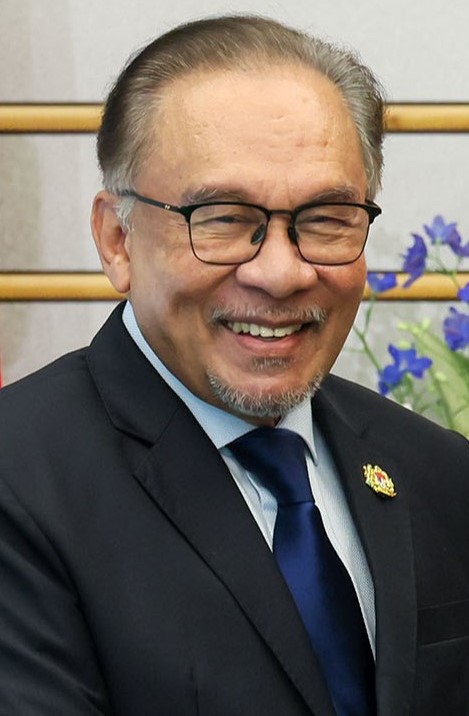
Prime Minister Datuk Seri Anwar Ibrahim is making his second visit to Johor within three days, heading to the district of Segamat to oversee a pair of public engagement activities designed to strengthen community bonds and showcase government priorities among residents in the lead-up to the upcoming state election.
The Segamat trip, scheduled for today, comes shortly after Anwar announced the comprehensive slate of Pakatan Harapan candidates contesting the 16th Johor state election on Monday in Bukit Gambir, Tangkak. The coalition will field 56 nominees across all state seats—20 from PKR, 19 from Amanah, and 17 from DAP—representing a unified front as the coalition seeks to consolidate its political position in the southern state. Segamat, situated roughly 200 kilometres south of Johor Bahru, has become a focal point in the campaign calendar, reflecting the coalition's determination to engage directly with voters across different constituencies.
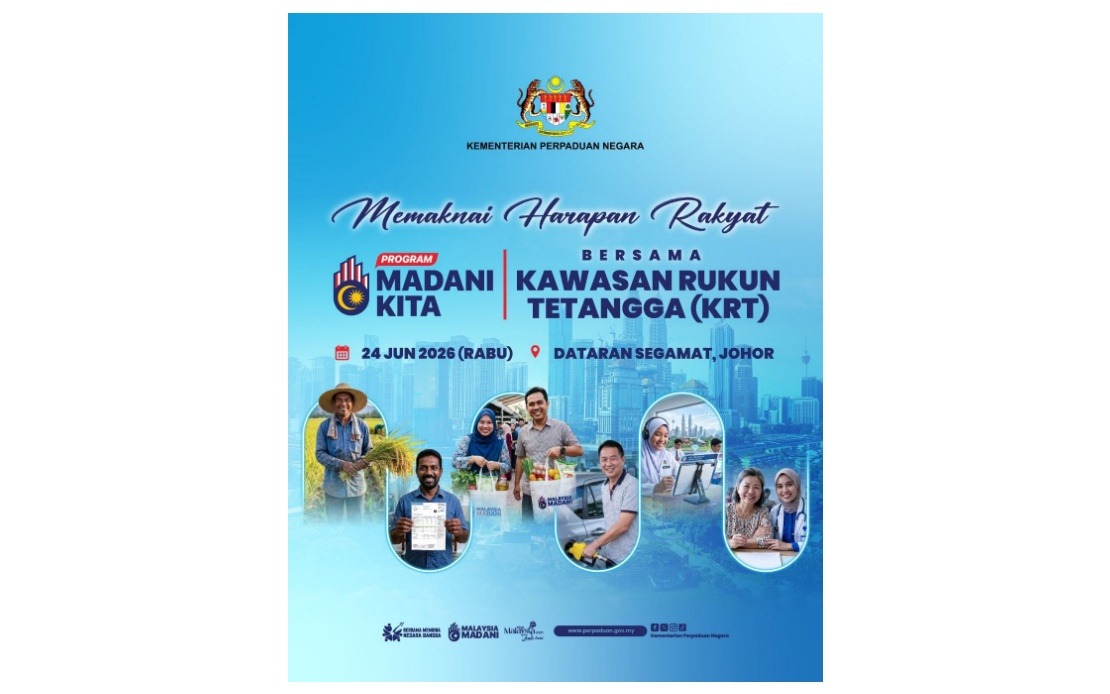
The centrepiece of Anwar's Segamat programme is the official launch of the MADANI KITA initiative, which will take place at Dataran Segamat at 5 pm in collaboration with local Rukun Tetangga (KRT) associations. This platform represents a deliberate strategy by the government to deepen social cohesion and foster inter-racial understanding at the grassroots level. By anchoring the programme within established neighbourhood associations, which have traditionally served as the backbone of community organisation in Malaysian villages and towns, the government aims to distribute its policy messages through trusted local channels and demonstrate tangible commitment to neighbourhood-level development.
The MADANI KITA programme embodies a broader governance philosophy centred on strengthening the fabric of local communities. Rather than limiting engagement to formal political forums, the initiative creates space for residents to directly interface with leadership and understand how government priorities align with their daily lived experiences. This approach recognises that electoral contests in Malaysia are increasingly determined by voters' perceptions of whether administrations deliver meaningful improvements to neighbourhood infrastructure, social services, and community cohesion—factors that often carry greater weight than grand policy announcements.
Following the more formal MADANI KITA launch, Anwar will transition to a second, less formal gathering: the "Jom! Makan Durian" programme at the Yayasan Bazaar site in Segamat at 6.30 pm. This shift in tone and setting—from civic ceremony to casual community meal—signals an understanding of how Malaysian voters value accessible, personable leadership. The durian-centred gathering allows Anwar to engage residents in a relaxed environment, potentially generating photographs and social media content that convey approachability and genuine interest in constituent welfare beyond the mechanics of electoral politics.
The timing of these activities carries strategic significance within the broader election calendar. The Election Commission has designated June 27 as nomination day, meaning the formal campaign period approaches. With polling scheduled for July 11 and early voting on July 7, the window for intensive grassroots mobilisation is compressed. By conducting multiple district-level visits within a short timeframe, the Prime Minister's office is signalling that the coalition intends to dominate the campaign narrative and maintain high visibility across key constituencies. Segamat's designation as a campaign stop underscores its electoral importance to Pakatan Harapan's broader Johor strategy.
For Malaysian and regional observers, these ground-level engagement strategies reflect evolving patterns in Southeast Asian electoral politics. Increasingly, successful campaigns depend not solely on institutional machinery or media dominance but on demonstrating genuine connection with ordinary residents through sustained, personalised interaction. The MADANI KITA framework, coupled with casual community events, represents Pakatan Harapan's attempt to rebuild voter trust through distributed, decentralised engagement rather than top-down messaging.
The Johor state election holds implications extending beyond the state itself. As Malaysia's third-largest state by population and a crucial economic hub, Johor's political complexion influences the broader national balance of power. Should Pakatan Harapan secure substantial gains, it would reinforce the coalition's recovery trajectory following the 2023 general election. Conversely, poor performance would suggest the coalition has not fully consolidated support among southern voters, potentially affecting its prospects in other peninsular states with similar demographic and socioeconomic profiles.
Segamat specifically merits attention as a district with diverse socioeconomic composition, blending urban commercial zones with agricultural and rural communities. This heterogeneity makes it representative of broader Johor constituencies where no single demographic or interest group overwhelmingly dominates political calculations. Campaigns targeting such areas must therefore adopt inclusive rhetoric and demonstrate relevance across multiple voter segments—a challenge that ground-level programmes like MADANI KITA are designed to address by emphasising universal values of community cohesion and inclusive governance.
The consecutive Johor visits also suggest that Pakatan Harapan recognises the state as competitive terrain rather than assured territory. While the coalition performed respectably in the 2023 general election, state-level contests operate according to distinct dynamics, with local issues, incumbent performance, and regional political personalities often mattering more than national trends. By investing significant prime ministerial time in personal campaigning, Anwar's office is effectively signalling that the coalition cannot take Johor for granted and must actively contest each seat through sustained engagement and visible leadership presence.