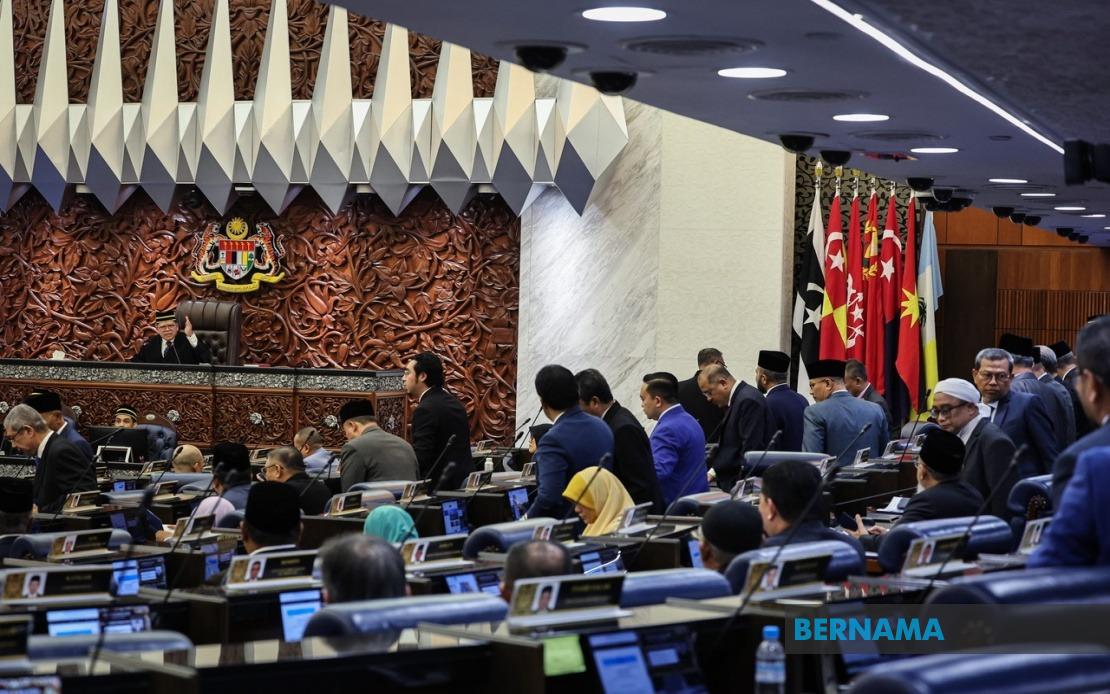
The Prime Minister's absence from a special parliament sitting ought not to serve as justification for legislators abandoning their parliamentary duties, according to Tengku Datuk Seri Zafrul Tengku Abdul Aziz, the Senior Political Adviser to the Prime Minister. His remarks emerged following a contentious session in the Dewan Rakyat where opposition lawmakers, including several Perikatan Nasional figures, chose to leave the chamber rather than engage with discussions surrounding the Royal Commission of Inquiry findings on Lembaga Tabung Haji.
The special sitting convened to examine a comprehensive 211-page RCI report detailing the management and operational practices of Tabung Haji across the period spanning 2014 to 2020. The report, which was released to the public on July 29 following government approval, represented a significant step towards transparency regarding one of the nation's most consequential institutions serving the Muslim and Malay community. Minister in the Prime Minister's Department (Religious Affairs) Dr Zulkifli Hasan presented the findings to parliament, creating an important opportunity for lawmakers across the political spectrum to interrogate governance and accountability at the institution.
Tengku Zafrul pointedly rejected the notion that parliamentary absence justified legislative inaction, emphasising that the debate transcended partisan considerations or individual personalities. He articulated his position through social media commentary, reframing the discussion as fundamentally about the financial interests and accumulated savings of Malaysia's Muslim population rather than a personalised attack on executive leadership. His intervention sought to redirect focus towards the substantive governance questions at stake and the fiduciary obligations owed to millions of Malaysian savers whose funds remain held within the institution.
Among those who departed the parliamentary chamber were notable opposition figures including Perikatan Nasional chief Datuk Seri Hamzah Zainudin, who currently serves as Opposition Leader, alongside PN chief whip Datuk Seri Takiyuddin Hassan and PN chairman Datuk Seri Dr Samsuri Mokhtar. Their collective walkout represented a coordinated political statement, though the underlying rationale remained somewhat ambiguous to observers. The departure of senior opposition figures raised broader questions about parliamentary convention, the nature of constructive opposition, and whether boycotting legislative proceedings constituted an appropriate response to concerns about executive accountability or governmental decision-making.
The Tabung Haji institution occupies a distinctive position within Malaysia's financial and social ecosystem, serving as a dedicated savings vehicle for Muslims preparing for the hajj pilgrimage while simultaneously functioning as a significant institutional investor in the broader economy. The accumulated assets within the scheme represent the modest but collectively substantial savings of ordinary Malaysians across diverse socioeconomic backgrounds. Consequently, concerns regarding management effectiveness, investment performance, and governance standards carried implications extending far beyond elite political circles, directly affecting the financial security and retirement planning of everyday citizens.
Tengku Zafrul's critique implicitly advanced a perspective on responsible parliamentary conduct during moments of political disagreement. He articulated the position that genuine democratic engagement required MPs to employ substantive tools available to them, including questioning, debate, and fact-based criticism rather than withdrawal from legislative proceedings. His formulation suggested that principled opposition and measured engagement represented more constructive approaches than symbolic boycotts, particularly when matters of public financial interest remained at stake. The advisory acknowledged the legitimacy of disagreement while challenging the strategy of legislative absence as a vehicle for expressing such disagreement.
The RCI process itself reflected broader governmental efforts to address longstanding concerns regarding Tabung Haji's operations and financial management. Public discourse surrounding the institution had intensified in preceding years, with various stakeholders raising questions about investment returns, administrative efficiency, and governance structures. The decision to commission an independent inquiry and subsequently release findings to public scrutiny represented an attempt to respond to these mounting concerns through formal institutional mechanisms rather than allowing criticism to fester without formal investigation.
For Malaysian stakeholders and the broader Southeast Asian context, the Tabung Haji episode illuminated persistent tensions between political opposition and institutional accountability. The walkout raised questions about whether parliamentary boycotts constituted legitimate forms of protest or represented abdication of legislative responsibilities. Regional observers monitoring Malaysia's democratic development have frequently noted that parliament's effectiveness depends substantially on substantive engagement by opposition benches, even during episodes of political disagreement or institutional controversy. Comparative experiences across Southeast Asia suggest that institutional credibility ultimately depends on transparent examination rather than avoidance.
The scale of the Tabung Haji portfolio and its significance within Malaysia's financial architecture meant that questions regarding the institution's management carried macroeconomic implications. Any governance failures or mismanagement could affect not only individual savings but broader financial market confidence and the reputation of Islamic financial institutions operating within the region. This wider systemic dimension reinforced arguments that parliament's examination of the RCI report merited comprehensive engagement rather than selective participation predicated on executive presence or partisan considerations.
Tengku Zafrul's intervention ultimately sought to elevate the discourse beyond personalised political contestation toward institutional and fiduciary responsibility. His framing suggested that MPs opposing government positions possessed multiple legitimate avenues for expressing dissent, including substantive parliamentary debate where they could present factual counter-arguments, highlight governance concerns, and propose alternative approaches. The advocate for engagement implicitly questioned whether boycotting legislative proceedings genuinely advanced opposition objectives or merely demonstrated disengagement from substantive governance questions affecting millions of Malaysian savers.

