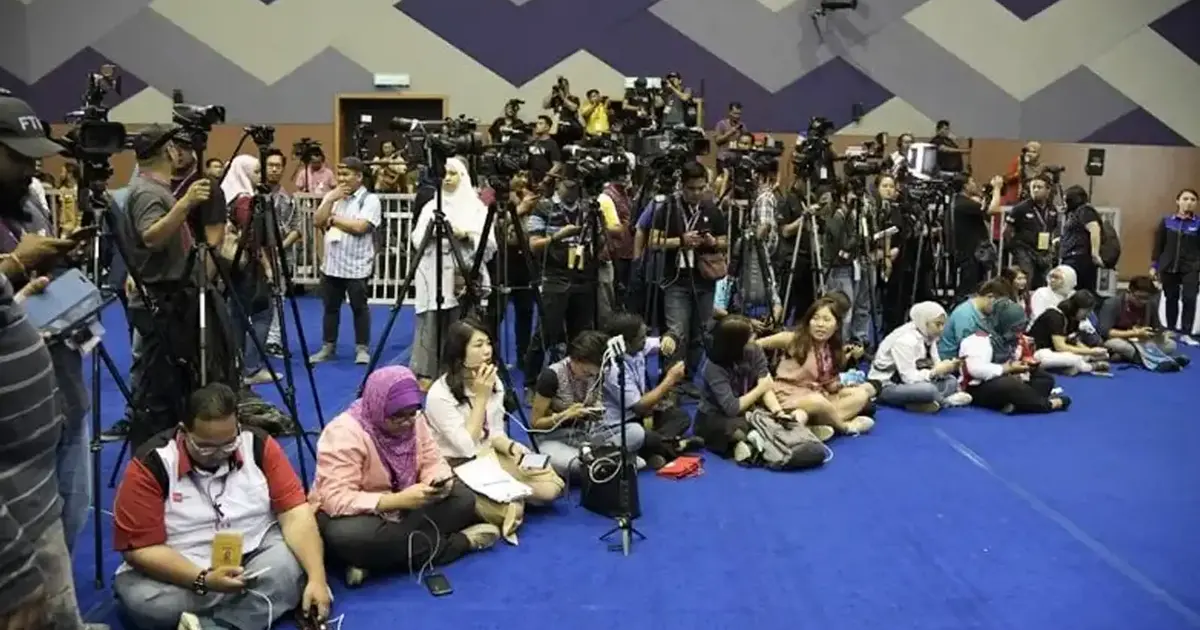
Prime Minister Anwar Ibrahim has established a formal protocol for handling complaints levelled against members of the media, stipulating that such grievances must first be submitted to the Malaysian Media Council for preliminary assessment before any investigative machinery or enforcement measures are activated. This procedural framework represents an attempt to create a structured, independent gateway for complaint scrutiny rather than ad-hoc government responses.
The Malaysian Media Council, an industry body tasked with upholding professional standards across the newsroom, would serve as the initial filtering mechanism under this arrangement. By routing complaints through this institutional channel, the government intends to demonstrate that allegations are assessed against established journalistic codes of conduct rather than examined through a purely governmental lens. This separation seeks to establish procedural legitimacy and distance political motivation from any eventual findings.
The initiative reflects ongoing tensions between Malaysia's political leadership and sections of the media over coverage accuracy, editorial independence, and the boundaries of legitimate criticism. Previous disputes have occasionally escalated into direct confrontation between ministers and news organisations, creating uncertainty about the rules governing press-government relations in the country. The formalisation of a complaints pathway signals an attempt to regularise these interactions through institutional protocol.
For Malaysian newsrooms already navigating complex regulations spanning defamation law, the Official Secrets Act, and various sectoral legislation, an additional layer of structured complaints represents a significant consideration in editorial decision-making. Journalists and editors will need to factor the potential for Malaysian Media Council examination into their assessment of story risk, potentially influencing which allegations receive investigation and how thoroughly they are pursued. The mechanism's actual impact on editorial confidence depends largely on how impartially the Council applies its standards and how transparent its reasoning becomes.
The Malaysian Media Council's role in this framework places considerable responsibility on an institution that operates with limited regulatory enforcement power compared to government agencies. The Council typically issues guidance and professional censure rather than imposing legal penalties, meaning its preliminary determinations would primarily serve an advisory function before determining whether formal investigation proceeds. This design choice may reflect recognition that media regulation is most effectively conducted through professional peer review rather than state apparatus, though it leaves unresolved questions about what constitutes grounds for escalation beyond the Council's assessment.
Regional observers have closely monitored Malaysia's approach to press regulation given the country's position as a relatively developed Southeast Asian economy with established democratic institutions. How this complaints mechanism operates will influence perceptions of Malaysia's commitment to press freedom among international monitoring organisations, diplomatic partners, and international media bodies. The framework's effectiveness in balancing government accountability concerns against editorial independence will likely inform discussions across the region about optimal press-government relations.
The timing of this announcement arrives amid broader conversations within Malaysia about regulatory modernisation and institutional reform. The government has simultaneously pursued initiatives across multiple governance domains, creating a complex landscape where media regulation intersects with questions about institutional capacity, professional standards, and the evolving social contract between government, media, and citizens. Understanding where media complaints fit within this broader reform agenda provides context for assessing the initiative's underlying objectives.
For media organisations considering how to respond to this framework, key uncertainties remain about implementation timelines, the Malaysian Media Council's resourcing and staffing for expanded complaint processing, and whether preliminary Council determinations would be publicly disclosed. Without transparency about how complaints are assessed and what conclusions the Council reaches, the mechanism risks appearing to critics as a tool for documenting grievances without genuine institutional consequence. Conversely, insufficient institutional independence for the Council could undermine the government's stated intention to demonstrate impartial evaluation.
The distinction between this complaint mechanism and other legal pathways available to those who believe they have been defamed or aggrieved by reporting remains significant. Malaysia's defamation framework already provides remedies through civil courts, while specific legislation addresses other categories of alleged media misconduct. The relationship between Malaysian Media Council determinations and these existing legal routes—whether Council findings influence court proceedings, whether they provide evidence of wrongdoing, or whether they remain entirely separate assessments—will substantially affect how the mechanism functions in practice.
Industry stakeholders will likely scrutinise whether the complaints mechanism includes adequate protections against frivolous or politically motivated allegations designed to burden newsrooms with investigation and defence costs. If the barrier to initiating complaint procedures remains low, media organisations could face resource drain from processing numerous claims regardless of merit. Conversely, if entry thresholds are set high, critics may contend the mechanism lacks meaningful accessibility for legitimate grievances. This balance between accessibility and protection against weaponisation of complaints procedures represents a key design challenge.
Moving forward, the Malaysian Media Council will require sustained resourcing, clear procedural rules published in detail, and demonstrated commitment to transparent reasoning about which complaints warrant escalation or closure. The Council's reputation for impartiality—already tested by occasional criticism regarding its independence from government influence—will be further shaped by how it exercises expanded complaint assessment responsibilities under this framework. Success depends not merely on institutional architecture but on consistent execution that meets professional standards recognised within international journalism communities.

