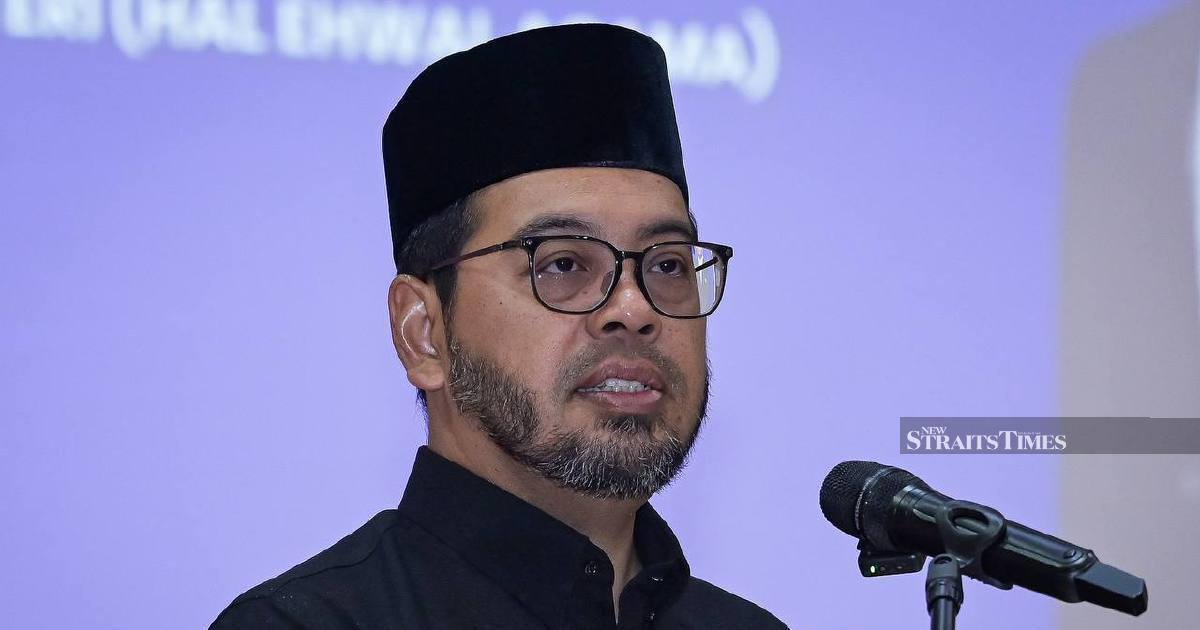
The Prime Minister's Department (Religious Affairs) has given its unequivocal backing to His Majesty Sultan Ibrahim, King of Malaysia, following his explicit call for a comprehensive and transparent investigation into the Royal Commission of Inquiry (RCI) findings on Lembaga Tabung Haji (TH). The department's endorsement signals alignment between the federal government and the monarchy on the critical need to examine the pilgrim fund management body with rigour and integrity.
Lembaga Tabung Haji, which manages savings and investments for Malaysian Muslims undertaking the annual pilgrimage to Mecca, has faced intensifying scrutiny in recent years over governance lapses, investment losses, and management decisions that have affected hundreds of thousands of account holders. The establishment of the RCI represented a significant escalation in oversight, tasked with examining alleged irregularities and breaches of fiduciary duty at the institution that holds substantial Islamic wealth.
The monarch's directive carries particular weight in Malaysia's constitutional framework, where the Yang di-Pertuan Agong functions not merely as a ceremonial figurehead but as a custodian of Islamic affairs and the spiritual interests of Muslim citizens. Sultan Ibrahim's emphasis on thoroughness, transparency, and an uncompromising approach underscores the gravity with which the palace views the Tabung Haji situation and the expectations placed on investigators to leave no stone unturned.
By publicly endorsing the King's position, the PM's Department (Religious Affairs) demonstrates that investigating authorities should expect full governmental support for their inquiries. This alignment removes potential ambiguity about political will and signals that obstructions or attempts to shield questionable practices will face institutional resistance from multiple levels of authority. For investigators and enforcement agencies, such backing provides crucial political cover to pursue leads wherever evidence leads them.
The emphasis on conducting investigations "without compromise" is particularly significant in the Malaysian context, where patronage networks, political considerations, and competing institutional interests have historically influenced the pace and outcomes of high-profile probes. The explicit invocation of this principle suggests awareness within government circles that past inquiries have sometimes been constrained by informal pressures or institutional hesitancy to pursue powerful figures implicated in misconduct.
Tabung Haji's challenges extend beyond governance deficiencies. The institution has struggled with investment performance, particularly following substantial exposure to troubled ventures and property holdings that depreciated significantly. Account holders—predominantly lower and middle-income Muslim Malaysians—have seen the real value of their savings eroded, transforming what should be a secure vehicle for hajj expenses into a source of anxiety and financial disappointment for hundreds of thousands of families.
The RCI's mandate likely encompasses examination of board decisions, executive compensation, related-party transactions, and investment strategies that deviated from prudent fiduciary standards. Understanding how such decisions were made, who authorized them, and what governance mechanisms failed to prevent them requires investigators willing to follow documentation trails and interview key decision-makers regardless of their standing or connections. The government's public commitment to unflinching investigation suggests these paths should be pursued vigorously.
For Malaysian Muslims and the broader public, the conjunction of the King's directive and the government department's backing provides some reassurance that accountability mechanisms are being activated. However, the ultimate test will be the tangible outcomes—whether investigations culminate in substantive findings, whether responsible parties face consequences commensurate with any wrongdoing identified, and whether systemic reforms emerge to prevent recurrence of the governance failures that prompted the RCI's establishment.
The statement from the PM's Department also carries implications for institutional reform at Tabung Haji itself. If investigations reveal structural weaknesses in oversight, risk management, or accountability mechanisms, the government's commitment to rigorous examination creates an expectation that remedial changes will follow. Stakeholders will scrutinize whether the institution implements meaningful governance overhauls or whether surface-level reforms mask continued underlying problems.
International observers monitoring Malaysia's approach to financial accountability and anti-corruption efforts will also track this inquiry's trajectory. Malaysia's standing as a destination for Islamic finance and Shariah-compliant investment depends partly on demonstrated commitment to institutional integrity and investor protection. The Tabung Haji situation, if not resolved satisfactorily, could undermine confidence in Malaysia-based Islamic financial instruments and governance standards, with implications for attracting Islamic capital flows.
The timing of the government's public statement reinforces that this investigation should not be viewed as routine bureaucratic process but as a matter engaging both the monarchy and executive authority. When multiple institutional actors publicly commit to an uncompromising approach, investigators gain clarity about expectations and stakeholders gain grounds to demand accountability if that commitment appears not to translate into action.
Moving forward, attention will focus on whether the investigation's findings are made public in substantive form, whether they trigger regulatory changes or enforcement actions, and whether the government's current backing translates into willingness to accept potentially embarrassing conclusions if evidence points in uncomfortable directions. The RCI's credibility and the government's integrity both depend on what happens after the final report is submitted.

