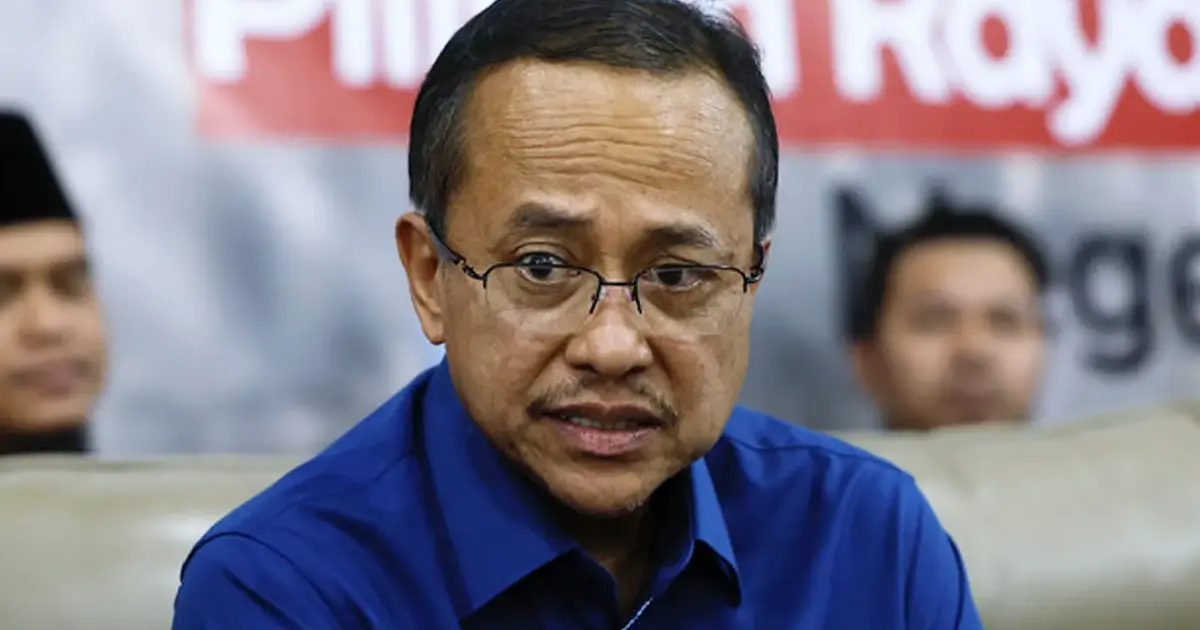
Perikatan Nasional's leadership has moved to quell concerns about the visual branding confusion that might arise from two of its component parties operating under the same coalition emblem during elections. Coalition chairman Samsuri stressed that there is no practical difficulty with the arrangement, pointing to the fact that the two political movements contest in distinct geographical constituencies, thereby avoiding any direct competition or voter bewilderment at polling stations.
The assertion comes at a time when Malaysia's opposition-aligned alliance faces renewed scrutiny over its internal mechanics and how multiple parties can function cohesively under unified symbols. PN, which emerged as a significant political force following shifts in the federal government landscape, has sought to present itself as a tightly organised coalition capable of challenging established political arrangements. Yet the practicalities of managing multiple parties sharing visual identity remain a subject of public discussion and media analysis across the region.
Samsuri's clarification addresses a fundamental concern in electoral politics: the principle of clarity between competing factions, even when they are ostensibly allied. In many democracies, parties maintain distinct logos and identities to ensure voters can clearly distinguish between candidates and movements, particularly in mixed electoral systems where voters may simultaneously choose between different tiers of representation. The Malaysian context, however, permits allied parties to pool resources and branding under umbrella coalitions, a practice that has become increasingly common since the 2018 elections reshuffled the political landscape.
The sharing of the PN logo between PAS and Bersatu reflects broader calculations about electoral strategy and coalition management. By presenting a unified face, allied parties can consolidate their messaging and campaign resources while maintaining separate organisational structures. This approach has particular resonance in Malaysia, where political competition often turns on the ability to mobilise traditional support bases while simultaneously appealing to swing voters and emerging constituencies. The two parties bring different demographic and geographical strengths to the coalition, with Bersatu historically drawing support from Bumiputera constituencies and professional classes, while PAS maintains deep roots in rural heartland areas across multiple states.
The decision to permit shared branding also reflects practical considerations about campaign finances and logistical efficiency. By operating under a common logo, PN members can coordinate advertising, messaging, and voter engagement strategies without duplicating expenditure or creating confusion in the marketplace of political ideas. This becomes particularly important during election campaigns, when the volume of materials distributed to voters can become overwhelming. A unified visual identity helps ensure that the coalition's core messaging reaches target audiences without fragmentation across competing party symbols.
Yet Samsuri's reassurance likely also contains an implicit acknowledgment that the arrangement carries certain risks. Electoral history globally demonstrates that voters sometimes struggle to distinguish between allied parties, particularly when candidates from different movements compete in adjacent districts or when media coverage fails to clearly identify party affiliations. The potential for inadvertent voter misdirection, or conversely for voters to deliberately split their support between preferred candidates regardless of party affiliation, represents a genuine challenge to coalition cohesion and strategic planning.
The PN coalition's structure reflects Malaysia's evolving political configuration since 2018, when the fall of the Barisan Nasional government created space for new alignments and partnerships. Perikatan Nasional itself emerged from configurations that shifted substantially between 2020 and 2024, with changing membership and internal power dynamics. The maintenance of a shared logo across member parties therefore also serves a symbolic function, reinforcing the coalition's claim to be a permanent and unified political force rather than a temporary electoral arrangement subject to renegotiation after each election cycle.
From a Southeast Asian perspective, Malaysia's approach to coalition branding and management offers insights into how diverse political movements navigate the challenges of maintaining unity while preserving distinct organisational identities. Neighbouring countries like Thailand and Indonesia face similar tensions between the desire for coalition coherence and the maintenance of separate party brands. The Malaysian case suggests that technical solutions—such as operating in separate districts—can mitigate the confusion that shared logos might otherwise create, though questions about voter perception and electoral fairness persist.
The practical separation of PAS and Bersatu into different electoral contests means that voters in any given district face a clear choice between individual candidates, even if those candidates operate under the same coalition symbol. This mirrors arrangements in other democracies where umbrella coalitions permit participating parties to maintain visual distinction in local contexts while projecting unified branding nationally. The approach allows both flexibility and consistency, adapting to local political dynamics while maintaining coalition-wide coherence.
Looking forward, the arrangement between PAS, Bersatu, and other PN components will likely face ongoing scrutiny as Malaysia approaches its next federal elections and various state-level contests. The credibility of Samsuri's assertion that separate constituencies prevent confusion will ultimately depend on how voters respond to the shared branding in practice. Should electoral results suggest that voters found the arrangement confusing or that it advantaged certain candidates over others unintentionally, pressure may mount for more clearly differentiated party identities within the coalition structure.

