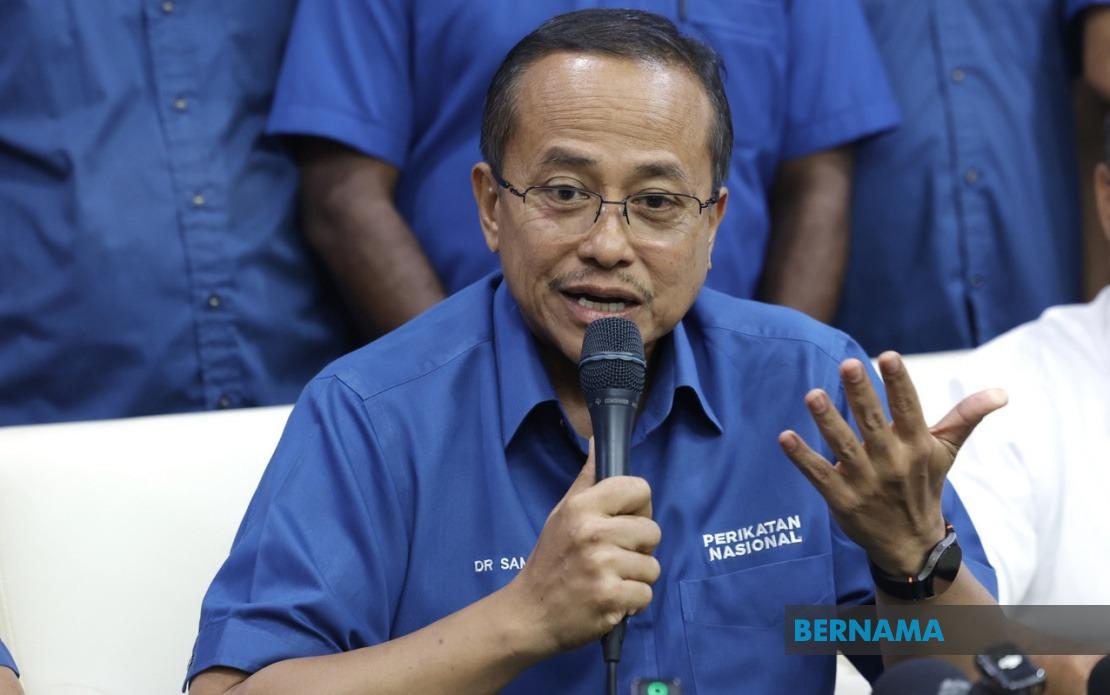
Perikatan Nasional has formally endorsed its electoral strategy for the upcoming Negeri Sembilan state election, with the coalition's Supreme Council approving how seats will be distributed among its component parties and confirming that all candidates will campaign under the PN logo. The announcement, made by PN chairman Datuk Seri Dr Ahmad Samsuri Mokhtar following a special council meeting in Seremban, signals a unified approach to the poll involving four parties: PAS, Parti Gerakan Rakyat Malaysia (Gerakan), Parti Bumiputera Perkasa Malaysia (Wawasan), and the Malaysian Indian People Party (MIPP).
The decision to field a consolidated campaign under a single coalition identity represents a strategic choice that differs markedly from how some other opposition-aligned coalitions have competed in recent state contests. By presenting voters with the PN brand rather than individual party logos, the coalition aims to project unity and coherence at a time when Malaysian electoral politics have become increasingly fragmented. This approach also simplifies voter messaging and campaign materials, allowing the coalition to focus on key themes without diluting its identity across multiple party banners.
Dr Ahmad Samsuri emphasised that the electoral push in Negeri Sembilan centres on three core objectives: advancing the welfare of the state's residents, accelerating development initiatives, and safeguarding communal harmony in a multi-ethnic society. These stated priorities reflect broader political concerns in Negeri Sembilan, where economic diversification and infrastructure development have been ongoing challenges. The coalition's framing positions itself as a custodian of stability and progress, messaging that seeks to appeal across demographic lines in a state where Malay-Muslim, Chinese, and Indian communities coexist.
The approval process followed extensive groundwork that Dr Ahmad Samsuri acknowledged fell squarely under his purview as coalition chairman. He explicitly confirmed that all preliminary negotiations with prospective partners and allied organisations had his full knowledge and endorsement before the Supreme Council's formal deliberation. This clarification appears designed to establish clear hierarchy and decision-making authority within PN's leadership structure, particularly important in coalitions where multiple parties with distinct interests must coordinate their actions.
However, the PN announcement immediately exposed fractures within what was previously understood to be a cohesive political alliance. Bersatu president Tan Sri Muhyiddin Yassin issued a countervailing statement asserting that Bersatu, a party that has been integral to PN's formation and identity, was excluded from discussions regarding seat distribution and potential cooperation frameworks with Barisan Nasional. This claim of marginalisation carries significant weight, as Bersatu remains one of the bloc's original architects despite recent internal turbulence at the national level.
Muhyiddin's response demonstrated that beneath PN's publicly unified facade, substantial tensions persist over resource allocation and strategic direction. His assertion that Bersatu had therefore opted to contest independently under its own party symbol in Negeri Sembilan effectively bifurcates the opposition campaign in the state. For Malaysian voters, this means that what PN presents as a consolidated alternative to the ruling coalition will in reality compete with a fellow opposition party, potentially fragmenting anti-establishment votes and diminishing the effectiveness of either group.
The dispute over Bersatu's inclusion or exclusion raises broader questions about PN's internal governance and inclusivity. If a founding member of the coalition felt excluded from critical strategic decisions, it suggests either communication breakdowns at the leadership level or deliberate sidelining of particular factions. Either scenario undermines claims of collective decision-making and may hint at longer-term viability questions for the coalition as a unified political force. In Malaysian politics, where coalition management has repeatedly proven challenging, such internal fractures often presage more serious splits.
From a Negeri Sembilan perspective, the emergence of this PN-Bersatu divide complicates the electoral landscape considerably. Voters accustomed to clear-cut choices between established alternatives now face a more fragmented opposition camp. The state election thus becomes not merely a referendum on the incumbent Menteri Besar and ruling party, but also a test of whether opposition unity—a frequently cited objective in Malaysian politics—can translate into practical reality. If PN and Bersatu candidates compete against each other in certain constituencies, the resulting vote-splitting could advantage the established ruling coalition.
The four parties within PN—PAS, Gerakan, Wawasan, and MIPP—bring distinct constituencies and ideological orientations. PAS controls the Islamist segment of PN's base, Gerakan traditionally appeals to moderate and business-minded voters, Wawasan represents bumiputera nationalist interests, and MIPP specifically targets the Indian community. The coalition's gamble is that a unified PN identity can transcend these party-specific associations and create an overarching alternative to the current state administration. Whether this branding strategy will resonate with Negeri Sembilan voters, particularly in areas where individual parties have established track records and loyal supporters, remains an open question.
For Malaysia's broader political ecosystem, the Negeri Sembilan contest serves as a significant barometer of opposition cohesion and electoral viability. State elections have increasingly become testing grounds for national political alliances before they are attempted at the federal level. If PN can overcome internal divisions and maintain coalition discipline in Negeri Sembilan, it could strengthen claims to represent a viable, unified alternative. Conversely, if Bersatu's independent contest significantly impacts PN's performance, or if internal contradictions become more pronounced during campaigning, it may foreshadow difficulties in sustaining opposition unity in future contests.
The timing of these developments also matters within Malaysia's electoral calendar. State elections in individual states increasingly influence national political perceptions and momentum. A successful PN performance in Negeri Sembilan could energise the coalition ahead of potential general elections, while internal dysfunction and public disputes might conversely damage its national profile. For Southeast Asian observers watching Malaysian politics, the degree to which PN can manage its internal tensions will signal whether coalition politics in the region can achieve the discipline required for sustained electoral competition.

