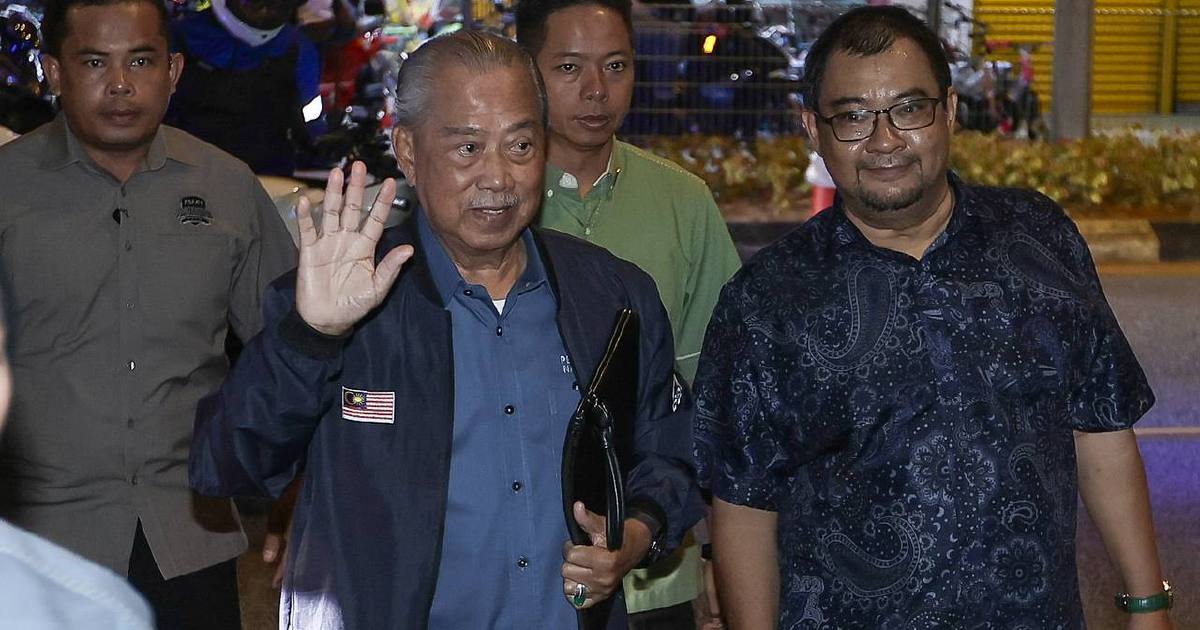
Perikatan Nasional's top leadership gathered for an unscheduled Supreme Council meeting in Kuala Lumpur, convening to address pressing matters affecting the opposition coalition's future direction and composition. Despite the urgent nature of the assembly, party president Muhyiddin Yassin clarified that deliberations centred on broader coalition mechanics rather than the contentious question of Bersatu's role within the bloc.
The meeting's agenda encompassed examining potential expansions to PN's membership base, indicating the coalition remains focused on broadening its political footprint across the Malaysian landscape. Coalition politics in Malaysia frequently hinges on such organizational questions, as parties balance internal stability with ambitions for electoral strength. The focus on prospective new members suggests PN leadership views expansion as strategically important despite the opposition bloc's current composition challenges.
Muhyiddin's explicit statement that Bersatu's membership status did not feature in tonight's discussions carries particular significance given ongoing speculations about the party's relationship with the broader opposition alliance. As PN's primary architect and convenor, Muhyiddin's clarification serves to manage expectations and potentially deflate tensions surrounding Bersatu's political positioning. The omission itself, however, may prompt observers to question whether contentious intra-coalition disputes are being deliberately postponed rather than resolved.
Perikatan Nasional emerged as a significant opposition force in Malaysian politics, commanding substantial parliamentary representation and serving as an alternative power centre to the ruling coalition. The bloc's composition and coherence directly influence its capacity to mount effective parliamentary scrutiny and project viability as a potential governing alternative. Recent months have witnessed various strain points within opposition politics, making coalition management increasingly delicate.
Bersatu's centrality to PN cannot be overstated, as the party remains one of the coalition's largest components and brings considerable political weight. The party's trajectory—from government participation through shifting coalitions to current opposition positioning—reflects the fluid nature of Malaysian politics where party alignments regularly reconfigure. Clarity regarding Bersatu's standing therefore carries implications extending beyond internal PN dynamics.
The deliberate framing by Muhyiddin that discussions focused exclusively on general coalition matters and prospective membership implies an attempt to compartmentalize different political questions. This approach allows PN leadership to address expansion possibilities without simultaneously confronting potentially divisive questions about existing member parties. Such separation proves common in coalition management, where leaders attempt incremental problem-solving rather than comprehensive restructuring.
Southeast Asian opposition coalitions typically struggle with sustainability, as member parties frequently pursue divergent electoral interests and ideological agendas. Malaysia's experience demonstrates how coalition mechanics require constant calibration, particularly when individual parties harbour ambitions that may conflict with collective bloc positioning. PN's apparent focus on prospective members rather than consolidating existing relationships suggests confidence in the current membership structure, at least publicly.
The timing of an emergency Supreme Council gathering in the current political environment warrants examination. Malaysian politics has recently witnessed significant movements regarding government formation, budget negotiations, and parliamentary strategy. PN's decision to convene urgently indicates developments requiring immediate attention from top leadership, though the content of tonight's meeting remained largely restricted to coalition-level considerations rather than specific member-party issues.
Muhyiddin's press statement effectively creates a narrative boundary around tonight's proceedings, suggesting focused discussion of expansion opportunities without entanglement in existing internal complications. Whether this represents genuine absence of Bersatu-related discussions or strategic discretion regarding sensitive topics remains subject to interpretation. Coalition leaders frequently manage information flows carefully, particularly when navigating complex intra-alliance relationships.
Moving forward, PN's willingness to consider new members while apparently avoiding difficult conversations about existing parties' roles reflects typical opposition coalition dynamics in Malaysian politics. The coalition's viability as a governing alternative depends substantially on resolving such questions comprehensively rather than deferring them indefinitely. Tonight's meeting represents one moment in what will likely constitute an ongoing process of coalition refinement and strategic positioning as Malaysia approaches future electoral contests.
The opposition landscape in Malaysia increasingly centers on PN's capacity to maintain coherence while expanding influence. Tonight's emergency meeting, focused on coalition expansion rather than member consolidation, suggests leadership prioritizes growth opportunities alongside stability maintenance. How these competing imperatives balance in coming months will significantly influence PN's trajectory and its credibility as an alternative governing force within Malaysian politics.