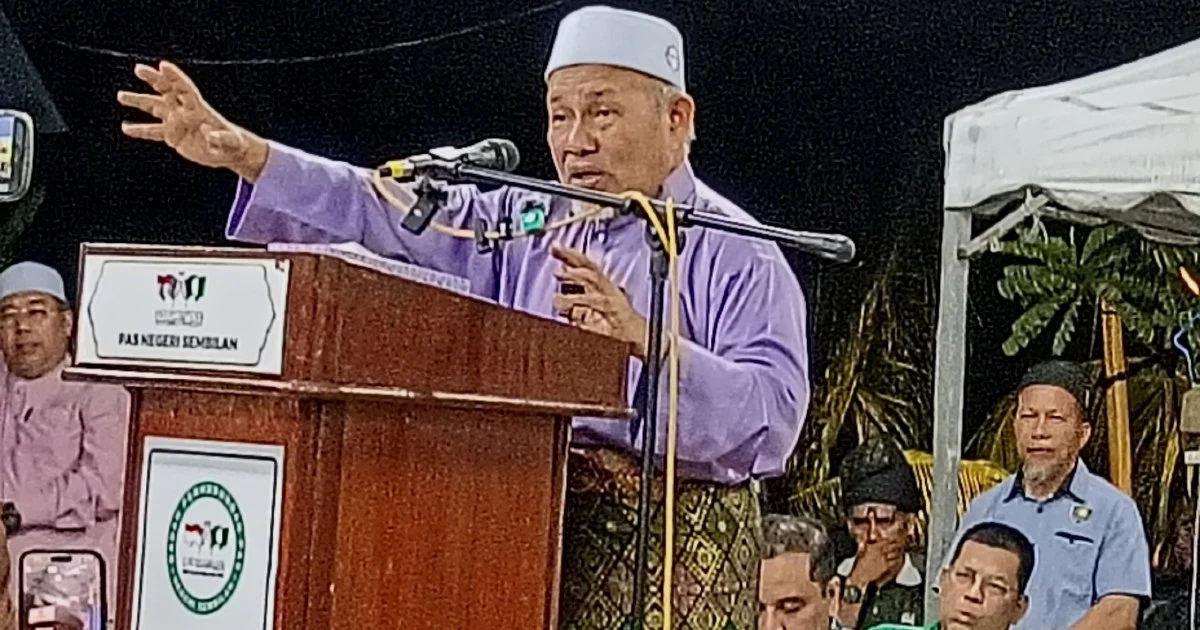
Perikatan Nasional operates as a coalition jointly held by all its constituent parties rather than as a vehicle dominated by a single member, according to a senior PAS leader who sought to dispel tensions within the opposition bloc. Datuk Seri Tuan Ibrahim Tuan Man, who holds the position of deputy president at PAS, made the assertion while addressing concerns about the governance structure and decision-making authority within the alliance that has emerged as a significant political force in Malaysia's current landscape.
The clarification from the PAS official represents an attempt to reinforce the principle of shared stewardship across the coalition's membership, a concept that has occasionally been tested as different factions within PN have pursued distinct strategic objectives. This statement carries particular weight given PAS's substantial role within the coalition and its influence over electoral outcomes in several key states. By emphasising collective ownership, Tuan Ibrahim sought to establish a framework where all member organisations possess equal standing in matters affecting the coalition's direction and representation.
The assertion becomes relevant within the context of ongoing discussions about coalition unity and the mechanisms through which major decisions are negotiated among PN's leadership. Malaysia's political terrain has grown increasingly complex following recent electoral cycles, with multiple coalitions competing for parliamentary dominance and state-level influence. The clarification underscores the importance that traditional coalition mathematics hold in Malaysian politics, where numerical strength at the grassroots must be balanced against centralised leadership authority.
PAS, as one of PN's most electorally significant components, brings considerable organisational capacity and voter mobilisation capabilities to the alliance. The party's emphasis on collective stewardship reflects awareness that any perception of unilateral control by a single party could generate friction among partners and potentially undermine the coalition's coherence during critical political moments. Such unity messaging becomes particularly important when external pressures or internal disagreements threaten to expose fractures within the broader opposition structure.
The principle of shared ownership in Malaysian political coalitions typically translates into consultative mechanisms where major strategic decisions require buy-in from senior representatives across member parties. This collaborative approach has proven essential for maintaining stability in multi-party alliances, which historically have faced challenges when dominant partners have attempted to impose decisions unilaterally. Tuan Ibrahim's intervention suggests that protecting the consensus-based model remains a priority for PN's leadership.
Bersatu, the party at the centre of the ownership debate, has occupied an evolving position within Malaysian politics over recent years. The party's trajectory and its relationships with other PN members reflect broader shifts in the country's political landscape, including changing voter preferences and generational transitions within party hierarchies. Understanding Bersatu's role within PN therefore requires attention to these wider structural developments rather than viewing coalition dynamics in isolation.
The timing of Tuan Ibrahim's statement reflects the ongoing importance of coalition management in Malaysian politics, where electoral viability often depends on presenting a united front to voters. Any ambiguity about internal power distribution risks inviting criticism that the opposition remains insufficiently cohesive to govern effectively at the national or state levels. By reaffirming the collective character of PN, senior party officials seek to project stability and organisational discipline to both supporters and undecided voters.
Regional observers and analysts view Malaysian coalition politics through the lens of broader Southeast Asian political trends, where multi-party alliances increasingly characterise opposition structures. The mechanisms through which these coalitions distribute authority and manage competing interests offer insights into how democratic systems function across the region. Malaysia's experience in balancing party autonomy with coalition solidarity therefore carries implications extending beyond the immediate Malaysian context.
The assertion of collective ownership also carries practical implications for PN's decision-making processes on matters ranging from candidate selection for electoral contests to positions adopted on major national policy questions. If ownership truly extends equally across all members, then consultation and negotiation become necessary prerequisites for major announcements or strategic pivots. This procedural reality shapes how quickly the coalition can respond to emerging political opportunities or threats.
Stakeholders within PN's membership structure recognise that perceptions of fairness in how authority is distributed significantly influence party members' commitment to the broader coalition project. When component parties believe their voice carries weight in collective decisions, they prove more willing to maintain discipline and suppress internal criticism that might otherwise become public. This dynamic helps explain why clarifications regarding ownership structure periodically surface in Malaysian political discourse.
Looking forward, the coalition faces the challenge of maintaining its coherence while accommodating the distinct organisational interests and strategic preferences of its member parties. The tension between pursuing unified coalition objectives and preserving individual party autonomy represents an enduring feature of PN's internal dynamics. Tuan Ibrahim's intervention illustrates how senior leaders continuously must rebalance these competing imperatives to sustain the alliance's long-term viability.