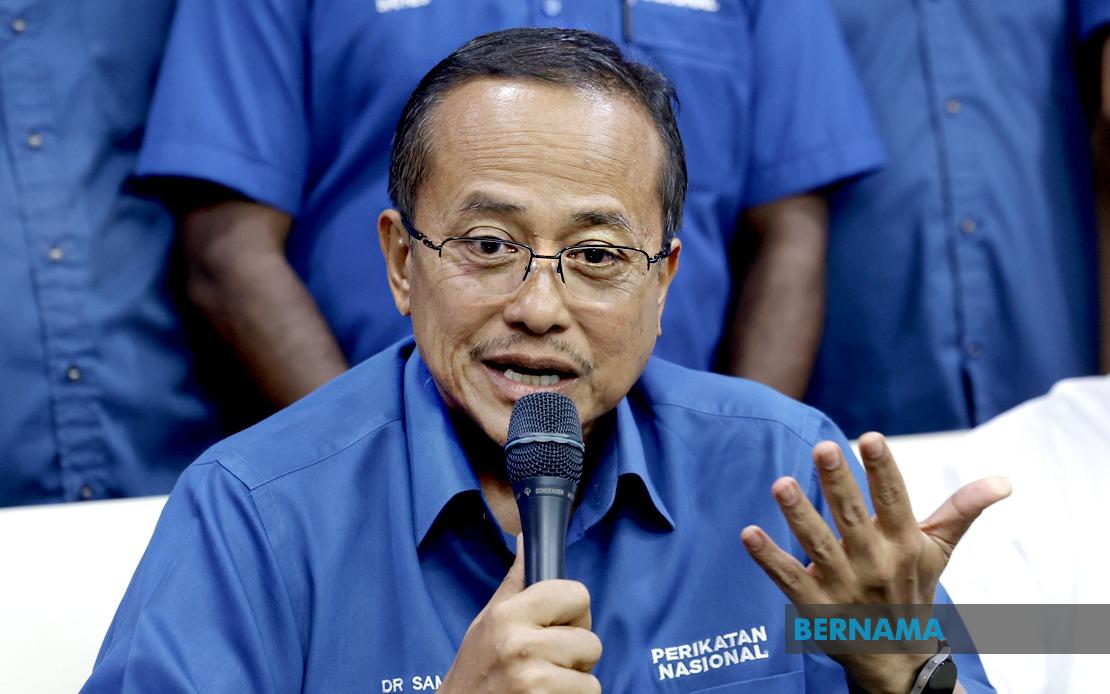
Perikatan Nasional has indicated readiness to enter into strategic negotiations with Barisan Nasional before the coming Melaka state election, according to the coalition's chairman Datuk Seri Dr Ahmad Samsuri Mokhtar. Speaking at the 23rd Perak PAS Convention in Taiping on Friday, Ahmad Samsuri emphasised that despite no formal discussions having materialised between the two coalitions to date, the window for meaningful talks remains open given the absence of a confirmed dissolution date for the Melaka State Legislative Assembly.
The PN leader stressed that timing would be crucial for any potential negotiation process, arguing that talks should ideally occur before the assembly is formally dissolved. This timeline consideration underscores the strategic calculation both coalitions must navigate as they position themselves ahead of what is expected to be a competitive state contest. Ahmad Samsuri's measured language—framing discussions as conditional on BN's willingness to engage—reflects the delicate diplomatic terrain surrounding coalition politics in Malaysia, where competing interests and territorial claims frequently complicate unity efforts.
Central to Ahmad Samsuri's pitch was a statistical projection suggesting that a joint PN-BN alliance possesses approximately a 75 per cent probability of capturing the state government. This analysis, presented during his convention speech, represents a compelling numerical argument for cooperation, signalling that neither coalition is guaranteed unilateral success. The calculation appears designed to incentivise BN, which has governed Melaka for decades but faced electoral headwinds in recent contests, to view an alliance not as a compromise but as a pathway to reclaiming state power with enhanced legitimacy.
However, Ahmad Samsuri acknowledged that pursuing this cooperative strategy would be neither straightforward nor frictionless. His metaphor of a non-highway journey lacking rest stops conveyed a candid assessment that any merger of PN and BN interests would require substantial negotiation, mutual concession, and organisational tolerance from both sides. The coalition leader essentially cautioned party members and observers that the road to government through alliance would demand flexibility and patience, acknowledging implicitly the competing egos, resource disputes, and ideological differences that have historically complicated BN-PN relations.
The strategic calculus underlying PN's openness relates to its current standing in Melaka's political landscape. Positioned as an opposition force, the coalition views a formal pact with BN as potentially transformative, enabling a transition from marginal political actor to governing partner. This ambition reflects broader Malaysian coalition dynamics, where opposition coalitions frequently explore merger opportunities when isolated electoral prospects appear limiting. For PN, particularly given intra-coalition tensions and variable state-level performance across Malaysia, a Melaka victory through strategic alliance would provide both symbolic and material strengthening.
Barisan Nasional's position in this developing scenario carries equal weight. The veteran ruling coalition has encountered significant electoral challenges in recent years, with Melaka representing a particularly sensitive test case given its historical association with BN dominance. The emergence of PN's explicit openness to negotiation effectively places the initiative partially within BN's court—a positioning that may reflect PN's confidence in its negotiating leverage, or alternatively, its recognition that BN ultimately holds greater state machinery advantages. BN's response, whether receptive or cautious, will signal much about coalition dynamics heading into the elections.
The absence of prior substantive discussions between PN and BN, despite Ahmad Samsuri's public overture, suggests that formal negotiations have not yet commenced. This gap between rhetorical openness and actual dialogue could reflect various conditions: neither coalition's leadership has authorised formal talks, preliminary soundings are occurring through backdoor channels not yet public, or genuine hesitation persists about the terms any potential agreement might entail. Ahmad Samsuri's Taiping remarks appear partly designed to shift this dynamic, making PN's negotiating readiness an explicit fact that BN leadership must formally acknowledge or dismiss.
The involvement of Perak PAS Commissioner and PAS vice-president Datuk Idris Ahmad in Ahmad Samsuri's convention appearance underscores the intra-coalition dynamics at play. PN comprises multiple parties with distinct geographical strongholds and leadership structures, meaning any broader coalition pact would require alignment across these component organisations. PAS's prominent positioning at a Perak convention reflects the party's enhanced standing within PN and its role as a key constituency in national coalition calculations. State-level elections, therefore, often operate as microcosms of broader national coalition positioning.
For Malaysian voters and observers, the PN-BN negotiation question carries implications extending beyond Melaka itself. Successful cooperation in one state election frequently becomes a template or counterexample for subsequent contests elsewhere. If PN and BN successfully coordinate in Melaka, the precedent could influence coalition behaviour in future state elections across Peninsular Malaysia and Sabah. Conversely, failed negotiation attempts or bitter contests between them could entrench opposition between coalitions and complicate eventual national-level realignments.
Ahmad Samsuri's carefully calibrated language—expressing readiness while maintaining dignified distance, citing statistical advantages while acknowledging practical challenges—reflects sophisticated political communication. The PN chairman avoided ultimatums, excessive triumphalism, or inflammatory rhetoric that might alienate BN negotiators. Instead, he presented PN as the rational, willing participant whose collaboration could serve BN's electoral interests. Whether this approach succeeds in catalysing formal bilateral discussions remains to be seen, though the public staking of PN's negotiating position marks a significant step in pre-election maneuvering.

