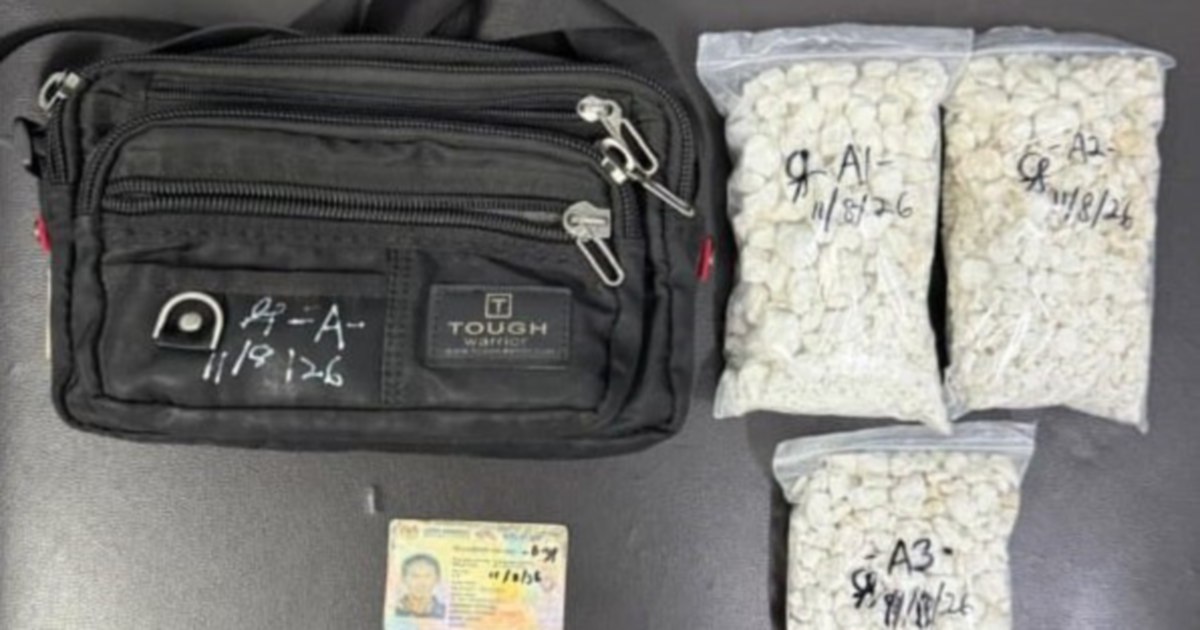
An early-morning narcotics operation in Simpang Renggam has resulted in the seizure of more than one kilogram of heroin and the arrest of a suspect, marking another success in Johor police's sustained campaign against drug trafficking in the state. Officers recovered 1.055kg of the controlled substance, estimated to have a street value of RM10,128, during the raid conducted in the rural locality north of Kluang. The detained man, aged 42, is currently assisting police with investigations into the source and intended distribution network of the confiscated drugs.
The timing of the operation underscores the police force's commitment to conducting surveillance and enforcement activities around the clock to disrupt the supply chain of illicit narcotics. Drug trafficking remains a persistent challenge in Johor, which sits along major trafficking routes connecting Malaysia's western regions to industrial and urban centres. The state has historically served as both a transit point and consumption market for heroin and synthetic drugs, making it a focal area for law enforcement attention. Early morning raids are often deployed strategically to catch suspects before they have opportunity to dispose of evidence or flee.
Heroin continues to dominate the illicit drug landscape across Malaysia despite decades of enforcement efforts. The drug's prevalence reflects both its entrenched supply networks and the recurring waves of addiction among vulnerable populations. At RM10,128 per kilogram, the estimated street value reflects the premium pricing of narcotics in retail distribution, where the same quantity would be broken into smaller packets for street-level sales. The actual amount seized represents the type of mid-level trafficking volume that authorities prioritise, as these quantities typically indicate distribution operations rather than personal consumption.
The arrest of the 42-year-old suspect falls within the typical age range of individuals engaged in supply-side drug operations in Malaysia. Traffickers of this age often occupy mid-tier positions within distribution networks, managing wholesale quantities for onward sale to smaller dealers. Understanding the hierarchical structure of drug operations is crucial for law enforcement seeking to dismantle entire networks rather than simply removing individual actors. Intelligence from arrests frequently leads to identification of upstream suppliers and downstream retailers, creating opportunities for broader interventions.
Johor's geography makes it particularly vulnerable to drug trafficking. The state's proximity to Singapore, whose harsh penalties deter local dealers but whose wealth creates lucrative demand, creates pressure for cross-border smuggling. The long coastline presents opportunities for maritime smuggling operations, while the extensive road network through rubber estates, palm plantations, and rural areas offers numerous routes for covert transport. Simpang Renggam's location in the central part of the state positions it along corridors connecting the east and west coasts, making it a natural focus for enforcement operations.
Police cooperation between federal and state authorities, as well as coordination with neighbouring state forces, has intensified in recent years. The formation of special narcotics task forces dedicated to high-trafficking areas has generated results, though the sheer scale of the problem means that seizures represent only a fraction of drugs in circulation. Each successful operation provides intelligence that compounds over time, helping authorities map supplier networks and identify key nodes for disruption.
The value attached to seized narcotics serves multiple purposes in law enforcement reporting. It reflects estimated street value based on purity and prevailing prices, helping communicate the significance of operations to the public. It also provides a metric for comparing enforcement productivity across regions and time periods. However, the actual harm of heroin extends far beyond monetary value, encompassing public health costs, social disruption, crime rates, and the personal devastation experienced by users and their families.
For residents in Johor, particularly in areas like Simpang Renggam where drug activity may be visible, police operations offer assurance of enforcement presence. However, sustainable reduction in drug problems requires complementary strategies including treatment and rehabilitation services, community engagement, and addressing root causes such as poverty and lack of opportunity. The arrested suspect may now face prosecution under Malaysia's stringent drug laws, which carry severe penalties including lengthy imprisonment for trafficking quantities of heroin.
The operation exemplifies the ongoing tension in Malaysia's approach to narcotics: sustained enforcement to disrupt supply, alongside public health initiatives to reduce demand. As trafficking networks adapt their methods and routes, police must continuously evolve their tactics and intelligence gathering. The seizure in Simpang Renggam represents one engagement in this ongoing struggle, with implications for drug availability and street prices across the region.

