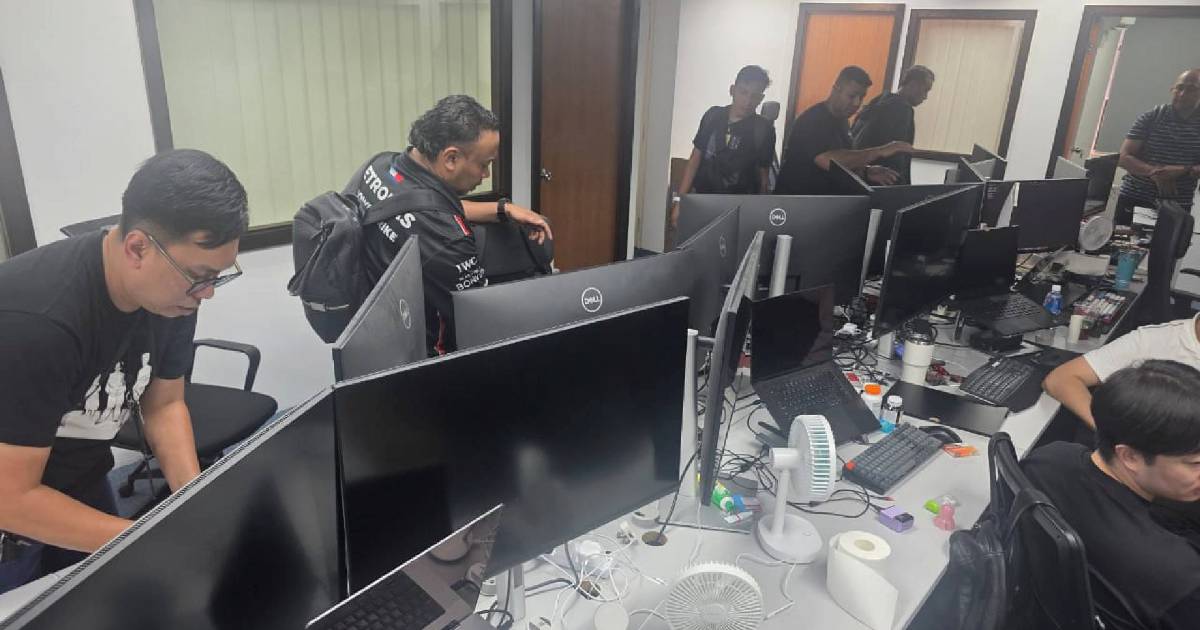
Malaysian authorities moved swiftly yesterday to shut down a sophisticated illegal betting operation targeting World Cup punters, culminating in coordinated raids that netted eleven suspects. The enforcement action took place at an office building situated in the Taman Desa area of Brickfields, where a clandestine call centre had been orchestrating large-scale football wagering activity. Six South Korean nationals were among those detained, signalling the increasingly transnational nature of organised gambling networks operating within Malaysia's borders.
The discovery of this particular betting syndicate highlights the persistent challenge law enforcement faces in combating underground gambling operations that exploit major sporting events to generate substantial illegal revenue. The World Cup tournament, with its global reach and intense betting interest, routinely attracts the attention of criminal networks seeking to capitalise on heightened wagering demand. The concentration of suspected operators from a single foreign nationality suggests a structured, possibly hierarchical organisation rather than an ad-hoc collection of opportunistic gamblers.
World Cup betting presents particular vulnerabilities for law enforcement across Southeast Asia, where the tournament commands enormous audience attention and betting volumes spike dramatically. The offshore call centre model detected in this case represents an evolution in illicit gambling tactics, allowing operators to maintain some distance from direct customer interaction while orchestrating complex wagering transactions. By establishing their operations hub within a commercial office environment, the suspected organisers attempted to blend their activities into legitimate business contexts, a strategy that has become increasingly common among transnational criminal enterprises.
The involvement of South Korean nationals warrants scrutiny into potential connections with broader regional gambling networks. Southeast Asia has become an attractive base for illegal gaming operations run by foreign syndicates, partly because it offers geographic proximity to major Asian betting markets whilst providing operational secrecy. The presence of half a dozen individuals from the same country suggests either a franchise arrangement or a subsidiary operation of a larger international syndicate with headquarters elsewhere.
Malaysia's regulatory framework prohibits unlicensed gambling activities, with specific restrictions on football betting to protect match integrity and prevent illegal wagering from influencing outcomes. Licensed operators must comply with strict licensing requirements through the government's appointed body, ensuring betting is conducted transparently and that funds are properly accounted for and taxed. The underground betting market, by contrast, operates entirely outside these safeguards, creating significant financial losses for the state whilst contributing to crime-related harms including loan-sharking and money laundering.
The Brickfields location appears significant, as the area has become known to contain various commercial operations that sometimes serve as fronts for unlicensed activities. The choice of an office building in a busy commercial district would theoretically provide cover from casual observation, though it ultimately proved insufficient to evade police attention. The call centre operational model suggests sophisticated telecommunications infrastructure and trained staff capable of managing multiple simultaneous betting transactions, indicators of a well-resourced and professionally managed criminal enterprise rather than small-scale backroom gambling.
Quantifying the actual betting volumes or financial transactions facilitated by this particular syndicate remains unclear from initial reporting, though the scale implied by the operational structure suggests considerable sums were likely processed. Underground betting operations typically extract margins ranging from five to fifteen percent on all wagered amounts, meaning even moderate transaction volumes generate substantial criminal profits. These funds often flow into broader money laundering networks and organised crime ecosystems, creating secondary harmful effects beyond simple gambling losses.
The South Korean connection potentially indicates a broader pattern of transnational organised crime utilising Malaysia as a base for regional gambling operations. Intelligence sharing between Malaysian authorities and South Korean law enforcement could prove valuable in identifying parent organisations, source markets, and distribution networks. The timing during the World Cup period suggests the syndicate was specifically activated to capitalise on the tournament's extraordinary betting demand before being dismantled.
Police investigations will likely focus on determining the full organisational hierarchy, the source of capital funding, the number of actual bettors served, and connections to money laundering infrastructure. The individuals detained may face charges under gambling laws, but proving their roles within the hierarchy and securing admissible evidence of financial transactions presents investigative challenges. Prosecutors will need to establish the commercial nature of the operation and evidence of systematic wagering facilitation rather than isolated gambling offences.
This operation reveals ongoing vulnerabilities in Malaysia's borders and commercial premises that criminal enterprises continue exploiting for illicit purposes. While the raid demonstrates police capability to identify and dismantle such operations, enforcement remains reactive rather than preventive. Authorities must now balance thorough investigation and prosecution of those detained against the likelihood that alternative betting operations have already established themselves elsewhere, adapting their tactics to avoid detection whilst serving the persistent demand for unregulated football wagering.

