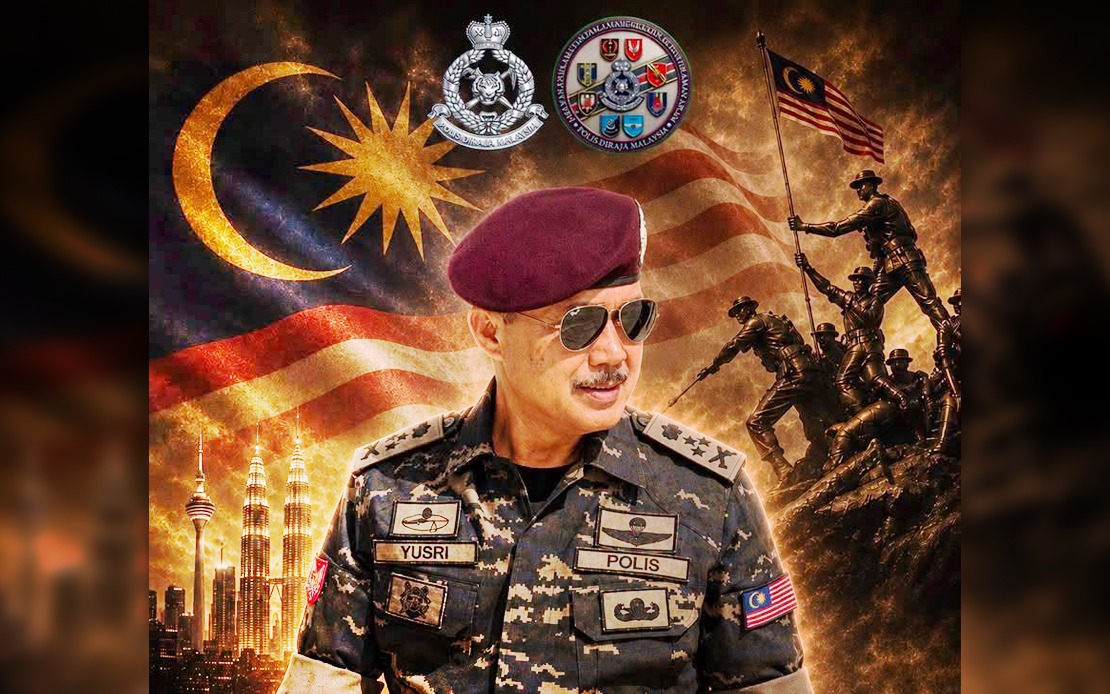
Datuk Seri Mohd Yusri Hassan Basri is trading his high-powered motorcycle for hoofbeats this National Day. The director of the Department of Internal Security and Public Order (KDNKA) will lead the Royal Malaysia Police (PDRM) contingent mounted on a white horse named Al-Sakb at the 69th National Day Parade scheduled for August 31 at Dataran Putrajaya. This represents a significant shift from his previous role, when he commanded the police detachment from atop a BMW R 1250 RT motorcycle.
The PDRM's ceremonial presence will comprise 595 personnel across the ranks, with the spectacle anchored by the Federal Reserve Unit's Mounted Unit. This elite horseback contingent consists of 20 officers and personnel accompanied by 20 horses, forming the vanguard of the police formation. The ceremonial placement of the Mounted Unit at the front underscores the symbolic importance of tradition and pageantry in national celebrations, blending heritage symbolism with contemporary police operations.
Mohd Yusri's transition into the mounted command role reflects the varied leadership demands within Malaysia's security apparatus. During his tenure as director of the Traffic Investigation and Enforcement Department (JSPT), he pioneered the motorcycled leadership approach, which became emblematic of modern policing's incorporation of technological prowess into public-facing operations. His appointment to the KDNKA position, a portfolio encompassing internal security and public order, now requires him to embody a different aesthetic—one rooted in ceremonial grandeur and mounted tradition. The shift captures the duality of contemporary security leadership: managing both cutting-edge operational tactics and time-honoured ceremonial expectations.
Preparing for this role demanded considerable personal investment. Mohd Yusri underwent more than a month of intensive training to master horsemanship and coordinate his movements with the broader mounted unit. This preparation transcends mere ceremonial proficiency; it ensures synchronisation across hundreds of personnel and establishes the rhythmic cohesion necessary for a parade of this magnitude. The training regimen reflects the meticulous planning that undergirds Malaysia's National Day celebrations, where even ceremonial elements must project military precision and organisational excellence.
Beyond the mounted spectacle, the KDNKA contingent will showcase the multifaceted nature of police operations. The General Operations Force and Air Operations Force components will demonstrate PDRM's territorial reach and operational diversity. This comprehensive presentation is strategically designed to communicate the force's evolution and technological adaptation to Malaysian audiences, particularly younger citizens who may associate policing primarily with routine traffic enforcement or community patrols.
Among the most eye-catching technological introductions will be ten newly acquired All Terrain Tactical Assault E-Bikes (ATEB). These high-performance electric motorcycles represent a significant modernisation initiative, supplied specifically to the GOF for deployment in border security, high-risk special operations, and conflict management scenarios. The inclusion of ATEB in the parade serves a dual purpose: it legitimises substantial capital investment to taxpayers while demonstrating the force's commitment to sustainable, technologically advanced policing methods. For Southeast Asian observers, the ATEB integration signals Malaysia's broader pivot towards green technology integration within security frameworks.
Aerial capabilities will be prominently featured through a flypast by an AW139 helicopter, underlining PDRM's vertical operational reach. This airborne component emphasises the force's capacity for rapid deployment, aerial reconnaissance, and large-scale coordination across Malaysia's varied terrain. Combined with the mounted and motorised components, the parade composition presents a narrative arc from traditional horsemanship through contemporary motorcycle technology to advanced aviation, reflecting policing's evolutionary trajectory.
The canine contingent adds another dimension to the ceremonial presentation. Sixteen K9 Unit dogs, trained for detection and tactical operations, will demonstrate the force's deployment of biological assets in security operations. These working animals represent specialised expertise and internationally trained capabilities, elevating PDRM's standing within regional and global security communities. The inclusion of working dogs in national ceremonial displays normalises specialised security functions and educates public audiences about operational diversity beyond visible street-level policing.
The synthesis of tradition, experience, and technological modernity defines this year's PDRM contingent strategy. By positioning mounted officers alongside electric motorcycles and helicopters, the force communicates institutional adaptability—the capacity to respect heritage while embracing innovation. For Malaysian citizens, particularly those attending in-person or viewing through media coverage, this visual narrative reinforces state capacity and institutional modernisation. The parade becomes more than ceremony; it functions as a public communication mechanism about national security priorities and capabilities.
Mohd Yusri's personal investment in the mounted leadership role carries symbolic weight beyond his individual performance. His willingness to undertake substantial retraining after senior appointments signals organisational commitment to evolving ceremonial standards and maintaining institutional relevance. The challenges he acknowledges—adapting from motorcycle to horse leadership—reflect the broader adaptability required of Malaysian security officials navigating between traditional state symbolism and contemporary operational demands.
Public attendance remains central to the celebration's success. By inviting families to participate and experience the National Day atmosphere, Mohd Yusri emphasises the community engagement dimension of security force operations. National Day parades function as legitimacy-building exercises, where visible demonstrations of state power, organisational competence, and patriotic commitment reinforce social cohesion. Weather permitting, the August 31 event promises to deliver a memorable presentation that articulates Malaysian institutional strength to domestic and regional audiences.
The comprehensive nature of the PDRM contingent—spanning mounted traditions, contemporary vehicle technology, aerial platforms, and specialised working units—positions Malaysia's security presentation within regional and global contexts. Southeast Asian neighbours observing the parade gain insights into Malaysian organisational capacity and technological integration. Domestically, the public experiences tangible evidence of substantial public investment in security infrastructure and operational modernisation, reinforcing confidence in state institutions during a period when security concerns remain paramount across the region.

