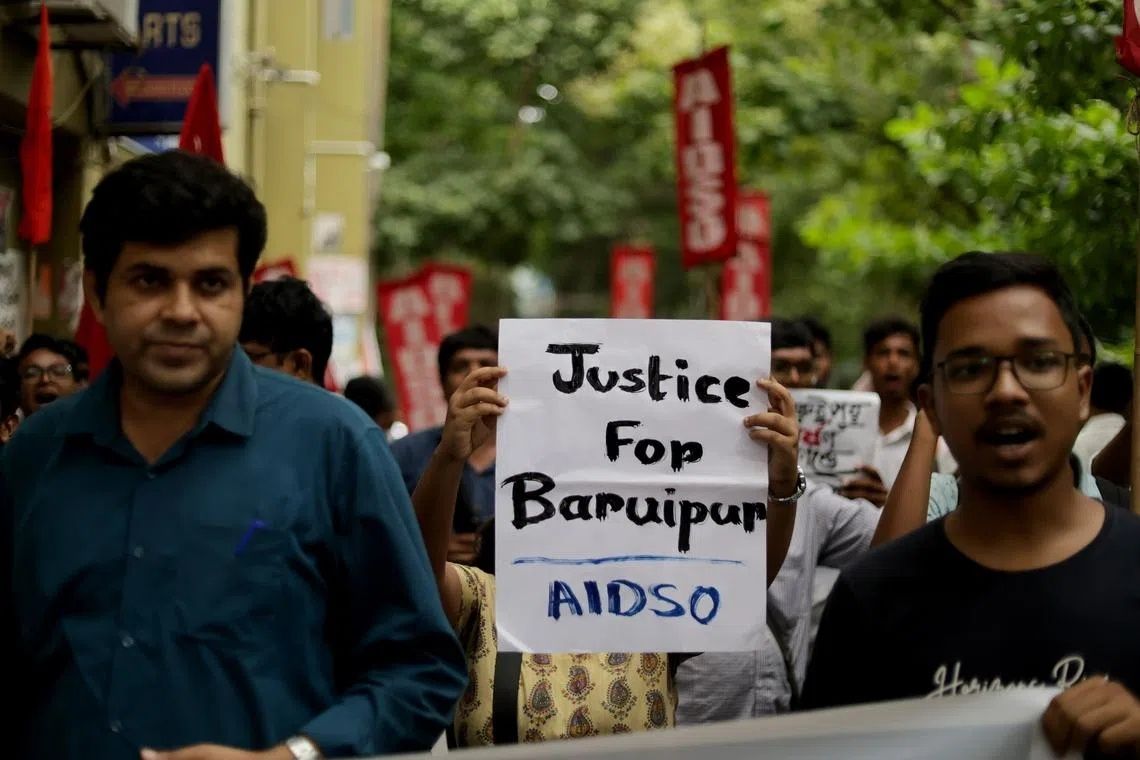
Law enforcement in West Bengal has intensified its response to violent demonstrations that erupted following the discovery of an 11-year-old girl's body in a pond in Baruipur city, located approximately 30 kilometres south of Kolkata. The child went missing on July 4 and was found dead in the water the following day, triggering widespread public outrage and uncontrolled street protests that have left authorities grappling with parallel investigations into both the crime itself and the subsequent disorder.
Police have confirmed that 35 individuals have been arrested in connection with violence and vandalism occurring during the protest period this week, according to senior state police officer Arvind Kumar Anand. The disturbances have been substantial, with demonstrators blocking major roads and setting vehicles ablaze as emotions ran high throughout the affected areas. Authorities indicate they are conducting ongoing identification efforts using footage circulating on social media platforms, suggesting the arrest toll may increase as investigations progress and additional suspects are tracked down through digital evidence.
Tragedies of this nature have historically provoked severe communal responses, and this incident proved no exception. Police disclosed that one individual, described as innocent and uninvolved in either the crime or the subsequent violence, was killed through mob vigilantism during the chaotic street scenes. Such incidents underscore the dangerous dynamic created when collective anger and despair override judicial processes, a pattern that has repeated across Indian cities during high-profile cases involving violence against women and children.
In a separate but connected development, law enforcement announced that one of four men arrested for the child's rape and murder has been shot dead. Prabhas Mondal, identified as a suspect, was killed in the early morning hours of July 8 during what police characterised as an escape attempt. According to the official account, Mondal had been transported to the crime scene as part of standard investigative procedures when the incident occurred. The circumstances of his death have raised questions typical of such encounters in the Indian justice system, where police shootings of suspects remain controversial and often spark human rights concerns.
Mondal's mother delivered an unexpected public statement following her son's death, conveying through media interviews that she would not accept his body for funeral rites. Her remarks reflected the profound shame and moral condemnation that families sometimes express in response to heinous crimes committed by their relatives. She characterised her son's actions as sinful and appeared to accept the fatal outcome as appropriate consequence, stating that she wanted no association with bringing his remains into their home. Such maternal rejection, while highlighting the severity with which the crime was viewed within the family structure, also illustrates the social ostracism that perpetrators of sexual violence face in Indian society.
Complications have emerged regarding the other arrested suspects, with Indian media reporting claims from one family that their relative was arrested through case of mistaken identity rather than genuine involvement in the crime. No statements have been made available from the families of the remaining two detained individuals, leaving questions about the strength of evidence against all four men. These developments point to potential complications in the investigation that could affect eventual prosecutions, even as public demands for swift justice mount.
West Bengal's newly elected Chief Minister Suvendu Adhikari, who assumed office following his Bharatiya Janata Party's victory in May state elections, has responded to the case by pledging uncompromising enforcement against perpetrators of sexual violence. Through a statement posted on X on July 9, Adhikari promised that his administration would show "no leniency" for those committing rape and related crimes, as well as for perpetrators of the mob violence that followed discovery of the child's body. He characterised innocent victims of the protest violence as "blameless" and assured the public that his government would deploy the full legal apparatus to pursue offenders and deliver justice.
The incident has reignited longstanding concerns about personal safety for women and girls across India, despite legislative reforms enacted in response to previous high-profile crimes. Following the 2012 Delhi gang rape and murder of a 22-year-old woman, which sparked massive nationwide demonstrations and international condemnation, India's parliament approved stricter criminal laws including enhanced penalties for sexual offences. Four men were subsequently convicted and executed by hanging for that killing, yet reported cases of sexual violence have continued, raising questions about implementation and enforcement gaps.
West Bengal specifically has faced renewed global attention regarding women's safety following 2024 developments at Kolkata's RG Kar Medical College and Hospital, where a trainee doctor was raped and murdered. That incident triggered extensive nationwide protests and investigations into institutional failures and broader systemic vulnerabilities that allow predators to operate. The timing of the current case, occurring within months of that scrutiny, suggests that institutional and social safeguards remain inadequate despite previous reform efforts and international pressure.
The convergence of these events creates a complex narrative for South Asian policymakers and civil society observers. While the immediate criminal response has been swift—involving arrests, police action, and ministerial statements affirming commitment to justice—the underlying conditions that permit such crimes to occur appear structurally persistent. The contrast between rapid enforcement responses and slower progress on prevention, institutional accountability, and cultural change around gender-based violence reflects broader tensions in India's approach to protecting vulnerable populations.

