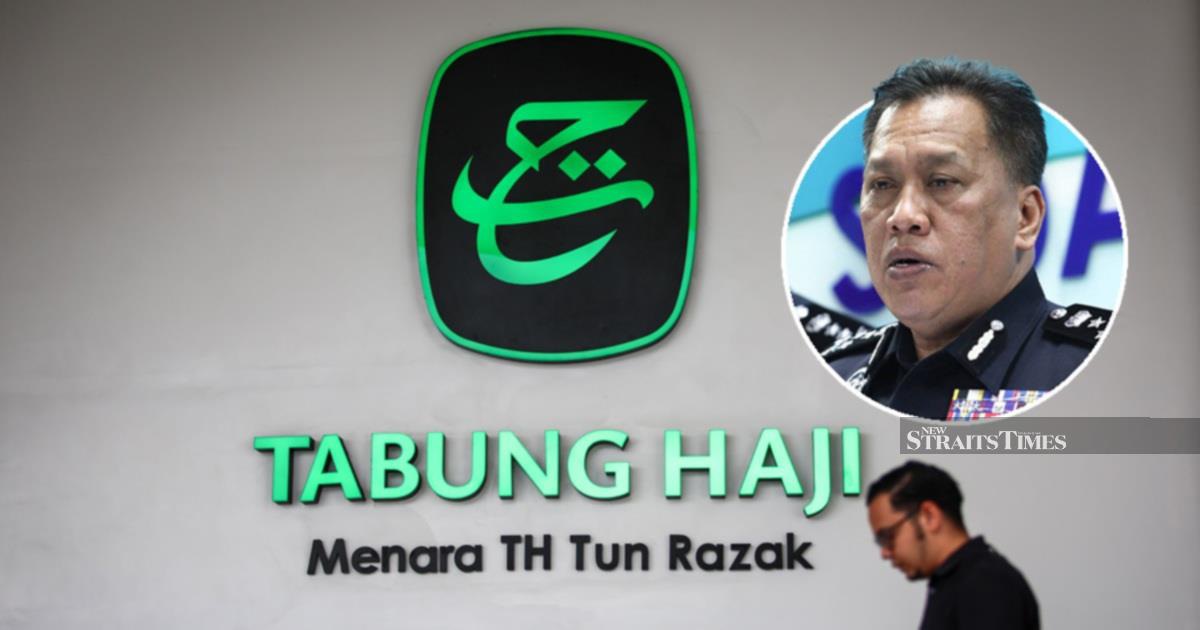
Malaysian police have substantially expanded their investigative efforts into the findings of the Royal Commission of Inquiry on Lembaga Tabung Haji, with officers having now documented statements from 134 witnesses as part of their comprehensive fact-gathering exercise. The inquiry represents a significant escalation in the authorities' response to revelations contained within the RCI report, which examined governance, financial management, and operational practices at the pilgrimage fund authority.
The scale of witness documentation underscores the complexity and breadth of matters identified during the RCI's investigation into TH. By accumulating statements from such a large pool of individuals, police are building a detailed evidential foundation that could potentially support criminal charges should evidence of wrongdoing emerge. This methodical approach allows investigators to cross-reference accounts, identify inconsistencies, and establish timelines of events that may have contributed to institutional failures within the pilgrimage fund.
Among the 134 witnesses interviewed, 10 individuals were recently called forward to provide statements. This rolling sequence of summonses suggests that the police investigation remains active and responsive, with new leads and investigative angles continuing to surface as the probe progresses. The staggered approach to witness interviews is typical of complex white-collar investigations where preliminary statements often prompt follow-up questions and necessitate additional interviews with related parties.
For Malaysian pilgrims and their families, the Tabung Haji probe carries profound personal significance. The institution manages savings schemes for millions of Muslims intending to perform the Hajj pilgrimage, making any governance failures or financial mismanagement a matter of direct concern to individual contributors and their accumulated funds. The RCI's investigation emerged from widespread public concern about TH's operational effectiveness and financial health, particularly following revelations about investment losses and management controversies.
The witness statement collection process serves multiple investigative functions beyond mere documentation. Through formal police interviews, authorities can assess credibility, examine institutional knowledge at different organizational levels, and identify potential culpability. Statements from employees, board members, advisors, and external parties can reveal whether decisions involved negligence, incompetence, or deliberate misconduct—a critical distinction for determining appropriate legal responses.
The RCI report itself likely identified specific transactions, decisions, or management failures that warranted criminal investigation. Police, in documenting witness accounts, are essentially translating the commission's findings into a format suitable for potential prosecution. This transition from administrative inquiry to criminal investigation represents an important threshold, as it subjects accused parties to legal protections and procedural requirements governing criminal process.
Such extensive witness interviewing also serves a protective function for the integrity of any eventual legal proceedings. By thoroughly documenting what individuals knew, when they knew it, and what actions they took, police create an evidentiary record that is contemporaneous with investigation rather than subject to later contestation. This is particularly important in cases involving institutional actors who might otherwise attempt to reconstruct their actions in legally favorable ways.
From a Southeast Asian perspective, Malaysia's willingness to pursue criminal investigation of major financial institutions reflects growing regional emphasis on accountability and transparency. Neighboring countries including Singapore, Thailand, and Indonesia have similarly conducted high-profile investigations into state-linked institutions and their leadership, suggesting a regional trend toward stricter oversight of large financial entities managing public resources or citizen assets.
The investigation's progression also indicates that Malaysian authorities view the RCI findings as sufficiently serious to warrant police involvement beyond the administrative sphere. Rather than treating the matter as one requiring only internal reforms or regulatory action, the inclusion of criminal investigation signals that potential illegal conduct may have occurred, warranting intervention by law enforcement agencies with prosecutorial capacity.
For institutional governance across Malaysia's broader ecosystem of statutory bodies and government-linked companies, the Tabung Haji investigation carries cautionary implications. Organizations managing significant public resources or citizen assets are being reminded that governance failures and financial irregularities may trigger not merely administrative remedies but criminal investigation and prosecution of responsible individuals. This prospect may encourage more rigorous internal controls and ethical oversight.
The 134 witness statements represent just one component of the overall investigative effort. Forensic financial analysis, documentary examination, and expert review of specific transactions typically accompany witness interviews in cases of alleged institutional misconduct. The complete investigation file will ultimately determine whether sufficient evidence exists to support prosecution recommendations to the Attorney General's Chambers.
As the police investigation continues its methodical progression through witness interviews and evidence examination, the outcomes will significantly influence public confidence in Malaysia's capacity to address misconduct at senior institutional levels. The investigation demonstrates that major institutions and their leadership are not insulated from criminal accountability, a principle increasingly emphasized across Malaysia's governance and institutional oversight frameworks.

