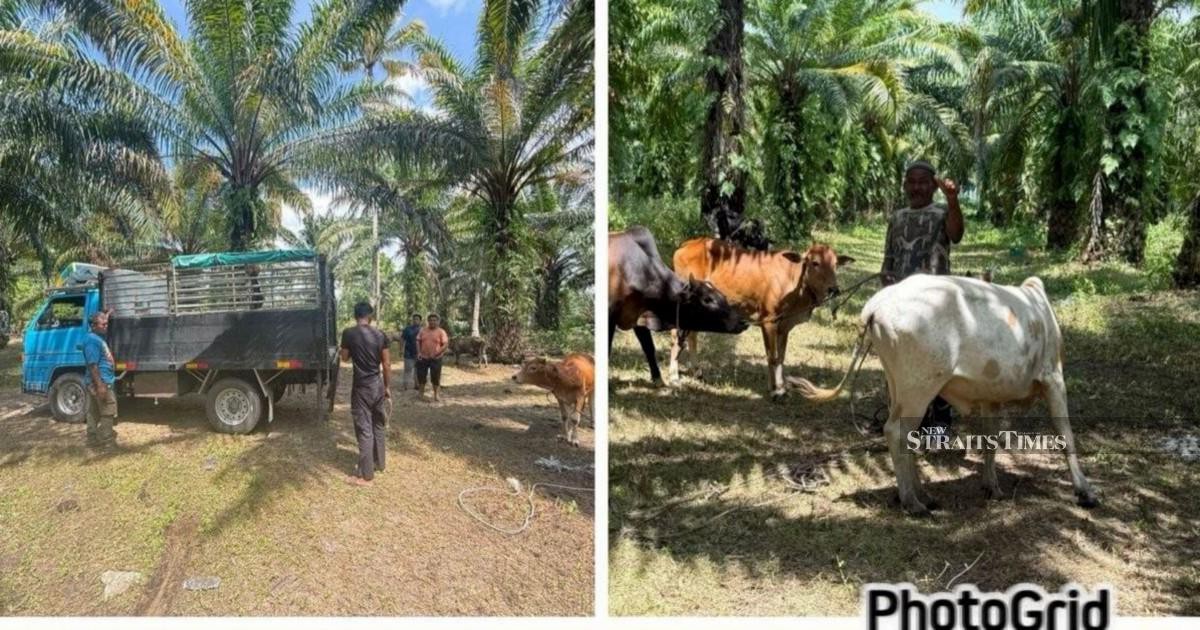
Police in Kelantan have successfully broken up an organized cattle rustling operation that had been preying on livestock owners across the northeastern region. Following a series of coordinated raids, authorities arrested 10 suspects, including two women, and recovered 32 head of cattle valued at RM96,000. The arrests represent a significant blow to an active theft syndicate that had been operating with apparent sophistication across both Kelantan and Terengganu.
The recovery of such a substantial number of animals in a single operation suggests the network had been operating at considerable scale, likely targeting multiple farms and smallholdings across the region. The inclusion of female suspects in the arrests indicates the syndicate had divided roles among its members, a common organizational pattern in livestock theft rings where women may have handled logistics, cash management, or served as intermediaries in sales. The geographic spread of the operation across two states underscores how organized cattle theft has evolved beyond simple opportunistic theft into a coordinated criminal enterprise with supply chains and distribution networks.
Livestock theft remains a persistent problem across Malaysia's agricultural regions, particularly in states where cattle farming constitutes a significant livelihood for rural communities. Kelantan and Terengganu, both with substantial livestock industries, have been vulnerable to such organized operations. For farmers in these regions, cattle represent substantial capital investment and long-term income security, making theft particularly devastating. The loss of breeding stock disrupts agricultural production cycles and can threaten the viability of family farms that operate on narrow profit margins.
The value of recovered livestock at RM96,000 demonstrates the financial stakes involved in such criminal networks. This figure likely represents wholesale or mid-market prices rather than replacement costs, suggesting the actual economic loss to the original owners would be considerably higher. Organized cattle rustlers typically operate by identifying targets, executing thefts during hours of darkness or when farms are least attended, and moving animals quickly to secondary holding locations before selling them through informal channels or to complicit traders.
The syndicate's apparent sophistication in maintaining operations across two states indicates they likely had established logistics for transport and secure temporary holding facilities. Modern cattle theft often involves coordination with buyers who may not inquire too closely about provenance, suggesting connections to both legitimate and informal livestock trading networks. The syndicate's ability to operate for what appears to be an extended period before dismantling points to gaps in inter-agency coordination or surveillance capabilities that have likely since been addressed.
Police operations against livestock theft require intelligence-gathering across farming communities, cooperation with agricultural extension services, and coordination between state police forces. The successful recovery of such a large number of animals indicates effective investigative work and likely cooperation from informants within farming communities who recognized the pattern of thefts. The publicity surrounding such arrests also serves as deterrence, signalling to potential criminals that organized cattle theft will be treated as serious criminal activity with corresponding law enforcement resources deployed.
For the broader Southeast Asian region, livestock theft remains a persistent challenge that absorbs law enforcement resources and destabilizes agricultural communities. The professionalization of cattle rustling into organized syndicates represents an evolution from traditional theft patterns, requiring corresponding evolution in policing strategies. Some affected countries have implemented livestock identification systems, community-based monitoring networks, and stricter penalties for organized livestock theft to combat the problem more effectively.
The arrest of the 10 suspects represents the beginning of the prosecutorial phase, where evidence gathered during the raids will be processed and charges formulated. Successful prosecution of organized livestock theft requires not only evidence of the stolen animals themselves but documentation of the chain of custody, identification of the original owners, and often testimony from community members. The complexity of such cases can mean that investigations become protracted, potentially delaying justice but ensuring that charges can withstand legal scrutiny.
For livestock farmers across Kelantan and Terengganu, the dismantling of this particular syndicate offers temporary relief, though the broader risk of theft remains. Agricultural communities have increasingly turned to preventive measures including improved fencing, surveillance systems, and community-based night patrols to protect their livestock. The successful police operation demonstrates that such community cooperation, when combined with professional law enforcement, can significantly disrupt criminal networks that target agriculture.
Moving forward, the key challenge for authorities involves preventing reorganization of the network's remaining members and addressing the underlying market conditions that enable rapid sale of stolen livestock. Tighter coordination between police and agricultural authorities, combined with closer scrutiny of livestock traders and transportation, can help sustain the gains achieved in this operation. The recovery of the animals, contingent on positive identification and chain of custody confirmation, should allow authorities to return them to their rightful owners, restoring livelihood security to affected farmers in the region.

