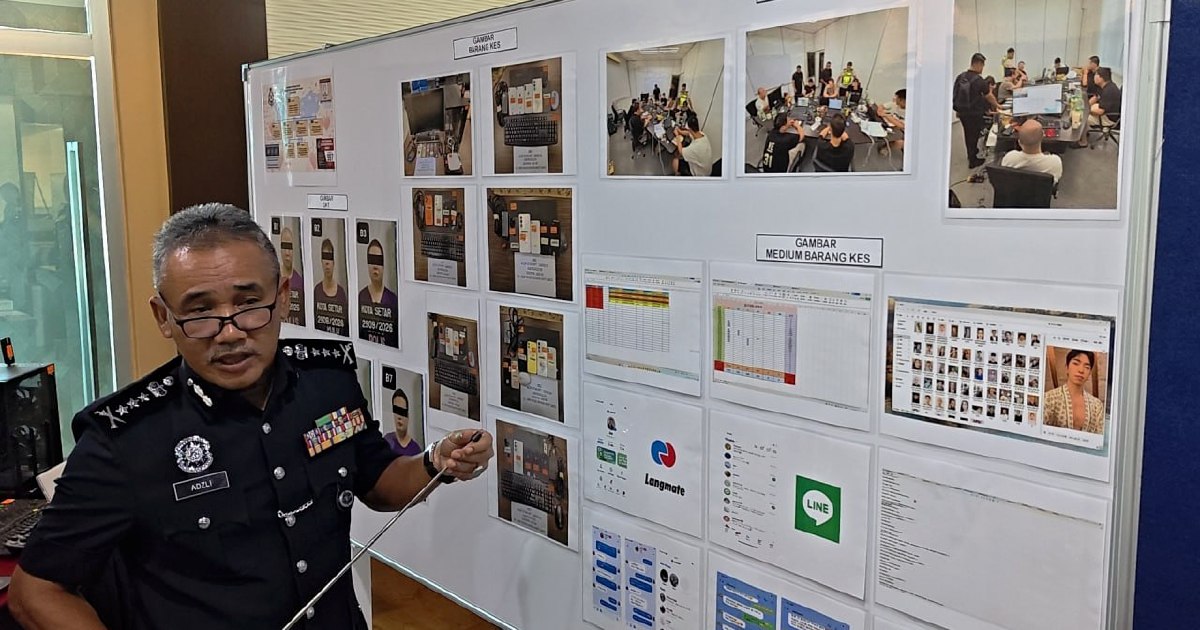
Malaysian police have successfully dismantled a coordinated romance fraud operation that systematically targeted Japanese victims through elaborate online deception schemes. The breakthrough came following a Sunday raid on a commercial unit within Kristal Light Industrial Park in Alor Star, leading to the arrest of seven Chinese nationals suspected of orchestrating the sophisticated scam network.
The syndicate's modus operandi typifies the increasingly complex nature of transnational cybercrime affecting the region. Criminal networks specialising in romance fraud typically establish false personas on dating platforms and social media, investing considerable time in building emotional connections with unsuspecting victims before pivoting to financial exploitation. Japanese nationals have emerged as a particularly targeted demographic for such schemes, likely due to their higher average incomes and documented willingness to send financial assistance to perceived romantic partners abroad.
The operation's headquarters within Kedah's industrial zone suggests a semi-professional infrastructure, with the perpetrators likely maintaining organised workflows, communication protocols, and victim management systems. Such industrial park locations offer operational advantages including legitimate business cover, minimal scrutiny from landlords, and practical isolation from residential neighbourhoods that might yield complaints about unusual activity.
Romance scams represent one of Southeast Asia's most insidious cyber threats, combining psychological manipulation with financial theft in ways that cause profound trauma extending beyond monetary loss. Victims typically experience severe emotional distress upon discovering the deception, often accompanied by shame and reluctance to report incidents to authorities. The cross-border nature of such schemes complicates law enforcement response, requiring coordination between Malaysian police and Japanese counterparts to trace fund flows and identify additional conspirators.
The Kristal Light Industrial Park location in Alor Star places this operation within Kedah, a state increasingly attracting attention from financial crime investigators. The region's geographic proximity to border regions and its developing commercial infrastructure have made it an inadvertent hub for various transnational criminal operations seeking semi-legitimate cover.
Japanese victims of romance fraud frequently lose substantial sums, sometimes exceeding hundreds of thousands of ringgit. The scammers typically justify initial requests for money through carefully constructed narratives—business emergencies, medical crises, or travel expenses—designed to exploit the psychological investment victims have made in the fabricated relationships. As trust deepens, demands escalate progressively, extracting funds across multiple transactions that victims often struggle to justify or acknowledge even to family members.
The seven individuals detained represent operational personnel rather than organisational leadership, based on typical syndicate structures. Investigation outcomes will likely reveal whether additional suspects, potentially located in China or other jurisdictions, directed operations or managed upstream financial operations. The sophistication evident in targeting specific nationalities suggests leadership with marketing expertise and demographic analysis capability.
Malaysian law enforcement has intensified focus on cyber fraud operations, particularly those leveraging the country's infrastructure to victimise foreign nationals. Such investigations generate reputational consequences extending beyond criminal justice outcomes, affecting Malaysia's standing as a cybersecurity concern within international communities and potentially influencing bilateral relationships with nations whose citizens face targeted exploitation.
The romance fraud ecosystem depends on cascading financial infrastructure, with perpetrators typically utilising intermediary bank accounts, mobile money services, and cryptocurrency platforms to obscure fund origins and destinations. Money laundering through these channels enables reinvestment in recruitment and technology infrastructure, perpetuating the cycle. Disrupting this financial plumbing has emerged as crucial to dismantling such networks more permanently.
Investigators will scrutinise communication devices, financial records, and digital footprints recovered during the raid to reconstruct victim networks and trace fund movements. Japanese authorities' involvement would likely extend to victim notification, follow-up investigations within their jurisdiction, and potential asset freezing or recovery proceedings. Such cooperation represents necessary practice in combating crimes transcending territorial boundaries.
The operation's discovery highlights enduring vulnerabilities in online dating and social platforms where perpetrators exploit the anonymity and psychological distance inherent in digital communication. While platforms implement increasingly sophisticated verification and fraud-detection systems, determined criminals continuously adapt methodologies to circumvent safeguards. Education regarding romance scam indicators remains essential, yet psychological factors underlying victim vulnerability—loneliness, trust, hope for connection—persist across demographics.
The arrests underscore Malaysia's capacity to disrupt significant criminal infrastructure, though sustainable reduction in romance fraud prevalence requires systemic approaches addressing platform security, cross-border law enforcement coordination, victim support systems, and community education. This particular operation's dismantling represents tactical success within a strategically broader challenge facing Southeast Asia and indeed global authorities confronting organised cybercrime.

