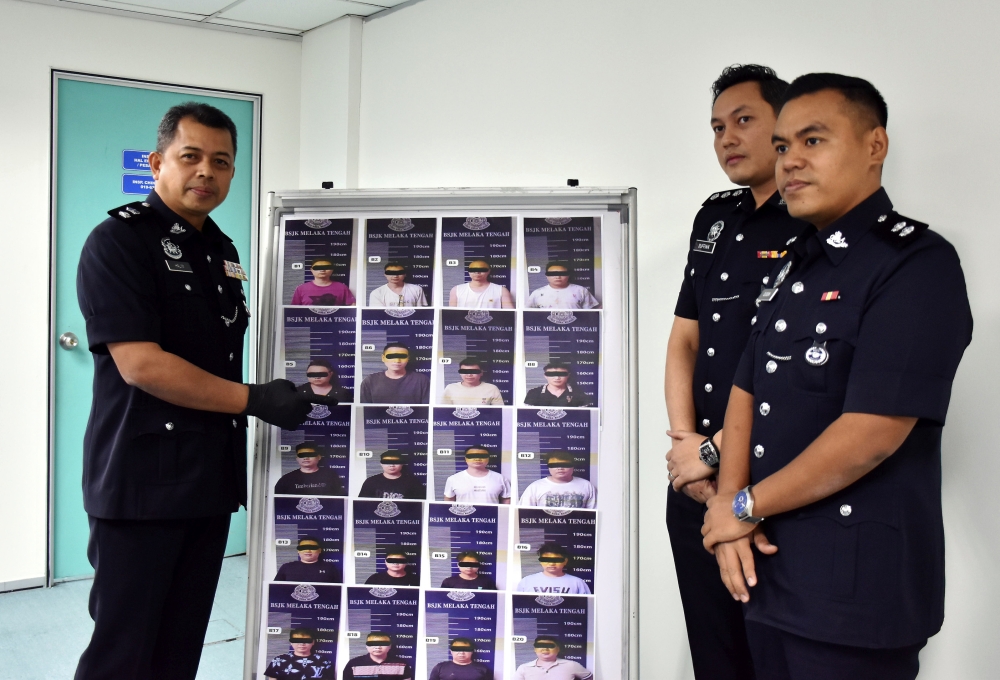
In a significant crackdown on organised financial crime, police in Melaka have apprehended 21 Chinese nationals suspected of orchestrating an elaborate investment fraud syndicate that lured unsuspecting victims with promises of substantial returns. The arrests mark a major breakthrough in combating transnational fraud networks that have increasingly targeted victims across Southeast Asia, with particular focus on Malaysia's role as a regional financial hub vulnerable to such criminal enterprises.
The operation, which centred on Melaka, operated with the hallmarks of a sophisticated cross-border criminal network. Investigators determined that the syndicate had constructed an entirely fictitious investment scheme, fabricating documentation, corporate registrations, and financial performance records to convince potential investors of legitimacy. The intricate deception extended to the creation of fraudulent digital platforms and communication channels designed to mimic established financial institutions, lending credibility to their false propositions and enabling them to maintain contact with victims across different jurisdictions.
Melaka's emergence as a hub for such criminal activity reflects broader vulnerabilities in Southeast Asia's financial landscape. The state's proximity to port facilities, diverse migrant population, and relative accessibility from Kuala Lumpur have historically made it attractive to organised crime syndicates seeking operational bases. Unlike major financial centres with intensive regulatory oversight, secondary cities can offer greater anonymity for criminal networks while still maintaining connectivity to regional financial networks. The presence of a substantial Chinese expatriate community, combined with language advantages and established networks, has made such locations particularly susceptible to syndicates that exploit cultural and linguistic ties to victims.
The scale of the arrest—21 individuals detained simultaneously—suggests a coordinated, hierarchical operation rather than isolated criminal activity. Police investigations typically indicate such networks operate with clear divisions of labour: some members manage financial flows and victim communications, others handle documentation and technology infrastructure, while leadership coordinates strategy and manages relationships with co-conspirators outside Malaysia. The simultaneous apprehension of multiple operators prevents the network from destroying evidence or relocating operations to alternative jurisdictions, a critical tactical advantage in cross-border cases where suspects might otherwise establish themselves in countries with weaker international cooperation frameworks.
The fraudulent investment scheme represents a particularly insidious form of financial crime because it exploits legitimate desires for financial security and wealth creation. Victims are typically vulnerable individuals seeking better returns on savings, small business owners exploring expansion capital, or middle-class investors attempting to diversify portfolios. Scammers weaponise common investment terminology, reference sophisticated financial instruments, and create elaborate performance reports to convince victims that their money is generating promised returns. Many victims remain unaware they have been defrauded until they attempt to withdraw funds and encounter network collapse or unresponsive operators.
Malaysia's law enforcement agencies have intensified efforts against investment fraud as the volume and sophistication of such schemes have escalated. The Financial Industry Collective Outreach (FINCO) and Bank Negara Malaysia have issued repeated warnings about unlicensed investment operators, yet criminal syndicates continue adapting their tactics to evade detection. Digital platforms provide unprecedented reach—criminals can target victims globally from a single physical location—while cryptocurrency integration and hawala networks enable fund movement across borders with minimal regulatory visibility. The arrest in Melaka demonstrates that despite these challenges, coordinated intelligence and enforcement operations remain capable of disrupting major networks.
The investigation likely revealed financial flows totalling millions of ringgit, with victims distributed across multiple countries and states within Malaysia. Cross-border cases invariably complicate prosecution, as evidence collection depends on cooperation from international law enforcement agencies, mutual legal assistance treaties, and willingness of victim witnesses to testify. Chinese nationals arrested in Malaysia must navigate complex extradition considerations, diplomatic protocols, and the determination of which jurisdiction will prosecute. Some cases involve simultaneous investigations by multiple countries' authorities, creating coordination challenges but ultimately strengthening evidence if handled effectively.
The implications for Malaysian consumers and investors extend beyond this particular syndicate. The prevalence of investment fraud reflects a persistent gap between regulatory capacity and criminal innovation. While Bank Negara Malaysia maintains lists of licensed investment advisors and warns against unlicensed operators, enforcement depends substantially on victim reporting and public awareness. Many individuals remain unfamiliar with verification procedures, unable to distinguish legitimate from fraudulent platforms, or reluctant to report suspected fraud due to shame or belief that authorities cannot assist. Enhanced financial literacy campaigns, accessible reporting mechanisms, and coordinated cross-agency response protocols represent essential complements to police enforcement operations.
The arrest also underscores the transnational nature of organised financial crime in the 21st century. Criminal syndicates operate with sophisticated understanding of regulatory environments across multiple jurisdictions, exploiting differences in law enforcement capabilities and technology adoption rates. A network disrupted in Melaka may have sister operations in Bangkok, Ho Chi Minh City, or Manila, with central coordination occurring in jurisdictions with minimal regulatory oversight. International law enforcement cooperation—through ASEAN frameworks, bilateral agreements, and organisations like Interpol—represents the only viable counterweight to such distributed criminal enterprise.
For Malaysian authorities, the case demonstrates both the critical importance of sustained intelligence gathering on organised crime and the necessity of proactive dismantling operations before networks expand further. The timing of the arrest, before the scheme achieved even larger victim populations, reflects effective investigative prioritisation. However, each syndicate dismantled implicitly suggests multiple others remain undetected. Continued vigilance, technological adaptation, and resource allocation toward complex financial crime investigation will determine whether Malaysia can maintain relative success against increasingly sophisticated transnational fraud operations that view the region as fertile ground for exploitation.

