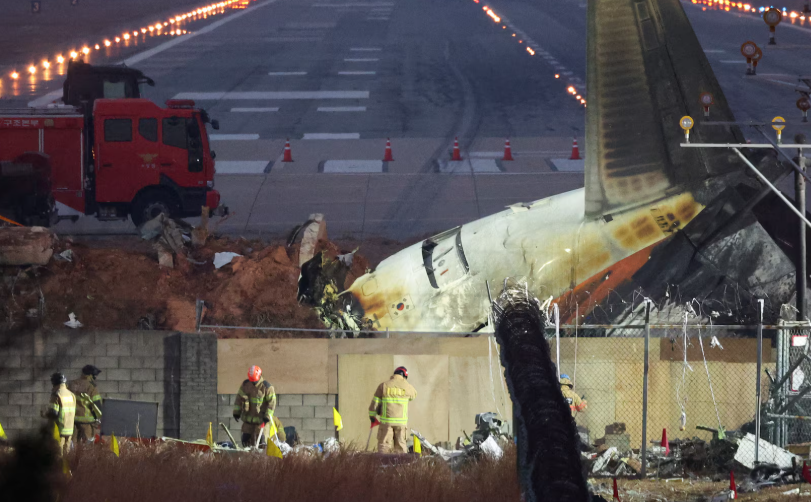
South Korean authorities have intensified their criminal investigation into last year's Jeju Air disaster by conducting coordinated raids on multiple organizations handling the probe. Police teams descended on Korea Airports Corp, the transport ministry, and the Busan Regional Office of Aviation on Tuesday to gather additional evidence as they pursue numerous suspects implicated in the tragedy that claimed 179 lives.
The December 29, 2024 incident at Muan International Airport remains one of South Korea's deadliest aviation accidents, and the criminal investigation has expanded considerably since initial inquiries began. Seventy-four individuals have already been identified as suspects facing various charges, signalling the breadth of the official scrutiny now encompassing decision-makers, operational staff, and regulatory bodies involved in airport management and oversight.
Korea Airports Corp, which operates the majority of the nation's domestic airports with the notable exception of Incheon International Airport, was a primary target of the latest search operations. The organization's central role in managing airport infrastructure and safety protocols makes it a key focus for investigators seeking to establish whether systemic failures or procedural oversights contributed to the crash or hindered emergency response efforts.
The special investigative team has centred its inquiries on charges of professional negligence resulting in death or injury, a serious criminal allegation that extends responsibility beyond individual operators to encompass organizational leadership and management decisions. This legal framework suggests authorities are examining whether those in positions of authority failed in their duty of care, whether through commission or omission, leading directly to loss of life.
Tuesday's raids marked the third time investigators have searched the transport ministry's facilities, underscoring persistent questions about governmental handling of aviation safety and the incident response. The repeated searches indicate that prosecutors have not yet concluded their examination of the ministry's role in safety standards, emergency protocols, and oversight mechanisms that should have protected passengers and crew.
The investigation's scope may widen further, with authorities considering additional charges related to causing a serious public disaster. This potential charge carries even greater weight than negligence allegations, reflecting the catastrophic scale of the incident and the possibility that investigators may attribute broader systemic failures to specific individuals or organizations rather than isolated acts of carelessness.
For Malaysian and broader Southeast Asian readers, the Jeju Air investigation offers sobering lessons about aviation safety governance. The scale of criminal accountability now being pursued in South Korea contrasts sharply with how some regional jurisdictions have handled aviation incidents, raising questions about whether enough emphasis is placed on prosecuting organizational failures versus operational errors. The involvement of national regulatory bodies suggests that systemic oversight at the highest levels carries legal consequences in the South Korean framework.
The investigation has kept considerable public attention focused on determining precisely what caused the aircraft to crash during landing and whether proper safety procedures were followed in the critical moments before impact. Questions persist about weather conditions, aircraft maintenance records, pilot communications, and emergency protocols—all areas where institutional responsibility can be assigned alongside individual accountability.
The transport ministry's repeated appearance in these investigation raids suggests deeper concerns about government regulatory capacity and oversight mechanisms. As the body responsible for setting and enforcing aviation safety standards across South Korea, its potential culpability has significant implications for public trust in national aviation authorities and raises questions about whether current regulatory frameworks adequately protect passengers.
The involvement of the Busan Regional Office of Aviation indicates that investigators are examining emergency response and local-level decision-making during and after the incident. This geographical extension of the investigation suggests concerns about coordination between national and regional authorities and whether local officials had adequate resources, training, and protocols to manage a disaster of this magnitude.
As the investigation proceeds toward what South Korean prosecutors hope will be comprehensive prosecutions, the case demonstrates the country's willingness to pursue criminal charges against government agencies and major corporations implicated in public tragedies. This approach differs markedly from some jurisdictions where institutional accountability remains largely civil rather than criminal, though both systems aim ultimately to improve safety and prevent recurrence.
The ongoing investigation serves as a reminder that aviation disasters, while rare, trigger extended legal and institutional examinations that can reshape regulatory frameworks and corporate practices. For Southeast Asian aviation authorities and airport operators, the Jeju Air case illustrates how thoroughly modern air safety incidents are scrutinized and how seriously some governments take institutional accountability when public lives are at stake.

