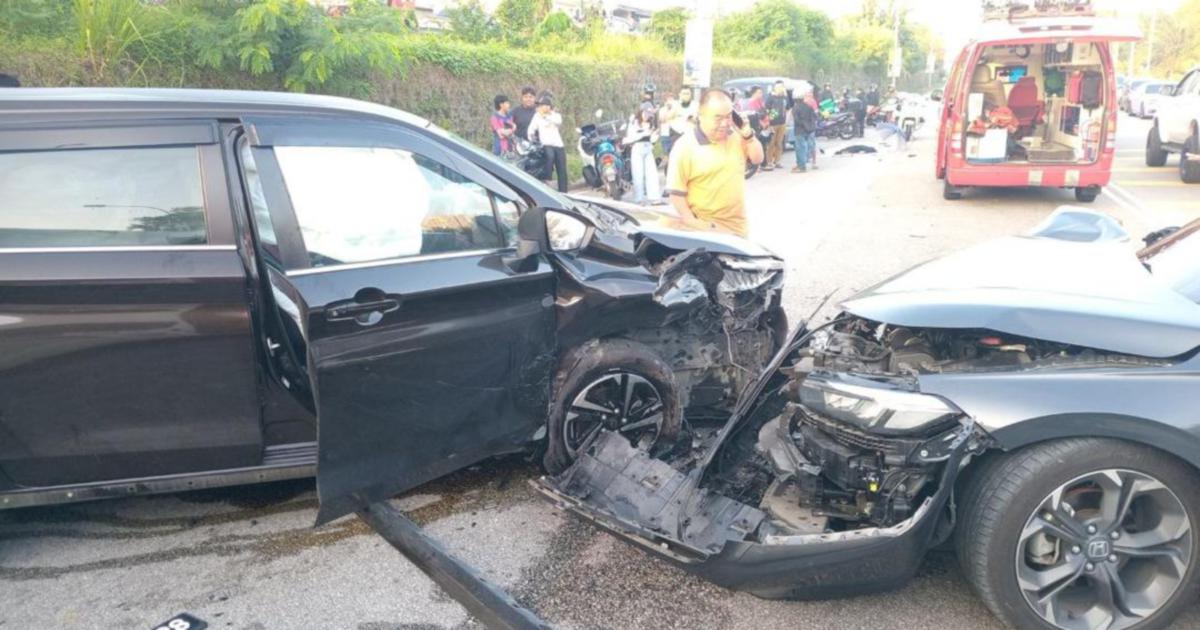
A multi-vehicle collision on Jalan Permas Utama in Johor Baru has claimed the life of a factory operator in circumstances that have prompted police to launch a comprehensive investigation into the circumstances surrounding the crash. The incident, which occurred this morning, involved four vehicles and resulted in the fatal injury of the woman, who was thrown from one of the vehicles during the impact and subsequently crushed beneath the overturned van.
The tragedy underscores the persistent risks that road users face on Malaysian thoroughfares, where complex multi-vehicle collisions can escalate minor traffic incidents into catastrophic events. The sequence of events that unfolded along Jalan Permas Utama demonstrates how quickly a routine journey can transform into a life-threatening situation, with consequences that extend beyond the immediate victims to their families and loved ones.
According to initial reports, the factory operator was travelling with her father and three children at the time of the collision. The presence of multiple passengers, particularly minors, raises significant concerns about the broader impact of the accident and the potential for additional injuries among those travelling in the vehicle. Such circumstances typically necessitate a more extensive investigative process to establish the sequence of events and determine any contributing factors.
The police response to this incident reflects standard protocol for fatal traffic accidents of this magnitude. Officers will examine vehicle damage patterns, road conditions, eyewitness accounts, and any available traffic camera footage to reconstruct the collision sequence. The investigation will also consider whether mechanical failures, weather conditions, driver error, or other road users' actions contributed to the catastrophic outcome.
Jalan Permas Utama is a significant thoroughfare in the Johor Baru metropolitan area, serving as a connector for residential and industrial zones. Traffic conditions on this route can vary significantly throughout the day, and understanding the conditions at the time of the collision will be crucial to the investigation. High-traffic periods often correlate with increased accident risk, as drivers navigate congested conditions while maintaining speed.
The nature of the crash—specifically the ejection and crushing of the victim beneath an overturned vehicle—suggests the force of impact was substantial. Such outcomes typically occur when vehicles collide at considerable speed or when the collision dynamics create sudden directional changes that destabilize the vehicle. The fact that multiple vehicles were involved indicates a potential chain-reaction scenario, where initial contact between two vehicles set in motion a sequence that drew in additional road users.
For Malaysian road safety advocates, incidents of this severity reinforce ongoing concerns about driver behaviour, vehicle maintenance standards, and infrastructure design. The presence of young children among the passengers adds an emotional dimension to the tragedy while also highlighting the vulnerability of child passengers in severe collisions. Malaysian road fatality statistics remain concerning relative to developed nations, with multi-vehicle accidents accounting for a disproportionate share of serious injuries and deaths.
The investigation will likely examine whether all vehicles involved were properly maintained and whether occupants were using appropriate safety restraints. While seatbelt compliance has improved in Malaysia over recent years, enforcement remains inconsistent, and child safety seat usage lags behind recommended standards. These factors can significantly influence outcomes in high-impact collisions.
For Johor Baru residents and the broader Johor community, this incident will likely prompt renewed awareness of road safety hazards. The collision on Jalan Permas Utama serves as a sobering reminder of the life-altering consequences that can result from momentary lapses in attention, misjudgement of distance or speed, or mechanical failures. Such incidents often lead to increased police presence on affected routes and temporary traffic management measures while the investigation proceeds.
The psychological impact on witnesses and those tangentially connected to the incident should not be underestimated. Multi-vehicle collisions that result in fatalities typically traumatize emergency responders, witnesses, and other road users who were present during or immediately after the incident. Johor police will need to manage both the investigative requirements and the broader community response to this tragedy.
As the investigation unfolds, police will issue public appeals for additional witnesses and information. Those who observed the collision or the vehicles involved immediately beforehand are encouraged to come forward. The thoroughness of such investigations depends significantly on the volume and quality of eyewitness accounts, which can provide crucial details about driver behaviour, vehicle speeds, and the sequence of events leading to the collision.
This fatal incident underscores the importance of continuous investment in road safety infrastructure, driver education programmes, and enforcement mechanisms. Malaysian authorities have periodically launched campaigns targeting specific risk factors, but sustained, systematic approaches remain essential to reducing fatality rates on domestic roads. The investigation into this Jalan Permas Utama collision will contribute valuable data to ongoing road safety analysis and may inform future policy interventions.

