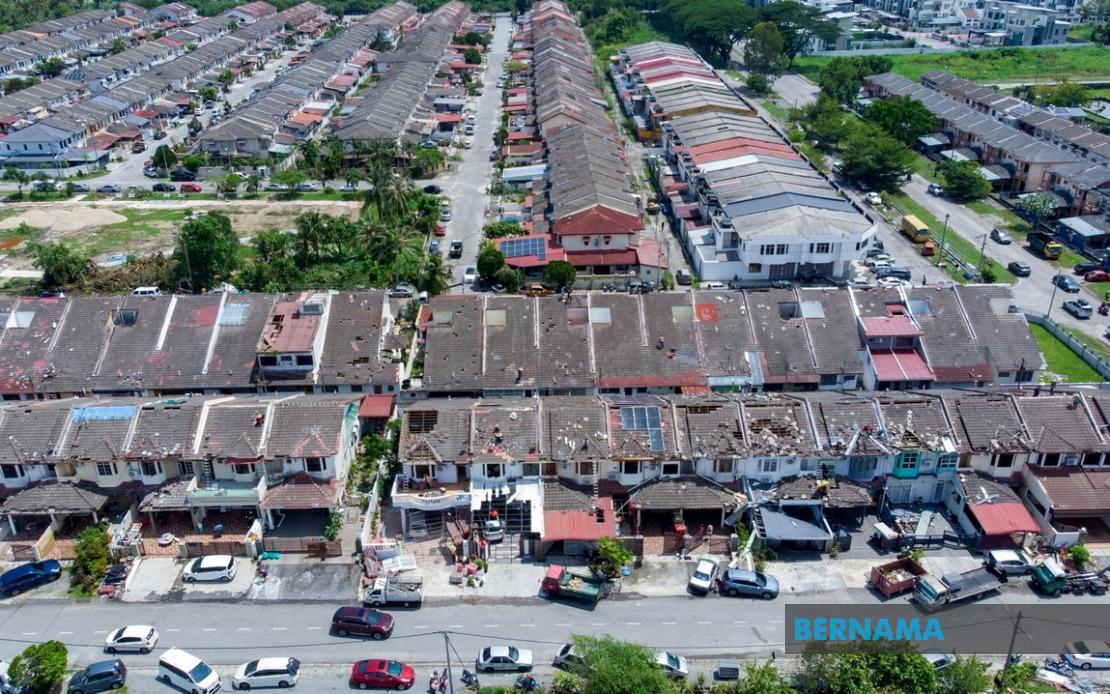
Authorities in Ipoh have implemented strict access controls across five cordoned zones in Bercham following a catastrophic storm that devastated the residential area and displaced numerous families. The police lockdown aims to safeguard properties from theft and criminal activity as residents begin the lengthy process of salvaging belongings and assessing damage across multiple neighbourhoods affected by the weather event.
Ipoh district police chief ACP Muhammad Najib Hamzah outlined the security strategy at a briefing held at Bercham police station, emphasising that while residents will receive reasonable allowance to retrieve personal items and carry out cleaning operations, enforcement will intensify during night hours when visibility is poor and criminal elements typically operate. The affected zones include Anjung Bercham Utara, Taman Mujur, Kampung Bercham, Kampung Tersusun Tasek, Taman Pusat Bercham and Taman Indah Sakti—residential areas with varying levels of infrastructure damage and electricity supply disruption.
The police chief acknowledged that electricity remains unavailable in several affected neighbourhoods, particularly Anjung Bercham, complicating recovery efforts for residents who wish to work at night. Rather than implementing a blanket prohibition on nighttime activities, authorities will adopt a verification protocol whereby officers will inspect properties to confirm ownership before permitting entry. This approach balances the practical needs of storm victims against the heightened risks of organised theft operations disguised as legitimate cleanup activities, a pattern commonly observed during disaster recovery periods.
As of 8 am on the day of the briefing, police received 492 storm-related incident reports through Op Bencana, the official national disaster response operation. Authorities confirmed they have established no fixed deadline for residents to formally lodge damage reports, allowing adequate time for those still managing immediate family needs and emergency shelter concerns to document losses with law enforcement. The open reporting window reflects recognition that disaster victims often require days to stabilise their situations before addressing administrative requirements.
M. Kulasegaran, Member of Parliament for Ipoh Barat and Deputy Minister in the Prime Minister's Department (Law and Institutional Reform), characterised the Friday weather event as extraordinary in its intensity and destructive capacity. Initial assessments indicated the storm damaged more than 200 residential structures across the locality, with impact patterns suggesting a localised but severe phenomenon. Meteorological analysis attributed the incident to a landspout—a rare, rotating column of air that forms over land and produces tornado-like effects—indicating the event was not a typical tropical downpour but a distinct atmospheric occurrence requiring specialised emergency response coordination.
The scope of property damage remains under evaluation, with official authorities unable to provide comprehensive loss figures during the early recovery phase. Insurance adjusters, municipal engineers, and disaster assessment teams are still documenting structural integrity, utility damage, and household losses across affected neighbourhoods. The complexity of tallying losses stems from the sheer number of damaged properties distributed across six distinct residential areas, each with varying construction standards and vulnerability to weather impacts.
For Malaysian readers, this incident underscores the increasing frequency and severity of localised extreme weather phenomena across the peninsula. Climate variability and changing atmospheric patterns have elevated the occurrence of landspouts and similar phenomena in regions previously considered relatively protected from such events. The Bercham situation demonstrates both the vulnerability of densely populated residential zones and the importance of rapid law enforcement response in preventing secondary disaster impacts such as looting and organised theft that frequently compound initial weather damage.
The police cordon strategy also highlights evolving disaster management protocols in Malaysia, where initial security measures now form an integral component of comprehensive response frameworks. Rather than viewing law enforcement purely as post-incident investigation, authorities increasingly recognise that preventing property crime during the vulnerable recovery window protects community assets and facilitates faster normalisation of affected areas. This preventive orientation contrasts with historical responses that typically emphasised investigation after the fact.
The restriction of movement and the careful verification procedures implemented by Ipoh district police reflect broader concerns about opportunistic criminal activity following high-profile disasters. Storm events concentrate media attention on affected areas and create temporal windows where perpetrators anticipate reduced household presence, distracted residents, and disrupted utility systems that normally trigger security responses. By maintaining visible police presence and implementing checkpoint procedures, authorities attempt to deter such activity while simultaneously facilitating legitimate resident access to damaged properties.
Communities affected by the Bercham storm now face an extended recovery period spanning weeks or months, during which police presence will remain a constant feature of the damaged neighbourhoods. This extended security commitment requires significant resource allocation from already stretched Ipoh district police resources, raising questions about staffing levels and operational sustainability throughout the recovery phase. The incident therefore carries implications not only for the immediate affected residents but also for regional policing capacity and disaster response coordination frameworks across Perak state.