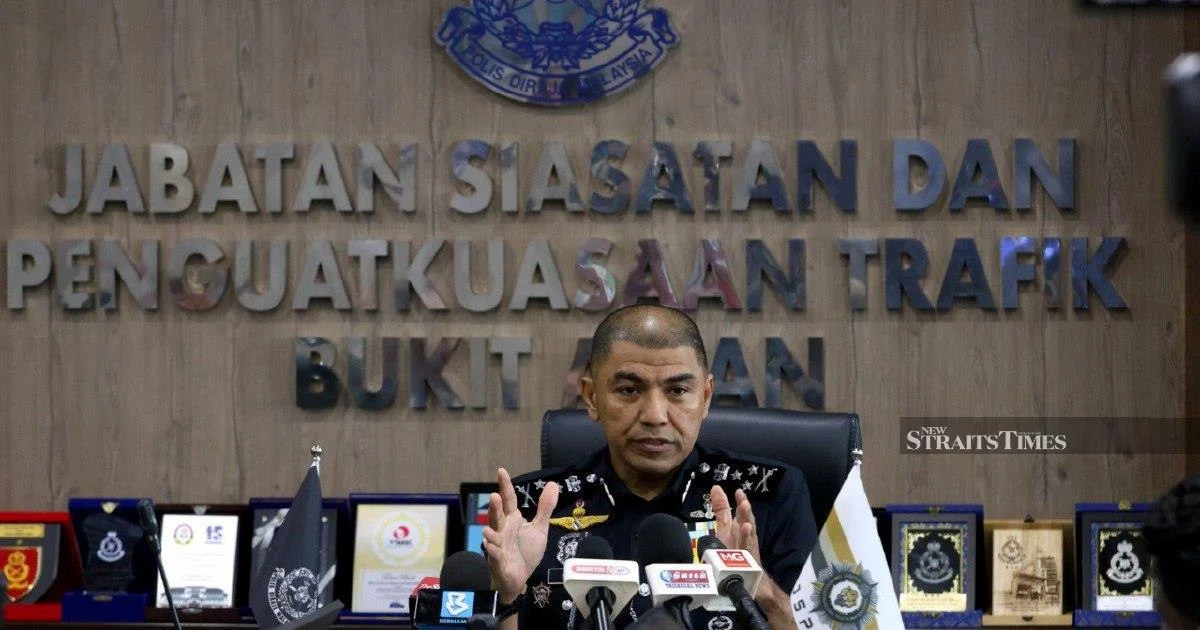
The Royal Malaysia Police have completed a comprehensive three-month integrated enforcement campaign that culminated in the arrest of 121 commercial vehicle drivers accused of driving while under the influence of drugs. The operation, conducted across the country, represents a significant enforcement push against a persistent road safety hazard that has drawn increasing official attention from transport authorities and law enforcement agencies concerned about public welfare on Malaysian highways.
The scale and scope of the operation underscore the gravity with which police are treating substance-impaired driving among professional drivers. Commercial vehicle operators—those piloting buses, lorries, tankers, and other heavy transport—occupy a position of critical responsibility on the nation's roads. The concentration of enforcement resources on this particular sector reflects recognition that when drivers of larger, heavier vehicles operate while impaired, the potential for catastrophic accidents involving multiple vehicles and fatalities increases substantially compared to impaired driving in private vehicles.
The three-month duration of the campaign suggests a methodical, intelligence-led approach rather than sporadic enforcement actions. Police likely deployed screening checkpoints, conducted intelligence operations at transport hubs and rest areas, and coordinated with regulatory bodies overseeing the commercial transport industry. The sustained nature of the operation indicates commitment to disrupting behavioural patterns within the sector rather than merely pursuing isolated incidents.
For Malaysia's transport ecosystem, these arrests carry significant implications. The commercial transport sector—encompassing long-haul trucking, inter-city bus services, and goods delivery networks—forms the backbone of economic activity throughout the Southeast Asian region. When a substantial portion of operators is discovered to be operating while drug-impaired, questions arise about systemic vulnerabilities in recruitment, training, health screening, and workplace culture within transport companies. The arrested drivers likely represented operations across multiple haulage firms and logistics providers, suggesting the problem is not isolated to individual bad actors but rather reflects broader industry challenges.
The motivations behind drug use among commercial drivers are often connected to occupational pressures. Long-distance driving demands extended wakefulness, irregular schedules, and intense fatigue management. Some drivers may resort to stimulant drugs—whether amphetamines, methamphetamine derivatives, or other performance-enhancing substances—to combat drowsiness and maintain alertness during marathon driving sessions. This creates a cyclical problem where occupational demands inadvertently incentivise behaviour that simultaneously undermines safe vehicle operation. The reliance on drugs to manage fatigue differs fundamentally from casual drug use and points to workplace culture and operational practices that tolerate or enable substance dependency.
Malaysia's highway network carries enormous volumes of commercial traffic daily. Major arterial routes connecting Kuala Lumpur to other economic centres, cross-border routes to Thailand and Singapore, and east-coast highways serving ports and industrial zones all depend on the safe, sober operation of heavy vehicles. Impaired commercial drivers pose direct threats to other road users, creating collision risks that extend far beyond the driver's own vehicle. When a 40-tonne articulated lorry operated by an impaired driver encounters smaller vehicles, the outcome is frequently catastrophic.
The enforcement action also raises questions about detection methodology and testing protocols. Police would have employed various techniques to identify potentially impaired drivers, ranging from behavioural observation at checkpoints to roadside drug screening tests. The conversion of 121 suspected cases into formal arrests suggests reasonable suspicion meeting threshold standards for investigation. However, the operation also highlights the practical challenges of systematic drug testing across millions of commercial journeys annually—only a tiny fraction of commercial driving can realistically be monitored through roadside operations.
For transport operators and logistics companies, these arrests should trigger internal reviews of drug policies, driver welfare programs, and fatigue management systems. Insurance companies and fleet operators face mounting liability exposure if their vehicles are involved in accidents where impairment factors emerge. Progressive transport firms increasingly recognise that investment in driver wellbeing, reasonable scheduling, and robust health screening protocols reduces operational risks and insurance costs while improving safety outcomes.
The arrested drivers now face the criminal justice process. Charges related to drug-impaired driving carry serious penalties under Malaysian law, potentially including substantial fines, license suspension, and imprisonment depending on the specific offences and the substances involved. Conviction records also effectively exclude drivers from future employment in regulated transport roles, effectively ending careers in the industry.
For Malaysian road users, the operation offers modest reassurance that enforcement agencies actively pursue dangerous impaired driving. However, the scale of arrests—121 drivers across a three-month period in a nation with hundreds of thousands of commercial drivers—suggests the enforcement operation has likely apprehended only a fraction of those operating impaired. The visible enforcement action, though important, exists within a broader ecosystem requiring coordinated responses from transport regulators, employers, occupational health services, and drug treatment providers. Lasting road safety improvements will depend on addressing the underlying occupational and substance factors that propel drivers toward drug use rather than relying solely on periodic enforcement campaigns.

