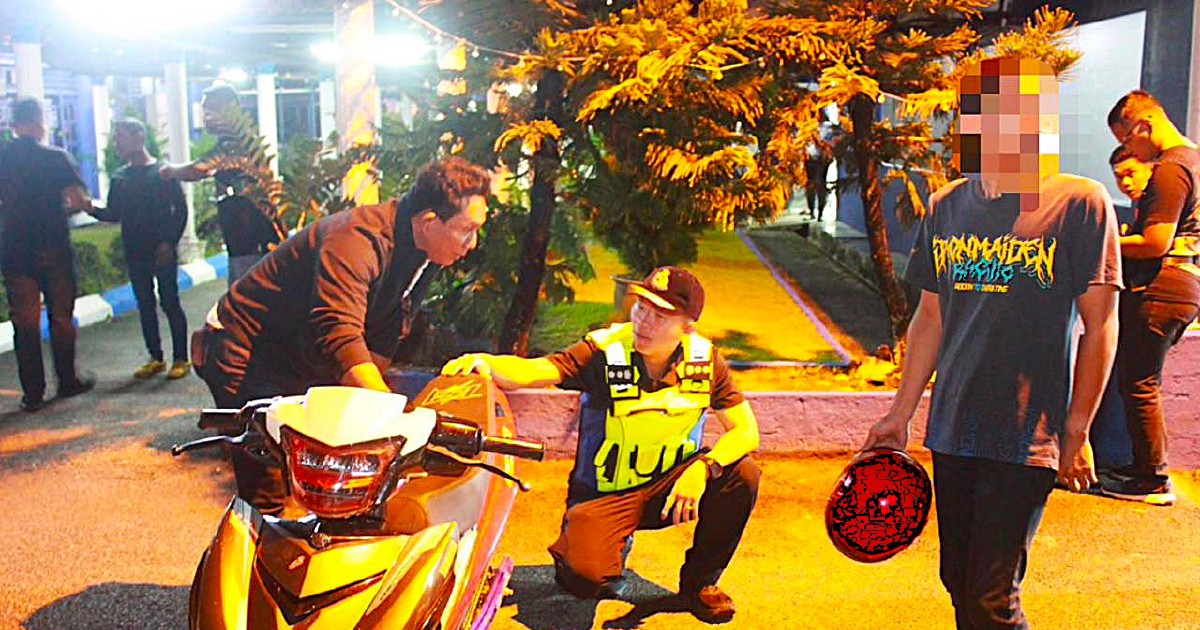
A pre-dawn police operation in Klang has resulted in the confiscation of seven motorcycles and the initiation of investigations against a motorcyclist accused of operating a vehicle recklessly and endangering public safety. The enforcement action, which took place in the early hours, demonstrates the Selangor constabulary's continued commitment to dismantling illegal street racing networks that have plagued the area.
Illegal street racing represents a persistent public safety challenge in Malaysia's urban centres, particularly in densely populated regions surrounding Klang Valley. These unsanctioned motorcycle gatherings frequently occur during late-night and early-morning hours, exploiting reduced traffic volumes and lower police visibility. Riders engaged in these activities typically modify their machines for enhanced acceleration and performance, contributing to disturbances that affect residential communities through excessive noise pollution and traffic hazards.
The operation targeting Klang reflects a broader strategic push by local enforcement agencies to reclaim road safety from organised street racing communities. Such initiatives go beyond simple traffic enforcement; they address the infrastructure of illegal racing culture, which often involves planned meetups, betting arrangements, and the coordination of look-outs to evade detection. By seizing vehicles, authorities aim to strike at both the immediate participants and the economic incentives that sustain these dangerous practices.
The investigation opened against the individual rider centres on establishing liability for reckless and dangerous driving. Under Malaysian traffic law, such charges carry serious consequences, including substantial fines, licence suspension, and potential imprisonment depending on the severity of the offence and whether injury or property damage occurred. The legal framework provides enforcement agencies with robust tools to prosecute offenders, yet street racing incidents continue to pose challenges for law enforcement across multiple state jurisdictions.
Clang's vulnerability to street racing activity stems from its geographic positioning within the greater Klang Valley conurbation, where multiple expressways, secondary roads, and industrial areas create an environment conducive to illicit racing. The municipality's road infrastructure, developed primarily for commercial and residential traffic, becomes a de facto racing circuit when regular enforcement presence diminishes. Residents in surrounding neighbourhoods have repeatedly complained about disruptions linked to these activities, prompting pressure on authorities to intensify operations.
The seizure of motorcycles serves dual purposes within enforcement strategy. Immediately, it removes specific vehicles from circulation, preventing their operators from participating in further illegal activities. More broadly, the confiscation sends a deterrent message to the street racing community, demonstrating that participation carries tangible consequences affecting equipment investment. Impounded vehicles typically face a lengthy detention period, and their eventual return to owners depends on legal proceedings and the outcome of investigations.
This enforcement action arrives amid growing awareness among Malaysian police forces regarding the sophisticated nature of organised street racing networks. Beyond the immediate legal infractions of illegal racing, these communities often intersect with broader concerns around antisocial behaviour, substance use, and gang-related activity. Intelligence gathering suggests that street racing groups sometimes serve as recruiting grounds for more serious criminal organisations, making their disruption an important preventive measure.
The timing of early-morning operations reflects tactical planning designed to maximise enforcement effectiveness. Street racing typically peaks during hours when regular traffic surveillance decreases, making nighttime and dawn periods prime windows for illegal activity. Police operations coordinated for these periods demonstrate improved intelligence gathering and strategic deployment of resources, allowing authorities to arrive at locations ahead of anticipated activities.
Regional road safety perspectives underscore the broader significance of this Klang operation. Southeast Asia experiences elevated motorcycle fatality rates compared to global averages, with street racing and stunt riding contributing disproportionately to youth mortality statistics. Malaysia's own data consistently reflects this pattern, with young male riders representing the majority of street racing participants and fatality victims. Enforcement initiatives therefore carry public health dimensions extending beyond criminal justice considerations.
Community responses to street racing enforcement tend to split between appreciation from residents seeking quieter neighbourhoods and understanding from younger demographics viewing street racing as cultural expression. Effective long-term mitigation requires authorities to balance enforcement with alternative recreational pathways. Several regions have experimented with legalised racing venues offering controlled environments where enthusiasts can pursue performance driving safely, though such facilities remain limited in Malaysian context.
The investigation against the identified rider represents the opening phase of what may develop into more complex legal proceedings. Evidence collection during the operational phase will prove crucial for prosecution success, potentially including vehicle inspection reports, witness statements, and dashcam or surveillance footage from the location. Authorities will likely seek to establish not merely that dangerous driving occurred, but to demonstrate patterns of behaviour suggesting habitual participation in street racing networks.
Moving forward, the Klang operation underscores enforcement agencies' evolving approach to street racing as a systemic problem requiring sustained attention rather than episodic response. Coordination between Klang municipal authorities, Selangor traffic police, and community reporting mechanisms will likely intensify as agencies attempt to transform this incident into a broader campaign against illegal racing culture. Success ultimately depends on combining enforcement rigour with community engagement, addressing both the legal violations and underlying attractions that draw participants to these dangerous activities.

