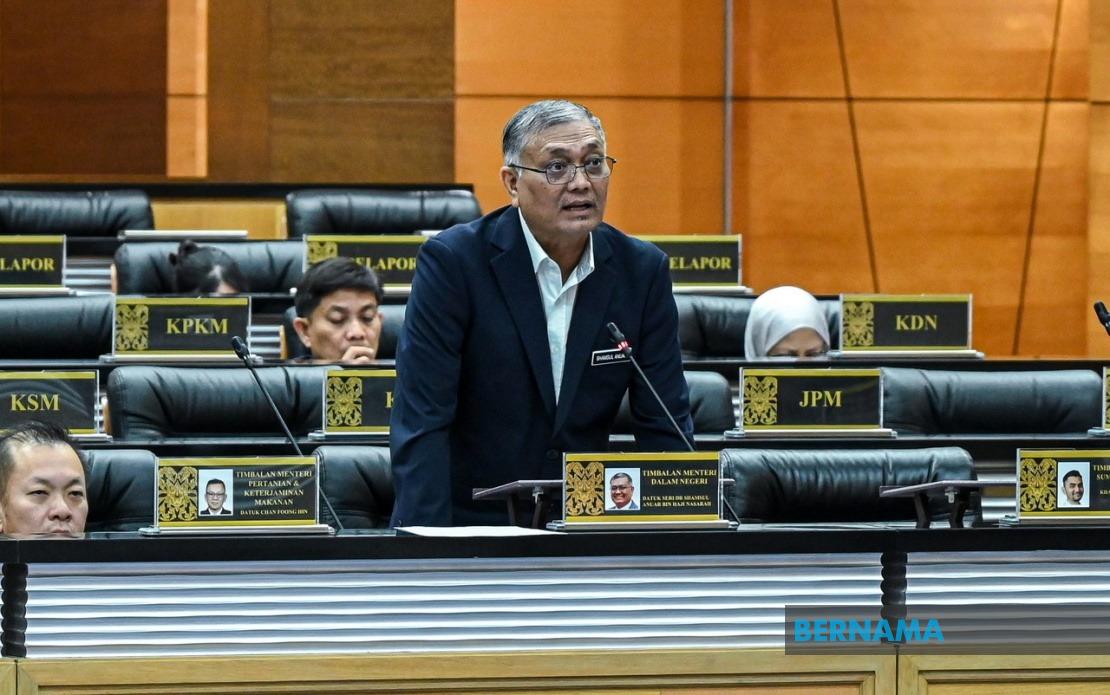
The Royal Malaysia Police (PDRM) operates without prejudice toward individuals of any rank or political standing when conducting major investigations, Deputy Home Minister Datuk Seri Dr Shamsul Anuar Nasarah declared during parliamentary proceedings on July 15. His statement sought to dispel perceptions that the police force might show favoritism or extend protection to prominent figures embroiled in sensitive inquiries, stressing instead that investigations proceed according to established procedures and the law.
Shamsul Anuar's remarks came in response to a question from Datuk Wan Saifulruddin Wan Jan (PN-Tasek Gelugor) concerning the status of several prominent cases. Among these was the 2019 intimate video recording that circulated widely online and became associated with a former government minister. That investigation continues actively as authorities work to obtain the original footage and identify all devices involved in its creation and dissemination.
The police inquiry into the viral recording operates within a comprehensive legal framework encompassing multiple statutes. Investigators are proceeding under Section 292, Section 377B, and Section 504 of the Penal Code, alongside Section 233 of the Communications and Multimedia Act 1998. This multi-layered approach reflects the complexity of the case, which touches on issues of privacy violation, potential criminal conduct, and unlawful communications technology misuse. The protracted nature of the investigation underscores the thoroughness required when handling such sensitive matters involving prominent individuals.
During the same parliamentary session, Shamsul Anuar addressed a separate inquiry concerning the son-in-law of former Prime Minister Tan Sri Muhyiddin Yassin. He confirmed that the Malaysian Anti-Corruption Commission (MACC) has assumed jurisdiction over this matter and issued an arrest warrant. The Deputy Home Minister maintained appropriate restraint by declining to elaborate further, citing the MACC's exclusive investigative authority. This division of responsibility between the MACC and police demonstrates Malaysia's institutional approach to separating investigative bodies according to case type and gravity.
The minister's emphatic declaration that investigations proceed "professionally, transparently and fairly without considering the position or political affiliation of any party" carries significance for public confidence in Malaysia's law enforcement institutions. Such assurances matter particularly in a regional context where questions about judicial independence and political interference in criminal investigations have periodically surfaced across Southeast Asia. Malaysia's demonstrated willingness to pursue cases involving former senior officials potentially sets a precedent regarding institutional impartiality.
For Malaysian citizens and observers internationally, these statements reflect an attempt to reassure that the police force maintains standards expected of democratic law enforcement agencies. The explicit mention that political affiliation does not influence investigative outcomes addresses legitimate public concerns about selective prosecution or strategic targeting of political opponents. Whether through actual practice or perceived commitment, this messaging aims to reinforce institutional credibility.
Beyond domestic criminal matters, Shamsul Anuar elaborated on Malaysia's international cooperation framework regarding extradition proceedings. Such treaties represent essential mechanisms for combating transnational crime and locating suspects who flee beyond national boundaries. Malaysia currently maintains extradition agreements with eleven countries and has endorsed the ASEAN Extradition Treaty, positioning itself within regional security cooperation structures.
The government signaled openness to expanding this extradition network through future negotiations with additional foreign jurisdictions. For Southeast Asia specifically, strengthened extradition arrangements facilitate coordinated law enforcement against regional criminal activity ranging from financial fraud to trafficking operations. Malaysia's participation in these frameworks reflects both commitment to international legal cooperation and recognition that contemporary crime transcends borders, requiring coordinated responses.
The remarks also underscore broader institutional tensions between maintaining public confidence in police impartiality and managing political expectations. High-profile investigations inevitably attract scrutiny from multiple directions—from the public seeking accountability, from political actors with varying interests, and from international observers assessing rule-of-law standards. Police leadership must navigate these pressures while demonstrating that investigative decisions flow from evidence and legal principle rather than external political pressure.
For Malaysian readers and regional observers, these declarations warrant monitoring through actual investigative outcomes and case progression. Institutional statements about fairness and transparency gain credibility through consistent application across cases involving figures of different political backgrounds and social standing. The test of Shamsul Anuar's assertions will ultimately lie in whether investigations into high-profile individuals proceed methodically regardless of their connections or current positions.

