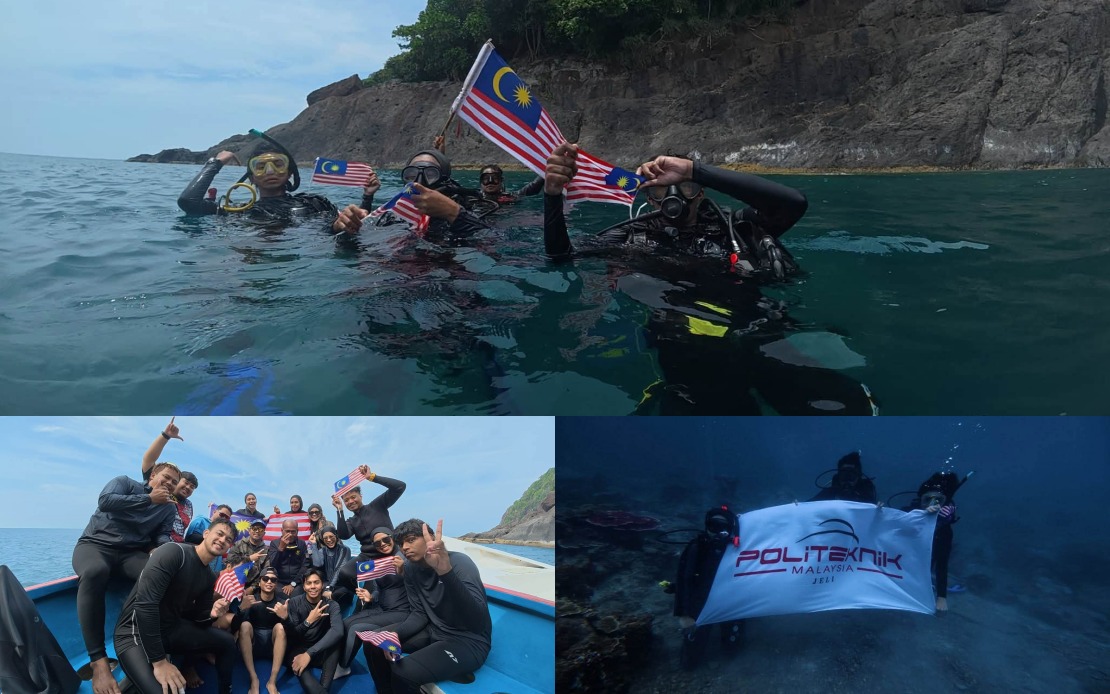
Politeknik Jeli Kelantan (PJK) marked Malaysia's 69th National Day with an unconventional celebration—planting the Jalur Gemilang on the seabed 18 metres below the surface off Pulau Tenggol in Terengganu. The initiative combined patriotic symbolism with practical maritime skills training, reflecting how vocational institutions are integrating national observance with curriculum objectives. The gesture went beyond ceremonial flag-waving, instead positioning the national colours in an environment where few Malaysians venture, thereby creating a memorable and distinctive commemoration of Independence Day.
The underwater display formed the centrepiece of a scuba diving training and certification programme conducted between August 27 and 30 at Dive Buddy Dungun. The project involved two lecturers and two fifth-semester students enrolled in the Diploma in Aquaculture Technology programme, all of whom participated in intensive PADI (Professional Association of Diving Instructors) training. Mohd Adam Nashriq Bani Yamin, an aquaculture lecturer at PJK, explained that the exercise served a dual purpose—honouring the nation while furnishing students with internationally recognised diving credentials essential for their future careers in marine-based industries.
The training encompassed both the PADI Divemaster and PADI Open Water Diver certification courses, delivered by Dr Nabila Talib of Dive Buddy Malaysia. Participants completed rigorous underwater competency assessments before undertaking the flag placement operation. The structured nature of the programme ensured that all divers met international safety standards before descending to the planned depth. This methodical approach distinguished the initiative from a simple public relations stunt, transforming it into a legitimate component of professional development within Kelantan's polytechnic system.
Beyond the Jalur Gemilang, the team also positioned the PJK institutional flag at the same depth, a gesture intended to reinforce the institution's own patriotic commitment. The dual flag placement underscored the connection between personal national pride and institutional identity, messaging that the polytechnic cultivates both attributes in its student body. For aquaculture students, the visibility of these symbols in their workplace environment—the sea itself—carried particular resonance, anchoring their developing professional identity to a sense of national belonging.
The water safety dimension of the programme cannot be overstated for a cohort whose post-graduation employment may routinely involve maritime operations. Aquaculture technologists frequently encounter hazardous conditions: unpredictable currents, equipment malfunctions, sudden weather changes, and the physiological stresses of working at depth. By embedding formal safety training within the curriculum, PJK equipped these students with knowledge and reflexes necessary to respond effectively when emergencies arise. The certification validates their preparedness in the eyes of prospective employers operating offshore facilities or deep-water marine farms.
The strategic location off Pulau Tenggol proved significant. Terengganu has developed considerable aquaculture infrastructure, with numerous fish and crustacean farming operations dotting its coastline. Many of these enterprises require divers to conduct maintenance, monitoring, and emergency interventions below the waterline. Conducting training operations in a region where students will likely seek employment created contextual relevance. The Terengganu sea beds where they trained represent the actual working environment they may inhabit professionally, making theoretical instruction immediately applicable to observable, tangible geography.
Mohd Adam Nashriq emphasised that such practical exposure cultivates graduates equipped with more than textbook knowledge. Malaysian employers in the marine sector increasingly demand workforce competencies beyond traditional academic qualifications. Students who arrive at job interviews holding PADI certifications, coupled with demonstrated experience conducting underwater operations, possess competitive advantages in a tight labour market. The combination of diploma-level aquaculture science and internationally portable diving credentials positions PJK graduates as attractive candidates for regional marine biotechnology firms and export-oriented aquaculture companies.
The diving competencies acquired during this programme extend applicability beyond routine farm management. Marine research initiatives investigating coral bleaching, fish stock assessments, or seabed ecosystem changes all require trained divers capable of safe underwater data collection. Conservation projects protecting endangered marine species similarly depend on technical divers able to deploy monitoring equipment or conduct population surveys at depth. By certifying students in foundational diving skills, PJK opened pathways to career trajectories spanning research, environmental management, and sustainability initiatives—sectors increasingly prominent in Southeast Asian development planning.
The initiative reflects broader trends within Malaysian vocational education toward experiential, industry-aligned learning. Polytechnics nationwide increasingly pursue partnerships with private sector operators and professional associations to embed certification programmes within standard curricula. This approach addresses employer complaints that graduates lack workplace-ready competencies. By integrating PADI certification with traditional aquaculture coursework, PJK demonstrated how patriotic observance and skills development need not exist in separate spheres—they can reinforce one another, creating memorable educational experiences that simultaneously deepen national consciousness and professional capability.
For observers tracking the evolution of skills training across Southeast Asia, the Politeknik Jeli initiative offers a case study in how institutions navigate pressures to modernise workforce development. As maritime economies expand throughout the region and demand for marine sector professionals intensifies, polytechnics that integrate internationally recognised certifications with hands-on training gain institutional reputations. The underwater flag ceremony served simultaneously as nationalist expression and sophisticated educational marketing, capturing media attention while delivering tangible professional credentials to participants.

